If you are deciding how to evaluate a Google Ads agency for an export business, begin with the evidence it can produce. Request a conversion map, a redacted report, a change log, and a clear explanation of account control. Then watch the team investigate a real account question. The review below focuses on Google Ads execution and verification, from country settings to the handoff you would need if the contract ended.
The account review
- Begin with an evidence request, not a sales deck
- How to evaluate a Google Ads agency for an export business: verify account access
- Watch the agency test a conversion action
- Review campaign architecture against the export business
- Test location, language, and query relevance
- Read reports as operational records
- Evaluate the agency’s case evidence
- Make fees, scope, and exit terms easy to compare
- Give the candidate a budget stress test
- A structured Google Ads agency scorecard
- Run a bounded account review or pilot
- Questions to ask in the final agency interview
- How to evaluate a Google Ads agency for an export business
- Use a discovery meeting to test judgment, not presentation style
- Two decisions worth resolving early
- The final agency interview
- Hire the team whose decisions stand up to review
Begin with an evidence request, not a sales deck
A sales deck can show how an agency wants to be understood. An account review shows how the team actually works. Before a meeting, send the provider a limited evidence request: account access model, reporting sample, conversion map, change log, search-term review example, and a redacted case description. Do not request another client’s confidential information. Ask for materials the agency is permitted to share and give it a clear way to anonymize sensitive details.
The review should be about process and decision quality, not about judging an account by one screenshot. A high click-through rate can coexist with poor lead quality; a high cost can coexist with valuable inquiries. Ask what decision the report helped the client make, what limitations remained, and what was changed afterward. If the agency cannot explain its metric definitions or why a setting is in place, do not assume the account is healthy simply because it looks organized.
Clarify what “audit” means before paying for one. A technical audit may inspect settings, tags, and tracking. A performance audit may focus on search terms, budgets, and bidding. A commercial audit may connect costs with sales outcomes. A one-hour screen share cannot fully establish all three. Define the scope, access, deliverables, and confidentiality before granting permissions. If the agency will not receive account access, it should explain what it can and cannot verify from the materials provided.
How to evaluate a Google Ads agency for an export business: verify account access
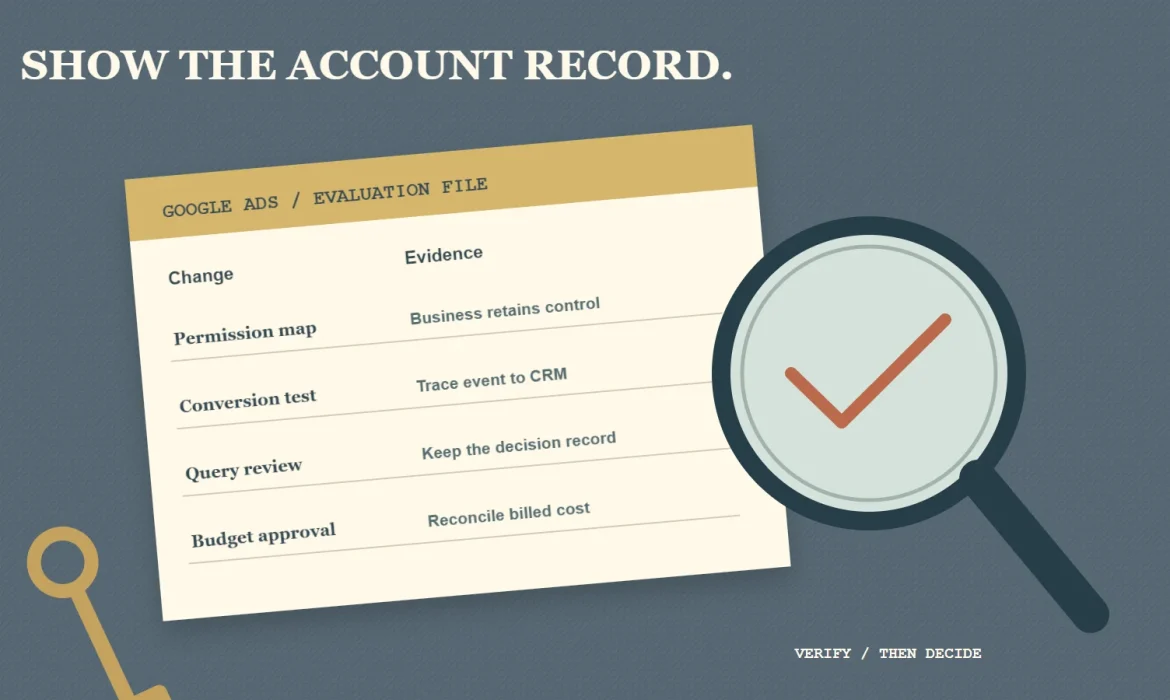
Ask the agency to diagram the account relationship: advertiser account, manager access, billing profile, analytics property, tag manager, domain, CRM, and any connected tools. The client should know which assets it owns and which ones belong to the provider. In most arrangements, the advertiser should retain administrative ownership of core business assets and provide the agency with task-appropriate access. Verify the current Google account permissions and company security process before onboarding.
Review the named users or entities that can access the account. Ask who approves new access, how former employees are removed, and whether multi-factor authentication and other company controls apply. Confirm how billing works and whether the client can see the platform’s actual spend. If payment passes through the agency, ask how credits, taxes, and currency are accounted for. These checks are part of vendor governance; they should not be treated as optional simply because the agency has a long relationship with the client.
Test the exit path. Can the company continue using its account if the relationship ends? Are campaign settings, conversion definitions, negative keyword lists, reports, and naming rules documented? Who retains creative and landing-page source files? How are third-party tools closed or transferred? Put the answers in the agreement. A business that cannot leave without losing its historical data is not in a strong position, even if monthly results look acceptable.
Watch the agency test a conversion action
Ask the team to explain one primary conversion from click to report. What action is counted? What makes it primary? How is it deduplicated? Which system records it? What happens if the form is submitted twice, the user returns on another device, or the CRM updates later? The exact account settings change over time, so use current Google Ads documentation and the live account. The point is to see whether the agency understands the definition and can reproduce the test.
Run a test submission using an approved test record. Verify that the destination works, the event fires once, Google Ads receives the conversion as intended, analytics records the appropriate event, and the CRM receives the inquiry. If the business tracks calls or offline sales, ask how those are defined and what data is transferred. Do not accept “the tag is installed” as proof that the whole journey works. A tag can fire while the record is misrouted or the event represents the wrong action.
Inspect primary and secondary actions. A product guide download may be useful, but it should not necessarily be treated as equivalent to an RFQ. The agency should explain which actions are used for bidding and which are retained for analysis. If multiple campaigns optimize to different events, make that choice visible in the reporting. A new employee should be able to tell what the system is learning from the account without reverse-engineering every campaign.
Review campaign architecture against the export business
Look for a structure that reflects the company’s products, markets, language, buyer intent, and sales ownership. Campaigns may be divided by country when budgets, landing pages, or sales teams require control. Product families may need separation when margins or conversion paths differ. But a large number of tiny ad groups is not automatically sophisticated. Ask how the structure makes decisions easier and who maintains it when the catalog changes.
Inspect naming conventions. A good convention helps a finance or sales user understand market, product, campaign purpose, and language without needing an analyst to decode the account. Names should be consistent and should avoid personal or sensitive information. If the agency uses a custom label or spreadsheet, ask where that logic is documented. A naming system that exists only in one employee’s head is fragile.
Review how keywords and search terms are managed. Ask for a recent example where a query was excluded, a reason was recorded, and the decision was revisited or propagated. Negative keywords can behave differently from positive matching, so the agency should check current Google documentation before applying shared exclusions. Watch for overbroad blocks that might remove legitimate procurement language in one product line because it was irrelevant in another.
| Audit area | Evidence to inspect | Follow-up question |
|---|---|---|
| Account structure | Campaign and ad group map | How does it reflect markets and buying intent? |
| Search terms | Recent query review and negatives | Why was each major exclusion made? |
| Conversion actions | Event map and test result | Which action informs bidding? |
| Locations and language | Settings and geographic report | Can every reached market be served? |
| Change history | Dated optimization record | What was changed, why, and when was it reviewed? |
| Reporting | Redacted export or dashboard | How does a platform lead connect to CRM status? |
Test location, language, and query relevance
An international account should have a clear reason for each target market. Confirm the location settings, language coverage, schedule, and page destination. Ask whether the settings match the business’s shipping and sales coverage. Then compare the intended country with geographic reports and lead records. A campaign name that includes “Germany” does not prove all traffic or inquiries came from people who can be served in Germany.
Review language as a complete journey. A translated keyword list is not enough if the ad, landing page, form, confirmation message, and sales follow-up use different languages or terminology. Ask who reviewed local expressions and technical product names. The agency does not have to be a translation firm, but it should describe how it handles localization, approvals, and market-specific exceptions. If the client supplies translations, define who checks them before launch.
Look at queries in the context of the exporter’s commercial limits. A search can be relevant to a product category and still be unserviceable because of geography, minimum order size, or a customer type the company does not handle. The agency should know how sales feedback enters the search-term review. If the team optimizes only to form count, it may continue attracting contacts that cannot become opportunities. Ask to see at least one example of a search query being evaluated against actual lead outcomes.
Read reports as operational records
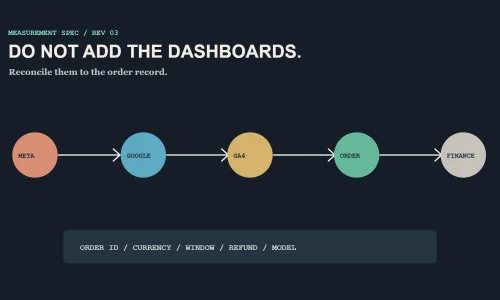
An agency report should identify period, market, currency, media spend, conversion definition, source system, and notable limitations. It should show what changed, what the agency learned, and what it recommends next. A chart without a denominator or conversion definition is not enough. Request a report sample and trace one number back to the platform or CRM. The goal is not to demand raw data for every discussion, but to confirm that the summary can be verified.
Check whether media spend is separated from agency fees, creative, tax, currency conversion, and other costs. A report may show the platform budget but omit the full cost of acquiring a sales-accepted lead. Ask finance to compare the report with invoices and platform billing. If the provider manages several accounts through one billing arrangement, the client should know how its share is identified and reconciled.
A useful report shows uncertainty. If Google Ads records 50 conversions but the CRM contains 38 inquiries, the report should explain the difference or mark it unresolved. It should not silently choose the higher number because it makes the campaign look better. Time zone, duplicate records, delayed imports, consent behavior, and attribution settings can all affect a reconciliation. The agency should distinguish observed facts, interpretations, and recommendations so a decision-maker knows what confidence to place in each statement.
Evaluate the agency’s case evidence
Ask whether the case resembles your sales cycle and product complexity. A consumer campaign with many low-value purchases is not a direct comparison for industrial equipment with a long procurement cycle. Look for the target country, time period, budget range, conversion definition, lead volume or range, quality process, and agency role. If details are confidential, anonymized evidence can still show how the work was done and what limits applied.
Check the arithmetic. If a case states that CPL fell, ask for the before and after values, the period for each, whether media spend alone is included, and whether both periods use the same definition. If the agency reports ROAS, ask how refunds, discounts, repeat purchases, and platform attribution are treated. A result without a denominator or source should not be used as a forecast. A credible supplier should be comfortable with a narrow statement of what the evidence does and does not establish.
Ask for a story about a test that did not work or a campaign that had to be paused. The answer can reveal whether the team communicates bad news, protects the client’s budget, and learns from operational failures. If the agency claims every client case is a success, ask what conditions make a campaign unsuitable. Sound judgment includes recognizing when not to spend or when the client needs to fix a product page or sales process first.
Make fees, scope, and exit terms easy to compare
Ask for separate line items for media spend, management, setup, creative, translation, landing-page work, tracking, software, and taxes. Determine whether the fee is fixed, a percentage of spend, project-based, or blended. Each model can be reasonable if the formula and scope are clear. Request an example of how the fee changes if the budget doubles, a new country is added, or creative volume increases. The example should use your actual scope assumptions rather than a generic service label.
Write down deliverables and exclusions. How many campaigns, markets, creative tests, and reports are included? Does the agency make changes to the website or only recommend them? Who handles product claims, privacy review, sales routing, and customer service? What response time applies to an account issue? If an outside developer is required, who coordinates the ticket? A clear scope makes it possible to identify whether a missed task is an agency failure or an unassigned responsibility.
Review renewal and termination, pause rules, data export, account access, intellectual property, confidentiality, and outstanding media commitments. Legal language should receive qualified review. The marketing team can make a list of operational questions but should not treat this checklist as legal advice. If the agency requires a long commitment, ask what setup work justifies it and which assets the client receives during that period.
Give the candidate a budget stress test
Here is a useful final-interview exercise. Give the agency an unchanged $100 average daily Google Search budget and ask it to explain a $190 spending day. A candidate should be able to open Google’s own guidance, explain that daily spending may reach twice the average setting, and distinguish that daily behavior from the standard 30.4-times monthly limit. Ask it to check the campaign’s actual rules, budget edits, served cost, and billed cost before declaring a billing problem.
The correct multiplier is only the beginning. Ask who approved the setting, who can edit it, where the change history is retained, and how finance receives an explanation. Then change the scenario: the account reports ten leads, while sales can find only six records. Watch whether the team traces events and records or jumps straight to a bid adjustment.
These exercises expose working habits. A good evaluator preserves the original report, asks for the conversion definition, tests the submission route, and separates confirmed facts from hypotheses. It can explain what evidence is still missing without hiding behind a dashboard.
Score the candidate on that reasoning and the clarity of its record. There is little value in selecting a firm that knows the right jargon but cannot show how a routine account question becomes an accountable decision. The interview should resemble the work you expect to receive after signing.
A structured Google Ads agency scorecard
Use the same scorecard with every candidate. Weights below are an example only. Adjust them based on business risk. If account control is the main concern, give it more weight. If a business already has a strong analytics function, give more attention to export-market knowledge or lead quality. Record the evidence beside each score. A high rating supported only by a verbal claim should remain provisional until the provider supplies a document or test.
| Criterion | Example weight | Evidence for a strong rating |
|---|---|---|
| Account access and asset control | 20% | Client ownership, documented permissions, export path |
| Tracking and QA | 20% | Tested conversion journey and definitions |
| Export-market understanding | 15% | Country, language, and serviceability logic |
| Search-term discipline | 15% | Review record with reasons and sales feedback |
| Reporting clarity | 15% | Reproducible metrics and explicit limitations |
| Contract and handoff | 15% | Specific scope, change process, and exit steps |
Score the candidate and mark a confidence level. For example, “4/5, high confidence” may mean the provider demonstrated the account access model and supplied a redacted handoff pack. “4/5, low confidence” may mean the answer sounded plausible but evidence is pending. This distinction stops a polished answer from being mistaken for verified practice. If two candidates have similar ratings, review the evidence quality and the working relationship rather than searching for a decimal-point winner.
Run a bounded account review or pilot
A short, paid account review can test whether the provider’s thinking fits the company. Define the deliverable before granting access: audit findings, prioritized fixes, conversion QA, search-term review, or a campaign plan. State what is outside scope, including implementation or legal review. Give access only through approved controls and remove it when the review ends if there is no ongoing engagement. The client should retain a copy of the output.
If the business chooses a pilot campaign, limit it to a product line and market the sales team can support. Document the budget, conversion, landing page, review date, lead acceptance rule, and pause conditions. The pilot should test onboarding, communication, tracking, and reporting as well as ad delivery. It may be too short to prove pipeline impact in a long B2B cycle, so evaluate both leading indicators and uncertainty. Do not advertise the pilot’s outcome as a case study without a complete, approved evidence record.
At the end, decide what happens next. Continue if the team can explain the evidence and wants to buy the next scope. Revise the assignment if the audit uncovered a technical problem or the client did not provide a needed dependency. Stop if account control, reporting, or communication remain unclear. A successful procurement decision can be a decision not to spend with a particular provider. The process is valuable when it reduces uncertainty before a larger commitment.
Questions to ask in the final agency interview
Ask the agency to explain one recent optimization in plain language: what did it observe, what did it change, and how did it evaluate the result? Then ask which customer-side action would most improve the campaign. This reveals whether the provider understands that media performance depends on the product, page, and sales process. A team that can explain a limitation may be more useful than one that offers a universal promise.
Ask what the agency does when the account’s numbers do not match the CRM, a landing page fails, or sales rejects the majority of leads. A good answer includes diagnosis, communication, owner, and next step. It should not blame the platform, client, or sales team without examining evidence. Ask who will actually manage the account, how senior staff are involved, and what happens if the day-to-day contact leaves.
Finally, ask the agency to outline the first 30 days. The answer should include access, baseline review, conversion verification, market and product context, priorities, and the client’s responsibilities. The sequence may differ, but it should be practical and include a point when the agency can say “do not launch yet” if the evidence or infrastructure is not ready. That answer gives the buyer a glimpse of the real relationship beyond the pitch.
How to evaluate a Google Ads agency for an export business
- Request a redacted report, conversion map, change log, and account-access explanation.
- Confirm the exporter owns core accounts, data, domains, and business assets.
- Test a conversion from landing page to analytics, Google Ads, and CRM.
- Review campaign structure, country settings, language, queries, and exclusions.
- Trace report metrics to platform billing and sales-accepted lead definitions.
- Verify case-study scope, time period, budget, and arithmetic.
- Compare itemized fees, responsibilities, renewal, and exit provisions.
- Use a bounded review or pilot before expanding the engagement.
Use a discovery meeting to test judgment, not presentation style
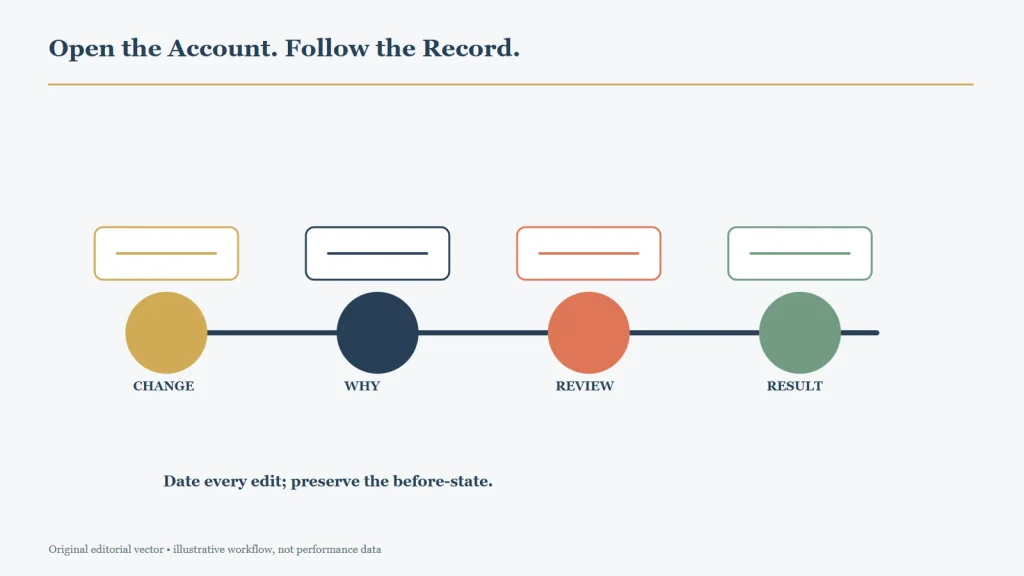
The phrase “how to evaluate a Google Ads agency for an export business” should lead to evidence, not a checklist that ends at the sales call. After the meeting, write down which claims were supported, which were recommendations, and which still need verification. Ask the candidate to send missing documents by a stated date. If a point remains unresolved, decide whether it is a deal breaker, a pilot condition, or an acceptable limitation. This follow-up record makes the comparison consistent when several people join the buying decision.
Give each candidate the same short business scenario. Describe a product, two target markets, a sales constraint, and the current conversion data. Ask what the provider would want to verify before launch and which assumptions it would avoid making. Do not expect a free complete strategy. The purpose is to see whether the agency asks about serviceability, product language, lead acceptance, and measurement—or jumps directly to a platform recommendation.
Listen for a sequence of decisions. A thoughtful provider may first inspect the account and test forms, then map search intent and page readiness, and only then discuss budget. Another may recommend a limited research phase because no trustworthy baseline exists. Different sequences can be valid, but the reasoning should be clear. Be cautious when a provider recommends a large budget or a specific result without asking about margins, sales capacity, countries, or conversion definitions.
Ask who will do the work after the pitch. Meet the account operator, understand how senior review works, and ask how questions are escalated. A proposal from an experienced strategist does not guarantee that person will manage the day-to-day account. The operating team should be able to answer technical questions and explain its documentation. If the relationship depends on a single specialist, ask what backup exists and how knowledge is retained.
Two decisions worth resolving early
How long should a Google Ads agency contract be?
Choose a term that reflects setup work and the sales cycle, then make renewal, cancellation, scope changes, and data handoff explicit. Ask what work justifies any minimum commitment.
What if I cannot grant account access during evaluation?
The agency can review approved exports or conduct a discovery session, but it should state what remains unverified. Do not treat a partial review as a complete account audit.
The final agency interview
How do I know whether a Google Ads agency is doing a good job?
Check whether the provider can explain goals, account changes, conversion definitions, search-term decisions, lead quality, and unresolved limits. Use evidence and a consistent review period, not a single dashboard metric.
Should my business give the agency administrator access?
Grant the access needed for the work under the company’s security process, but retain ownership and a clear administrator route. Confirm current permission controls and document who can approve or remove access.
What should an agency report each month?
Reports should identify period, market, spend, conversion definitions, relevant lead-quality data, key changes, and next actions. They should also state data limitations and separate platform results from CRM or finance outcomes.
Can I trust an agency’s Google Ads case study?
Ask for market, period, spend scope, conversion rule, comparison method, sales quality, and agency role. An anonymized case can still be useful when the measurement and limitations are clear.
Is a low CPL proof that an agency is effective?
No. Low platform CPL can coexist with invalid or irrelevant leads. Compare accepted leads, quotes, opportunities, and the total acquisition cost under consistent definitions.
Hire the team whose decisions stand up to review
Evaluating a Google Ads agency is a test of operating quality. The business should be able to see who owns its assets, how the conversion is defined, which queries and markets receive budget, and how a platform action becomes a sales record. Ask for evidence, compare providers on equal terms, and preserve an exit path. These steps make it easier to decide whether to hire, run a pilot, or strengthen internal systems first.
To discuss cross-market campaign scope, see Marketboo’s global paid media services. If your staff wants to develop the ability to audit and manage the account internally, explore hands-on advertising coaching.