

Quick answer: A social media content calendar for export businesses is an operating plan, not a list of dates. Start with a priority market, a buyer question, a business objective, and the team’s real production capacity. Map ideas to buyer stages and platform-native formats. For each post, record the target country, language, time zone, evidence owner, rights status, approver, due date, destination page, campaign tags, and review date. Plan themes monthly; manage handoffs weekly. A good calendar shows why each post exists, who owns the next step, and what evidence will shape the next cycle.
A social media content calendar for export businesses is an operating plan, not a list of dates. Monday morning starts with a familiar question: “What are we posting today?” Design is waiting for a product photo, sales has just flagged a local holiday, and the scheduled English caption still names a model the factory replaced last month. That is not a creativity problem. It is a calendar problem: the team recorded dates but left out the decisions and handoffs that make publishing possible.
For an exporter, one content idea may require a source script, a US English edit, a localized version, two crops, captions, a product review, and a link that can be attributed later. A simple list of post dates cannot coordinate all of that. A working calendar connects the buyer question to the evidence, format, market, owner, approval path, and next action. It should also make it easy to see when the team has promised more work than it can actually deliver.
This guide takes a practical route: define the operating decisions first, build a reusable calendar, then use a short review cycle to improve it. The examples are planning recommendations rather than platform rules. A schedule can make a team more consistent; it cannot guarantee reach, inquiries, or sales.
Start with four decisions before entering dates
Choose one business priority. A month may focus on introducing a new product line, helping distributors evaluate fit, educating existing customers, or supporting a trade-show follow-up. “Grow awareness” is too broad to guide a particular post. Translate the priority into an observable action: visits to a relevant product page, requests for a specification sheet, qualified distributor inquiries, or views of a complete installation walkthrough. Social content may contribute to that path, but the calendar should not imply that a post controls the final sale.
Name the market and the people involved in the decision. “Overseas buyers” is not a useful audience definition. A North American distributor, an engineer in Germany, and a procurement lead in Southeast Asia may ask different questions and work in different languages, time zones, and buying cycles. Start with one or two markets the team can serve well. Record the country or region, language variant, primary time zone, local business days, and the colleague who can confirm market-specific details.
Set a realistic production ceiling. Count the work behind a post: collecting evidence, drafting, technical review, filming or design, localization, rights checks, scheduling, community response, and reporting. Do not call organic publishing “free” when it consumes staff hours. If the team can reliably produce two useful posts a week and answer comments, that is a better starting point than a daily schedule that collapses after two weeks.
Pick the behavior the calendar will measure. A post designed to teach a product-selection concept should not be evaluated only by follower growth. A distributor recruitment post may need qualified page visits and sales-accepted inquiries. One primary action per post makes the editorial decision and the later review clearer.
Build a social media content calendar for export businesses around buyer questions
Content pillars become useful when they describe a recurring buyer need rather than an internal department. “Product,” “company,” and “holiday” are categories, but they do not tell a writer what a buyer should learn. Instead, map questions across the buying journey: recognizing a problem, comparing approaches, checking fit, evaluating a supplier, installing a product, and maintaining it.
An industrial exporter might collect questions such as: Which operating conditions matter before selecting a valve? What changes when the material is exposed to a particular fluid? What should a distributor confirm before quoting? How does the installation sequence work? Which maintenance checks are appropriate for this model? Each topic should have an evidence owner. Product specifications belong with the product or engineering team; a quality-process description needs a plant-side reviewer; a customer story requires permission and a verified scope.
Sales conversations, support tickets, website search behavior, and product-team questions can seed the topic list. Treat them as inputs, not as proof that every buyer has the same concern. Keep a source note beside each idea: who raised the question, when, and whether it has appeared more than once. If the evidence is one anecdote, phrase the content as a scenario or question—not as a market-wide trend.
Plan a mix of educational, proof-oriented, operational, and relationship content only when the team can support it. A proof post needs evidence. A factory video needs a real process and appropriate access. A customer story needs permissions. A seasonal post needs a reason to matter in the target market. If a category exists only to fill a slot, remove the slot.
Decide what belongs in each calendar row
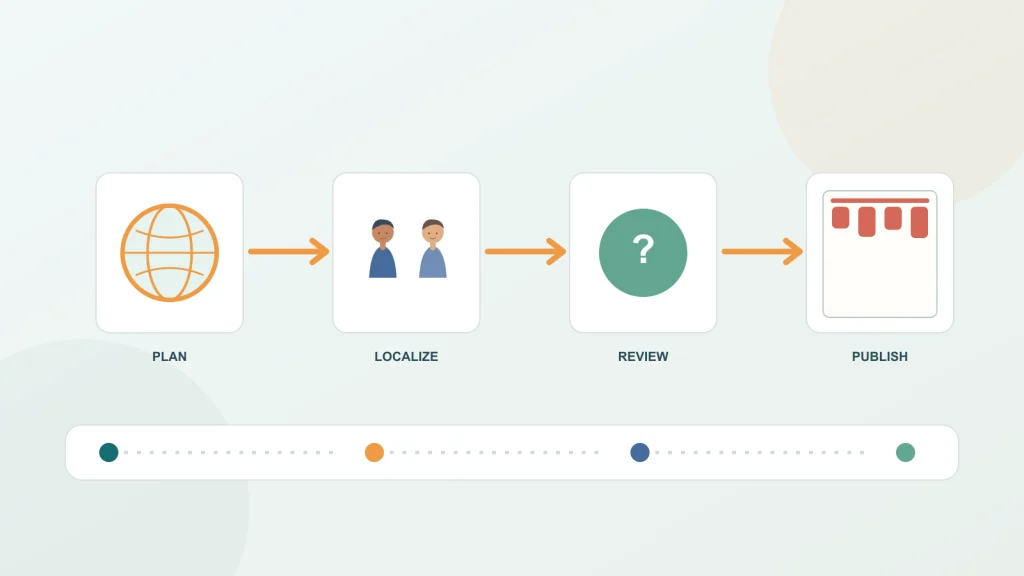
Use fields that support a handoff. A content manager should be able to tell what the post is for, which version is approved, what needs to happen next, and where it will send a reader. The calendar can be a spreadsheet or project board; the tool matters less than consistent fields and ownership. For multilingual work, give each language version a record or a clear parent-child relationship. Otherwise an English edit can be approved while a translated caption continues using an old specification.
| Field | What to record | Why it matters | Example |
|---|---|---|---|
| Market and version | Country, language, time zone | Prevents a headquarters schedule from being mistaken for local time | United States / en-US / America/Chicago |
| Audience task | Buyer question, stage, intended action | Connects the topic to a useful job | Compare fit / review a specification |
| Channel and format | Platform, native format, aspect ratio, captions | Stops copy-and-paste publishing from replacing adaptation | YouTube tutorial / chapters and captions |
| Production and approval | Asset source, owner, reviewer, deadline, rights status | Makes evidence and permissions visible before publishing | Product lead verifies model; editor checks language |
| Publication and measurement | Local time, destination page, campaign tags, review date | Connects the post to a traceable next step | us_distributor_demo / setup_video_a |
Keep status labels concrete: brief needed, drafting, technical review, localization, rights check, approved, scheduled, published, and reviewed. “Pending” hides the next action. If one person owns the final publishing decision, name that person even when several people contribute. Collaboration should not turn into a responsibility gap.
Match a core idea to the platform instead of duplicating the post
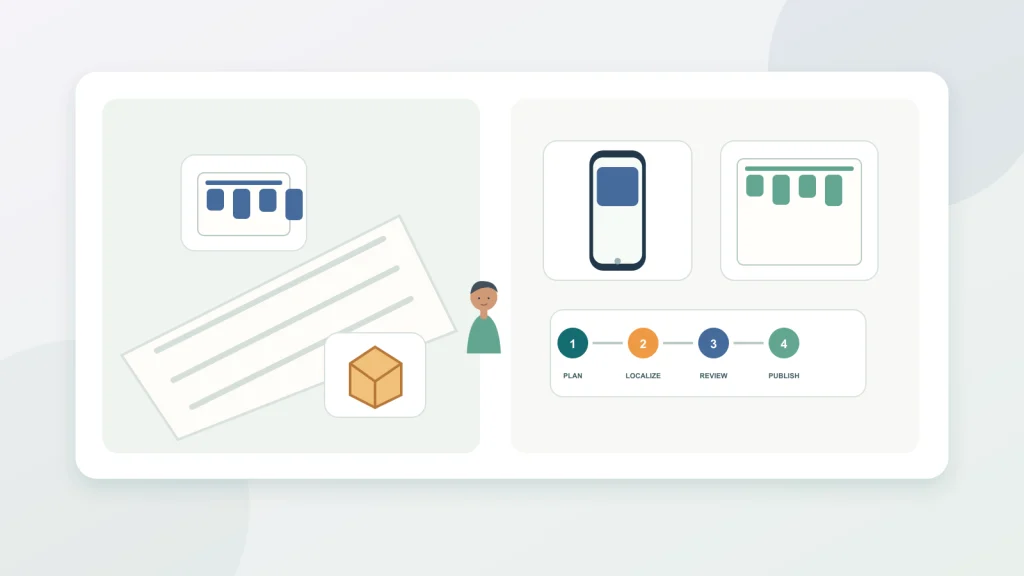
A core idea can travel across channels, but each finished asset should fit the way people encounter it. A carousel may break down a selection checklist. A short video can show one operation. A longer YouTube walkthrough can explain context and limitations. A text post can answer a narrow question raised by a distributor. Reuse verified facts and source material; rewrite the opening, pacing, captions, and call to action for each version.
For example, if the monthly priority is helping US distributors determine whether a piece of equipment fits a project, Monday’s post might list three questions to confirm before requesting a quote. Wednesday’s short video can demonstrate one relevant feature. Friday’s sales-approved FAQ can address a common follow-up and point to the corresponding technical page. Use a consistent campaign name while identifying the asset version separately. In the next review, compare destination-page behavior and sales feedback—not just likes.
Keep the calendar honest about what is unknown. If the team has not tested which local posting time works for its audience, mark it as a hypothesis. If a product claim has not been checked, leave it out of the approved copy. A near deadline does not make an unsupported statement reliable.
Use market data as a prompt for research, not a channel verdict
Pew Research Center’s report Americans’ Social Media Use 2025, published November 20, 2025, summarizes a survey of 5,022 US adults conducted February 5 through June 18, 2025. The report says 84% of respondents used YouTube, 71% used Facebook, 50% used Instagram, 37% used TikTok, and 26% used Reddit. Those figures describe platform use among US adults. They do not measure exporter buyers, industrial procurement roles, purchase intent, or global adoption.
Use that evidence to ask a better question: does our intended buyer use this platform for the kind of information we can provide? Then check the answer against customer interviews, website behavior, account insights, and sales feedback. A national adult survey can suggest where to investigate; it cannot choose a channel for a narrow B2B audience by itself. The numbers also have a publication date and a defined survey period, so retain both when citing them.
Plan the monthly rhythm and the weekly handoffs separately
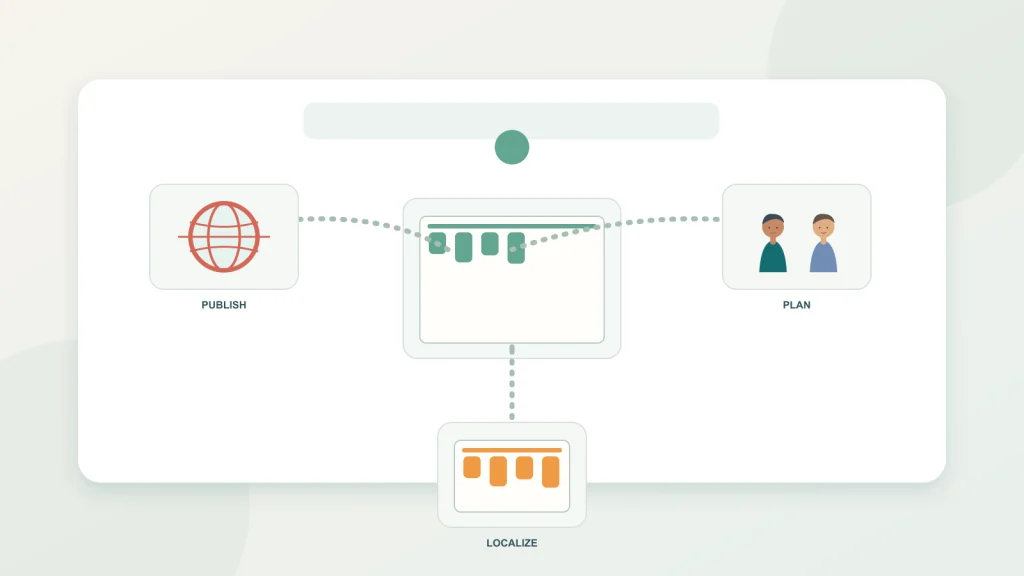
A monthly calendar should reserve the big decisions: the market, campaign, content theme, product availability, and people or assets that must be booked. A weekly production view should lock the copy, format, approver, language version, and local publication time. This separation keeps the long-range plan from pretending that every detail is known weeks in advance.
For a cross-border team, write an IANA time zone and local time rather than “Tuesday morning.” Record headquarters time only if it helps the team coordinate. Check local holidays with a named owner and a reliable regional source. Daylight-saving changes can shift a scheduled post by an hour; recheck dates near the transition instead of relying on memory.
Do not assume every market needs a simultaneous post. If one editor approves several language versions, stagger them so each receives a proper review. A localized version is not merely an English caption with translated words. Check units, product names, local contact paths, cultural references, and the action the reader can take. Keep the final approved version attached to its market row.
Build a buffer for review. A product post may need engineering input; a customer story may need legal or customer approval; a translated post may need a local proofreader. Give reviewers a deadline and a clear question. “Please review” is vague. “Confirm that model X supports the stated range under the listed conditions” is actionable.
A practical week: one theme, three distinct assets
The sample below is a planning device, not a required cadence. It shows how a buyer question can become several useful pieces without repeating the same caption. If the team lacks the people or footage to support the schedule, reduce the number of posts. A calendar should reveal capacity, not conceal the shortage.
| Workday | Audience and asset | Handoff | Review signal |
|---|---|---|---|
| Monday | Selection-question carousel for distributors | Product lead confirms specifications; editor approves US English | Visits to the relevant guide; note recurring comments |
| Wednesday | Short demonstration of one step | Engineering reviewer checks footage and captions | Video response and tagged link clicks, reported separately |
| Friday | Sales FAQ for people evaluating fit | Sales supplies the question; support confirms response route | Response time and any later qualified-lead feedback |
If the same week serves two language markets, create distinct rows for localization and approvals. Do not assume that a duplicated post is a checked translation. Shared source footage can carry a stable asset ID; the finished channel versions should still have their own status, URL, and owner. File names like “final-final-new” make it hard to know which version is safe to publish.
Leave room for change and give someone authority to pause
A plan needs slack. If a shipment is delayed, a product is revised, or a serious event affects the audience, a cheerful evergreen post may be inappropriate. Reserve a flexible slot or name the person who can pause scheduled content. A pause procedure can be simple: identify affected posts, stop scheduling, confirm the facts, decide whether to update or cancel, and record who approved the change.
When a late request arrives, do not silently push every other task downstream. Record whether the request is truly urgent, who provided the evidence, what planned work moves, and which approver owns the decision. If sales submits questions by a cutoff, questions received later can enter the next cycle unless a business owner explains the urgency. This protects the team from an endless stream of unreviewed “quick” posts.
Keep one flexible slot for a timely customer question or a content correction. Do not make the buffer a hidden promise to publish every day. It is there to absorb reasonable variance and to protect the quality of planned work.
Use a simple content calendar workflow
- Write one priority business objective for the month and define one observable action that can support it.
- Select the target country or region, language, audience role, and IANA time zone; verify local workdays and holidays.
- Collect buyer questions from sales, support, product, and site behavior, noting each source and confidence level.
- Choose a platform-native format for each question and name the evidence owner, asset producer, editor, and approver.
- Set a cadence that fits actual production and response capacity; reserve time for technical review and localization.
- Assign a stable campaign naming rule, destination page, rights status, and review date to every scheduled asset.
- After publishing, record platform and website data separately; review handoffs weekly and the overall plan monthly.
Example: turn one distributor question into a checked post
Suppose a sales representative reports that distributors keep asking what information they need before requesting a quote. Do not immediately convert that anecdote into a claim that every buyer has the same problem. Create a brief with the question, the source, the market where it came up, and the product category. Ask sales whether it recurs and invite a product specialist to confirm which inputs are genuinely required. That quick evidence check may reveal the useful answer: model, application conditions, required quantity, destination market, and an installation constraint.
Next, decide the format. A short checklist carousel may be easier to save than a broad brand post. A brief video can explain one particularly confusing item. A longer article on the site might support a salesperson who needs to share the complete quote-preparation process. The calendar should link these assets to a single underlying topic record so facts stay aligned, but each asset needs its own final review and next step.
Before scheduling, check whether the checklist applies to every model or only a product family. Confirm the spelling and units, the contact route for a distributor in the target market, and whether the linked page is current. If the post contains an example, mark it as an example; do not imply it is a customer result. Add the approved English caption and any translated version as separate assets. The local editor should check industry terminology, not merely grammar.
After publication, review the result against the original purpose. Did people save or share the checklist? Did the relevant page receive visits from the tagged link? Did the sales team receive more complete quote requests, or were the new inquiries outside the intended market? None of those signals alone proves causation. Together, they help decide whether the next calendar should expand the topic, change the format, or retire the idea.
This example also shows why a calendar benefits from carrying evidence, not just copy. If the question changes or a model is discontinued, the team can see which posts depend on that information. The content owner can update or pause related assets rather than searching through old captions one by one.
Set a practical ownership rule for approvals
Approval is easier when each reviewer has a narrow job. A product reviewer checks technical facts and limitations; a market editor checks tone, terminology, and local context; a business owner confirms commercial terms; a final publisher confirms that the scheduled asset is the approved version. One person can hold more than one role in a small team, but the calendar should still identify which review is needed.
Use a clear escalation path for uncertain claims. If a draft mentions a performance rate, certification, delivery promise, comparative claim, or customer result, the writer should link the evidence or mark the statement as unresolved. If evidence is unavailable, remove the claim or replace it with a narrower explanation. The calendar should never treat a missing reviewer response as automatic approval.
It also helps to define what happens when approval misses its deadline. The responsible editor can move the post to a later slot, replace it with already approved content, or ask the business owner to reassign the review. A missed deadline should be visible in the process record. Quietly publishing a partly reviewed asset protects a schedule at the expense of trust.
A review routine that improves the calendar, not just the posts

At the end of each week, ask whether work moved through the planned stages. Which pieces waited for evidence? Which reviewers received vague requests? Did a translated version arrive too late? Did the link point to a current page? A content calendar is also a process record. If delays cluster around one person or one approval step, the answer may be to change the handoff—not to pressure the writer to move faster.
At month-end, compare the intended action with the observed behavior. Keep the numerator and denominator when reporting a rate. A small number of clicks can produce a volatile percentage. Label the platform and website data sources, period, market, and time zone. Social platforms and analytics tools do not necessarily count the same event, so do not force the numbers to match.
UTM parameters can help distinguish campaign links. Google Analytics’ URL builder documentation describes parameters such as utm_source, utm_medium, and utm_campaign. The help page did not show a publication or version date in the checked rendering, so a human editor should verify the current guidance before publication. Use the company’s existing naming dictionary if one exists. Stable campaign tags help organize reporting; they do not prove that a post caused an eventual sale.
Also review the calendar for stale statements. Prices, model names, specifications, promotions, and support routes can change. Put a recheck date beside content that is likely to age. Store the approved asset, language versions, permission records, and last-checked date in a controlled team location—not only in an employee’s chat history.
Common calendar problems and a useful response
If the same topic repeatedly slips, inspect the production chain. The script may arrive without product evidence, the only technical reviewer may be booked, a translation may not be assigned, or footage may not have permission. Adding more dates will not repair any of those conditions. Remove or defer work until the team can describe the next step and its owner.
If every market publishes the same post at the same time, ask whether the audience and local team actually need simultaneity. If not, stagger the versions. If every channel carries the same caption, identify which elements are shared facts and which need a platform-specific treatment. If the calendar is full of holidays, ask whether each event matters to that audience and business. A calendar should make useful work easier to see; it should not reward volume for its own sake.
Questions teams ask about social media calendars
How far ahead should an exporter plan its social media calendar?
Plan monthly themes and market events ahead, then lock production details week by week. Filming, localization, and multi-team approval need more lead time than a simple FAQ. There is no universal number of days that fits every team.
How many posts should an export business publish each month?
Start with the pace the team can sustain while producing accurate content and responding to people. Test a modest schedule for several weeks, then adjust based on quality, workload, and the intended action. Posting frequency alone does not guarantee growth.
Can we publish the same caption on every platform?
Reuse the verified topic and facts, but adapt the opening, length, visual framing, captions, and next step to each channel. Copying one caption everywhere ignores how people encounter the content.
Should sales contribute to the calendar?
Yes. Sales can bring recurring buyer questions and feedback about lead quality. A designated marketing editor should still maintain the approved copy and evidence record so customer conversations do not become unchecked public claims.
How should a team schedule posts across time zones?
Record the target market and IANA time zone for each asset. Check local business days and daylight-saving transitions. Headquarters time can be recorded for coordination, but it should not stand in for the audience’s local time.
How should we name UTM parameters?
Use the company’s data dictionary, consistent lowercase values, and a clear separation between source, medium, campaign, and creative version. Check the final redirected URL before publishing and avoid placing personal information in campaign tags.
How can we tell whether the calendar is working?
Review plan completion, approval delays, rework, response coverage, destination-page visits, and qualified inquiries according to the month’s objective. Follower count alone cannot show whether the content helped the intended buyer.
Conclusion: make the next cycle executable
How to build a social media content calendar for export businesses is not a question about finding a magic posting frequency. It is about connecting a target market and a real buyer question to evidence, production capacity, ownership, local timing, and a measurable next step. Start with one manageable cycle, note the limits, and use the review to improve the handoffs. Before the next post is scheduled, check that the calendar names its audience, approver, destination page, time zone, and review date.
If you need support coordinating content production, publishing, and community workflows, review Marketboo’s social media management services and compare the proposed scope with the ownership fields in this guide.
If your social topics also need to connect with search and AI visibility, explore Marketboo’s SEO/GEO services and assess how social themes align with site content and destination pages.