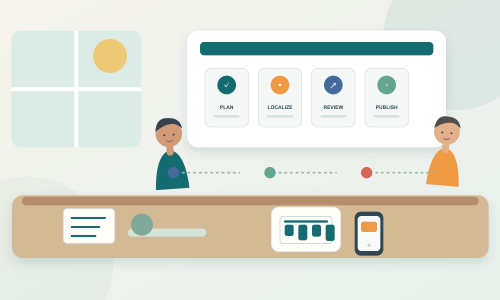
Quick answer: A social media content calendar for global brands should coordinate decisions, not just dates. Keep a shared view of markets, local owners, platform formats, audience purpose, deadlines, approvals, and measurement labels. Separate global campaign ideas from locally adapted assets, and make time zones explicit wherever a deadline or publication time matters. Build a realistic cadence from production capacity and audience evidence rather than copying one “best time to post” chart. A calendar is useful when a teammate can tell what is going live, where, for whom, who has approved it, and what the team will learn afterward.
A global calendar often fails in a familiar way: the master spreadsheet looks organized, but the local team receives a finished caption after the relevant moment has passed. The problem is not a lack of dates. It is that decisions about audience, adaptation, rights, review, publishing, and measurement live in different places—or were never assigned to anyone.
Use the social media content calendar for global brands to coordinate decisions
First decide what the calendar must help the team decide every week. A simple list might include which customer problem to address, which markets need their own version, whether the asset fits the platform, when legal or product review is required, and who can stop publication if the facts change. If the calendar only answers “what day do we post,” it leaves the difficult work hidden in email and chat.
Think of the calendar as a lightweight editorial operating system. It does not replace an asset library, project tracker, approval workflow, or analytics report. It points to those records and shows their current state. A content row should link to the final approved copy, image/video asset, localized version, destination URL, campaign tags, and performance review. Keep the actual working files where the team already manages access and version history.
The word “global” should describe the operating scope, not imply that every audience sees one identical message. A brand may have central positioning, shared visual principles, and common evidence while still changing the example, product availability, language, offer, timing, or call to action by market. Local adaptation is part of the work plan; it should not appear as an afterthought after a global asset is declared complete.
Start with markets that have a defined owner and business purpose. Avoid opening a dozen local tabs merely because the company has customers in those countries. A market needs someone able to review cultural context, product availability, customer questions, operational timing, and the destination page. If no owner can confirm those details, keep the content in research rather than treating a blank calendar cell as a launch plan.
Choose a central-and-local model
Most teams need a hybrid system. The central editor owns the campaign idea, claims, core assets, brand terminology, measurement conventions, and release status. The local editor owns market relevance, language review, regional examples, local links, timing, and feedback after publication. Small teams may assign both roles to one person, but the responsibilities still need to be visible.
Give local editors a real decision window. If the central team expects a market reviewer to approve a caption in one hour while the reviewer is asleep or handling another role, the process is not localized—it is merely distributed. Work backward from each market’s publication date. Leave enough time for translation, legal review, image-text checks, product confirmation, and a final link test. A deadline with no owner and no review buffer is an aspiration rather than a schedule.
One practical rule is to localize the point of view before translating the sentence. Ask what question the audience is trying to answer and what context makes the answer credible in that market. Then adapt terminology and copy. Literal translation may retain the words while losing the use case, product constraints, or tone. A reviewer should be able to explain what changed and why, not just approve a linguistic surface.
Avoid turning local review into an unrestricted rewrite that removes important factual controls. Maintain a claims sheet with source, approved wording, market scope, date checked, and an owner who can reconfirm it. If a price, specification, regulation, shipping time, or product availability differs by country, the market version must use the appropriate evidence. When evidence is absent, remove the claim or hold the post.
Specify the fields that make a row publishable
Make the calendar row small enough to scan and complete enough to operate. Suggested fields include content ID, campaign, audience, market, language, platform, format, funnel task, idea or hook, owner, asset link, draft deadline, review deadline, planned publish time with time-zone identifier, destination URL, UTM label, rights status, approval status, and follow-up review date. The names can vary; the decision each field supports should not.
| Field | Question it resolves | Example value |
|---|---|---|
| Market and language | Who is this version for? | Canada · English; Germany · German |
| Platform and format | What native delivery form is planned? | LinkedIn document post; Instagram Reel |
| Audience task | What should the person learn or do? | Compare two installation approaches |
| Local owner | Who confirms local details and release? | Named editor or accountable team |
| Publish time and zone | When should it go live for the intended market? | 2026-11-12 09:00 America/Toronto |
| Destination and tags | Where does the post lead and how is it classified? | Market landing page plus approved campaign parameters |
| Rights and approval | Can this asset be used here, and is it cleared? | Customer permission verified; legal approval recorded |
| Review date | When will the team evaluate what happened? | One week after publication |
Do not put sensitive customer information in a social calendar. Link to access-controlled records instead. If a campaign uses a customer quote, photo, creator asset, or identifiable workplace, record whether the necessary permission and usage scope have been confirmed without copying the underlying private file into a broadly shared sheet.
A cadence is a capacity decision, not a platform rule
There is no universal posting frequency that works for every brand, market, and social platform. A useful cadence depends on available production capacity, audience expectations, content value, response coverage, and the purpose of each channel. A company that can thoughtfully produce two localized updates a week may be better served by two strong assets than by a daily global queue that no one can review.
Platform use data can help frame a market discussion, but it cannot choose the publishing schedule. Pew Research Center’s 2026 U.S. fact sheet reports that 84% of U.S. adults say they ever use YouTube, 70% Facebook, 51% Instagram, 33% LinkedIn, 31% TikTok, and 18% Reddit. The survey covered 5,511 U.S. adults from January 30 to June 18, 2026, with an overall margin of error of ±1.8 percentage points. These figures describe self-reported use among U.S. adults. They do not measure global audiences, B2B buyers, daily activity, a brand’s reachable audience, or the best hour to publish. Use market-specific audience evidence and your own account data for local decisions.[1]
Use a pilot cadence to test operational feasibility. For a new market, try a small and repeatable schedule with a mix of formats, then review workload, response needs, audience interaction, qualified visits, and local feedback. Keep the test long enough to account for ordinary variation and campaign timing, but do not promise statistical significance if the audience or post count is small. Label early observations directional.
Do not export one platform’s format and cadence to another automatically. A short vertical video, a technical carousel, a community answer, and a founder’s longer explanation ask for different production and response work. Cross-posting can save effort when the asset fits; reformatting is often better than duplicating the same post everywhere. In the calendar, note the transformation required and the owner who will do it.
How to plan around time zones and local moments
Store the intended time zone with each market, preferably in a machine-readable name rather than an ambiguous abbreviation. “9 a.m. ET” can be interpreted differently during daylight-saving changes and across systems; an identifier such as America/New_York makes the intended location clearer in scheduling records. If the publisher uses a different operating time zone from the audience, show both only when that distinction prevents errors.
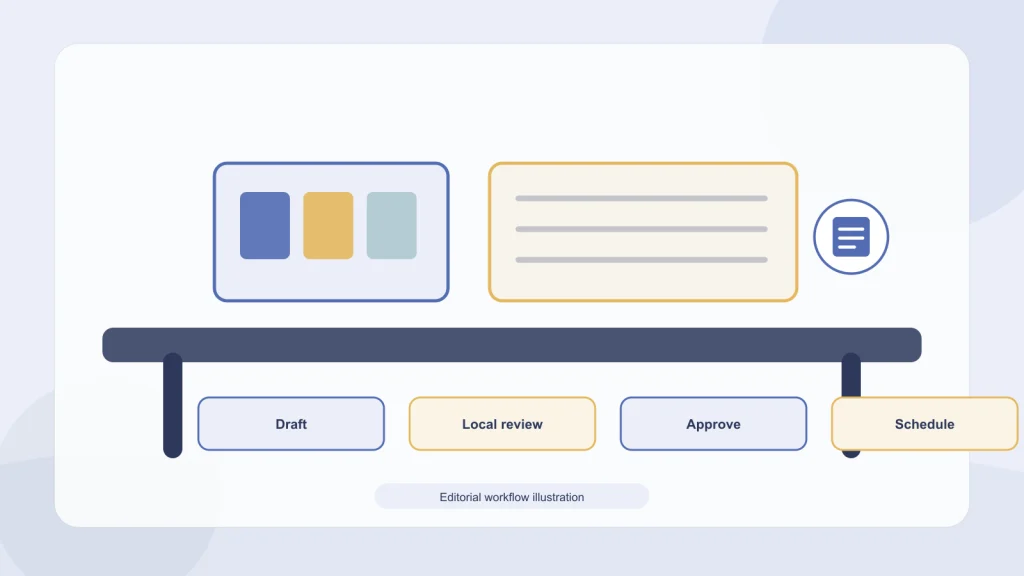
For a global campaign, choose an anchor time only after deciding what the moment means. A product release might need simultaneous availability across regions. A live event may need separate sessions. A retail promotion may need different local start times because inventory, currency, or customer support differs. The calendar should say whether the publication is synchronized worldwide or scheduled by market, and why.
Build a local moment checklist for each market: public holidays, major industry events, seasonal buying periods, local operating hours, potential sensitivities, and support coverage. A holiday list is a starting point, not a complete cultural calendar. It does not tell a team whether the audience observes the event, whether a brand should post, or whether a promotional tone is appropriate. Ask a local reviewer and confirm the date against an official source.
Time-zone conversions should be tested after daylight-saving transitions and around year-end scheduling. Do not assume that a weekly recurring post will remain at the same local hour if the scheduling system stores it in a different zone. Use a calendar view that exposes the zone, spot-check the scheduled post in the platform, and assign a second person to inspect critical launches.
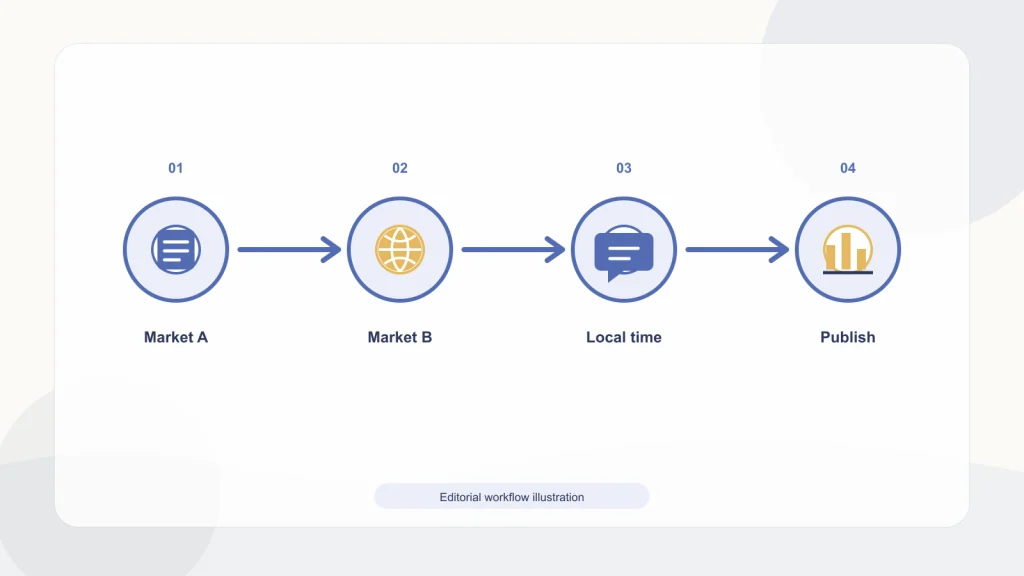
| Version | Audience context | What changes | What stays consistent |
|---|---|---|---|
| Global source asset | Shared campaign premise | Not a publishable market post yet | Verified product fact and core message |
| Market A | Local terminology and use case | Caption, example, destination, timing | Evidence scope and brand promise |
| Market B | Different season or buyer concern | Format, local proof, call to action | Campaign objective and claim boundary |
| Platform version | Platform audience behavior | Length, framing, subtitle, link placement | Approved facts and accessible meaning |
Plan for approvals, rights, and corrections
An approval system should identify who can approve copy, product claims, regional references, visuals, music, creator rights, legal language, and destination pages. One approval checkbox cannot establish that all of those questions were answered. Use separate review gates when risk differs. A routine educational post may need an editorial check; a comparative claim, customer result, regulated product statement, or paid creator asset may need additional review.
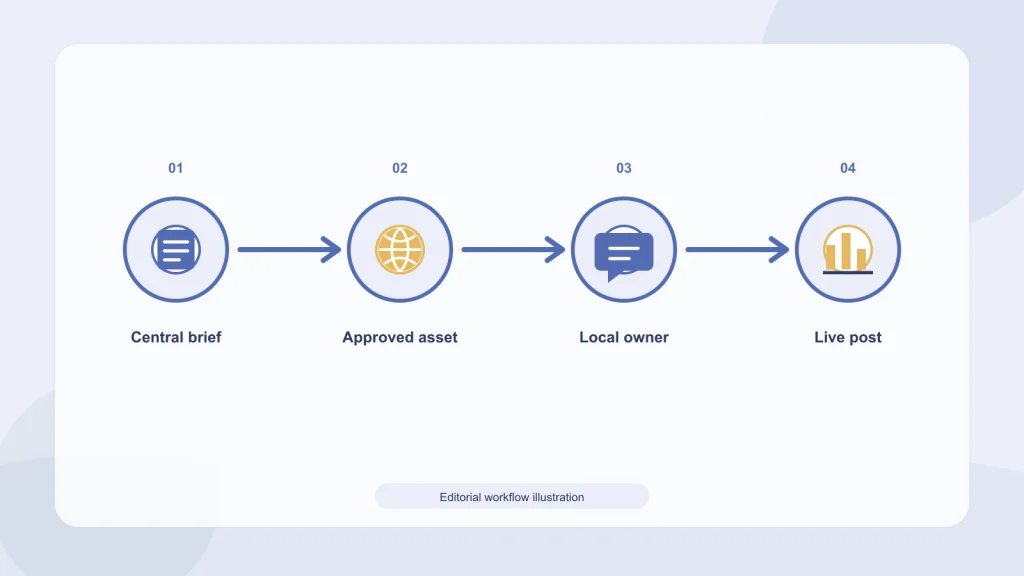
Give reviewers a complete packet rather than a caption alone: final text, intended placement, asset preview, audience and country, destination URL, any claims and their source, disclosure language, and planned date. The reviewer should not have to guess whether the image is a paid partnership, whether the offer works in that country, or whether a product feature is available to the named market.
Record the version approved. If the caption, image, offer, destination, or market changes materially afterward, reopen review. A quick edit can alter the meaning of a claim or remove a required disclosure. Keep a concise correction path: pause scheduled assets, update the live version where possible, communicate the correction, and document what changed. This is a quality-control recommendation, not a guarantee that every platform can instantly remove cached or shared copies.
Rights information belongs next to the asset reference. Record the creator or source, license or permission scope, allowed markets, usage period, paid-media rights, required credit, and expiry or renewal date. Do not treat public visibility as permission to reuse an image, video, quote, or customer story. If the team cannot confirm rights, replace the asset or hold the post.
Use the calendar to coordinate the publishing week
A weekly meeting should not become a read-aloud of every row. Use it to resolve exceptions: an unapproved claim, an asset delayed by a local reviewer, a destination page that is not ready, an overlap between campaigns, or a support gap during launch. Routine posts with complete records can move through the workflow without waiting for a meeting.
Give every post a status with a definition. “Draft” means the idea is being developed. “In local review” means a market owner has the complete packet. “Approved” means the identified review gates are complete. “Scheduled” means the platform scheduler shows the correct account, time, zone, asset, copy, and destination. “Published” means the team checked the live result. “Reviewed” means an owner has recorded learning against the intended objective.
Make the calendar show collisions. If three campaigns all require the same regional reviewer on one day, the risk is visible before deadlines fail. If the local team has a major exhibition or public holiday, it can flag the response implications. If a product launch changes dates, affected local versions can be identified by campaign ID rather than discovered through a search of every chat history.
The meeting also needs a stop rule. Pause a post when facts change, a link breaks, the landing page is unavailable, customer consent is unclear, rights expire, the market context becomes sensitive, or the team cannot handle expected replies. Pausing is a legitimate quality action. The calendar should show who can make that decision and how the team will notify affected owners.
Make measurement part of the brief
For each item, state what the post is expected to do: explain a problem, prompt a conversation, send a qualified visitor to a resource, support a launch, or collect questions for future content. Then choose a measure that fits. Reach or impressions can help describe distribution; replies and saves can help describe interaction; tagged sessions and landing-page events can help describe site behavior. None is a substitute for the others.
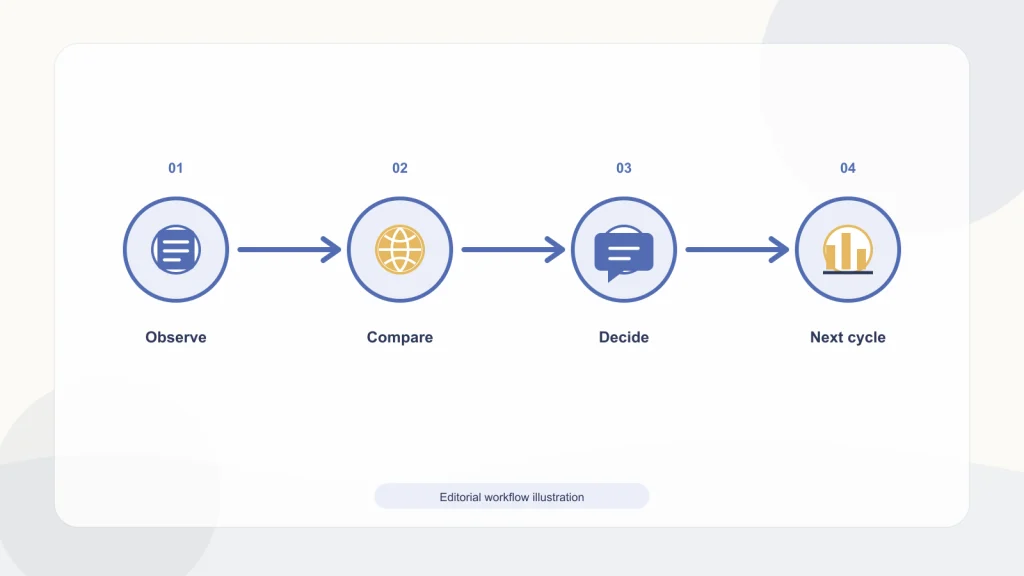
Use consistent campaign labels and check that the landing page matches the post’s promise and language. Google Analytics documentation describes campaign URL parameters such as source, medium, and campaign for categorizing tagged traffic. Agree on lowercase naming, separators, platform labels, market codes, and a privacy-safe campaign name before the calendar fills with one-off tags. Validate the URL, redirect, and analytics capture before scheduling.[2]
Keep platform and website reporting connected but distinct. A platform’s reach definition may differ from a website session, and a website session is not the same as a qualified lead. If the content supports a long buying journey, consider assisted paths and CRM feedback, while stating what the attribution model can and cannot establish. Do not credit a calendar row with a sale simply because a tagged click occurred before the purchase.
Review performance at the level that can inform a decision. A global average can hide a strong local version or a weak language adaptation. Compare similar markets and formats carefully, noting audience size, creative differences, paid support, and date range. A post with fewer clicks may still answer a high-value technical question; a highly viewed post may attract a broad audience with little business relevance.
Reuse the idea, not the exact post
Content reuse works best when the central team preserves the useful idea and lets each market and platform express it appropriately. A customer question might become a short video demonstration in one channel, a technical document in another, and a moderated discussion prompt where community rules allow it. The calendar should show the relationship between those pieces while keeping each asset’s owner, approval, and destination distinct.
Do not confuse reuse with publishing identical copy everywhere. A platform’s audience may encounter the post without seeing the original context, so each version needs a complete opening, clear caption, and useful next step. Make sure subtitles, image descriptions, and any text embedded in a visual remain accurate in each language. A centrally approved claim can still become misleading if a local crop removes its qualification or a translated headline changes the scope.
For campaigns with many assets, use a parent campaign ID and child asset IDs. That makes it possible to group learning without pretending every version was the same test. Preserve the language, format, paid support, market, and date with the result. If a local team changes the offer or audience, create a new version rather than silently overwriting the source row.
Protect capacity for timely local conversations
A calendar full of planned campaigns can leave no room to respond to a customer question that matters now. Reserve some editorial capacity for timely answers, but do not label unplanned posting as an emergency every week. A simple rule is to protect a modest share of production time for reactive work and require an owner to confirm both relevance and risk before a response goes live.
Reactive content still needs guardrails: check the source, verify the date, understand who is affected, and avoid turning a sensitive event into a sales hook. If the team cannot confirm the facts or local implications, wait. The editorial calendar can include a “hold for review” queue with an expiry date, so old ideas do not resurface after the context has changed.
Local teams should have a clear way to raise a pause request. A product issue, supply change, public event, rights concern, or safety update may make a scheduled post inappropriate. Give the local owner authority to escalate without having to prove that a crisis has already happened. The central editor can then decide whether to pause one market, all markets, or a particular message.
How to build a working global calendar
- Choose a limited set of priority markets. Name an owner and objective for each; leave unowned markets in research rather than pretending they are launch-ready.
- Define the audience task. Use customer questions or research to state what the post should help a person understand or do.
- Choose the platform format. Decide whether the idea needs a video, document, image sequence, short answer, or link post, and note any adaptation work.
- Create the source asset and evidence record. Link approved claims, sources, rights, and the central campaign concept.
- Assign local review deadlines. Work backward from publication and include language, product, legal, and link checks where required.
- Set publication time with a zone. Check local timing, holiday context, and response coverage; test daylight-saving changes for scheduled content.
- Prepare the destination and campaign tags. Match the local landing page to the post, apply the agreed UTM scheme, and test the final URL.
- Approve the full publishing packet. Review copy, image or video, disclosure, claims, rights, destination, market, and account together.
- Verify the live post. Check formatting, subtitles or accessibility details, links, and the correct local version after publication.
- Schedule a learning review. Record the intended measure, actual result, limitations, and next editorial decision.
A content calendar is not done when every date has a post assigned. It is ready when every scheduled item has an audience, purpose, local owner, complete asset, approved claim, usable destination, correct time zone, and a plan for review. If one of those is missing, the honest status is “not ready.”
FAQ
Should global brands use one calendar or a separate calendar for every country?
Use one source of truth with market-specific views when the team can manage permissions and filters reliably. Separate calendars can help local teams work, but campaign IDs, claims, approvals, and status definitions should remain consistent enough for central coordination.
What is the best time to post across all time zones?
There is no universal best time. Choose a local test window based on audience evidence, platform insights, support coverage, and the campaign’s purpose. Record the time zone and compare results without treating small samples as a universal rule.
How far ahead should a social media calendar be planned?
Plan stable campaigns farther ahead and leave room for timely customer questions or market changes. The right lead time depends on production, translation, approval, rights, and platform scheduling needs; a long-range calendar should mark ideas as provisional until evidence and assets are approved.
How should a brand localize social content?
Adapt the customer problem, example, terminology, offer, destination, and timing for the market, then have a local reviewer confirm the meaning. Translation alone does not verify product availability, cultural context, legal details, or whether the call to action works locally.
What should every calendar row include?
At minimum, identify market, language, platform, format, audience task, owner, asset, deadlines, publication time zone, destination, approval state, and review measure. Add claims and rights references when those affect publication.
How can a team avoid missing local holidays?
Maintain an official-source checklist for each priority market, assign a local owner to review it, and confirm whether the event affects the brand’s message or operating coverage. A holiday listing does not tell you whether a post is culturally appropriate.
How do you measure a global social content calendar?
Measure execution and outcomes separately: approved posts delivered on time, audience interactions, tagged visits, qualified actions, and useful local feedback. Compare like with like and state the market, date range, sample size, and attribution limits.
Next step: If your team needs a coordinated plan for platform roles, publishing, and community coverage, review Marketboo’s social media management service.
Close the loop before the next cycle
At the end of each month, keep the review practical. Which market had clear ownership? Which approval step caused rework? Which asset translated well into a native platform format? Where did the destination or tracking fail? What did local teams learn about customer questions? These answers improve the next calendar more than adding another color-coded status column.
Retire assumptions that no longer fit. A market may need a different schedule during a product launch, seasonal peak, public holiday, or platform change. A format that worked once is a hypothesis, not a permanent rule. Update the source record, keep the version date visible, and tell local owners what changed.
A social media content calendar for global brands works when global direction and local judgment meet early enough to shape the work. Put the audience and the responsible owner first; treat dates, formats, approvals, and measurement as connected decisions. That structure gives teams room to publish consistently without pretending every market is the same.
Connect the wider channel plan: For campaigns that need paid reach alongside organic social publishing, see Marketboo’s global paid media service.