Quick answer: A useful Google Ads course for export teams connects buyer search language to a viable offer, focused campaign, matching landing page, defined conversion, and search-term review. Learners should leave with a product-language map, keyword groups, draft campaign, conversion specification, page checklist, and query log. Ask whether practice uses a demo or live account, how current instructions are checked, and who reviews the work. Training can build skill, not guarantee qualified inquiries or export revenue; search volume and campaign benchmarks need current, relevant evidence.
For scale only, the IAB/PwC report put U.S. digital advertising revenue at $259 billion in 2024, up 15% year over year. [9] That industry statistic does not measure export search demand, qualified leads, training effectiveness, or a company’s likely return.

Start with the words a buyer would actually use
An export team may know its catalog by internal model names and technical categories. A prospective buyer may begin with an application, a material, a compliance question, a replacement part, or a supplier capability. A practical course helps learners investigate that gap before they build a keyword list. If the company starts from its own product vocabulary alone, it may miss the buyer’s language—or attract searches that are too broad to be useful.
Imagine a fictional maker of industrial filtration components hoping to reach maintenance teams and distributors in one market. The company has verified product sheets, an English-language product page, and a sales representative who can respond to technical questions. A learner should first extract approved product names, applications, specifications, supported markets, and known exclusions. Then they can brainstorm the words a buyer might use to describe the problem and record where each phrase came from. This scenario is hypothetical; it is not a Marketboo client story or a performance claim.
Google’s official keyword guidance is a useful reference for building a list around a business’s products and the ways customers might search. [1] It does not establish that any particular export keyword will generate a qualified buyer or that a course participant will achieve a specific result. The training exercise should therefore end with a hypothesis and a verification plan, not a revenue forecast disguised as a keyword spreadsheet.
Who should consider Google Ads training for export leads?
A course is relevant for a founder who wants to understand the campaign being run on the company’s behalf, a junior marketer who will prepare search campaigns, a sales and marketing team that needs shared inquiry definitions, or an in-house operator who already has access but lacks a structured review habit. Each learner needs a different level of practice. A manager may need to approve the market, offer, budget, and lead definition. An operator may need to build a draft, validate a conversion, and interpret a search-term report. Sales may need to explain what information makes a request actionable.
Before class, identify the business inputs available to students. They may need an approved product catalog, supported destination markets, shipping or service limitations, a website or landing page, a contact method, and a named person who owns incoming inquiries. If those materials are missing, the class can expose the gap, but it should not invent facts to complete the exercise. A training provider should be comfortable using an illustrative scenario until the company supplies approved information.
Decide whether the workshop is educational or operational. In an educational lab, participants can draft a campaign plan, review sample search terms, and practice interpreting clearly labeled fictional numbers. In operational coaching, someone may work in a real advertising account or website. That requires the company’s authorization, approved roles, an agreed change plan, a spend limit, and a clear stop procedure. A course should not blur those modes or treat access to a live account as the only evidence that learning has occurred.
The learning path: from product facts to search-term review
The sequence matters. Starting with campaign controls before learners understand the buyer, offer, page, and measurement goal can produce a technically tidy setup that answers the wrong question. A practical program should make the commercial logic explicit, then demonstrate how to represent that logic using the platform’s current tools. The module plan below is a buyer’s framework for evaluating course depth.
| Module | Question learners answer | Work product | Review standard |
|---|---|---|---|
| 1. Product and market intake | Which products and markets can the company support? | Approved-facts sheet and market constraints. | Each product statement has an internal source and owner. |
| 2. Buyer-language research | How might a qualified buyer describe the need? | Phrase bank with source, intent hypothesis, and uncertainty. | Product terms are separated from informational and supplier intent. |
| 3. Keyword grouping | Which terms belong together for an offer and page? | Keyword map with themes, exclusions, and match rationale. | Every group has a clear buyer need and a destination. |
| 4. Search campaign structure | How will geography, ads, and groups reflect the plan? | Draft campaign architecture and approval checklist. | Markets and offers align with actual business capability. |
| 5. Ad and landing-page alignment | Does the message set a truthful expectation and answer the buyer? | Ad concept and page review. | Claims are approved; the page fulfills the stated next step. |
| 6. Conversion definition | What action is recorded and what does it mean to sales? | Conversion specification and test notes. | Platform event is not conflated with a qualified opportunity. |
| 7. Search-term optimization | What searches actually triggered delivery and what should happen next? | Decision log: retain, investigate, exclude, or map to a new page. | Actions follow evidence and a review date, not reflex. |
Module one: prepare a product and market brief
Students should begin with a short intake, not with a blank keyword planner. For each product family, record the approved name, common technical variants, application, buyer role, target market, language, commercial availability, and the page that explains it. Add the source and owner of every consequential fact. If a specification or certification is uncertain, mark it for review instead of using it in an ad.
Next, identify the business limitations. Does the company ship to the proposed region? Are there minimum order requirements? Does a local distributor handle the sale? Can a specialist answer questions in the buyer’s time zone? Are there products or applications that must not be promoted? These questions are not advertising settings, but they shape whether the campaign can fulfill a searcher’s expectation.
When a business has several product families, learners should prioritize based on actual readiness: content quality, stock or production capability where relevant, margin or strategic importance if the business chooses to use it, and the team’s ability to respond. The course should not make these decisions on behalf of the company. It can teach a worksheet for comparing options, but the people responsible for commercial strategy must supply the priorities and constraints.

Module two: translate buyer language into intent hypotheses
Build the initial phrase bank from multiple sources available to the company: product documentation, questions from distributors, sales call notes that may be used for this purpose, customer support themes, relevant industry terminology, and current search-platform tools. Record the date and source for each phrase group. A phrase from a salesperson can be a useful clue, but it is not proof that many buyers search for it. A phrase suggested by a tool is also a clue, not a guarantee of commercial intent.
For each phrase, ask what a person might want. A search for “how does industrial filtration work” may be informational. A phrase including a precise product class and a region could suggest supplier research. A model number may indicate an existing user looking for a replacement. These are hypotheses to inspect against current search results and the company’s own offering. A training course should show how the learner documents the interpretation, including when the query is ambiguous.
Use a query map to keep the research disciplined. For each cluster, capture the phrase, likely intent, buyer role, geography, product fit, intended page, and uncertainty. Add a negative or exclusion question: could this phrase attract a consumer, a job seeker, a student, an unsupported application, or a market the business cannot serve? Do not add negatives mechanically from a list; inspect each word in context and confirm that an excluded search is genuinely irrelevant.
Google’s Ads API documentation, updated October 30, 2026, explains how keyword ideas can be generated from keyword or website seeds with language and location context. [1] Treat suggestions and historical metrics as inputs to a market hypothesis, not proof that an export buyer will qualify or convert.
Module three: group keywords around an offer, not a spreadsheet label
A keyword group is useful when its phrases express a sufficiently related need and can lead to a page that answers that need. The learner should be able to explain the group in plain language. If a group mixes product research, repair instructions, hiring queries, and distributor searches, it may be too broad for a single message. If it splits every small wording variation into its own group without a practical reason, it may be difficult to manage or evaluate.
The course should teach learners to review current match behavior and platform controls using first-party documentation. Because product interfaces and matching details can change, copied screenshots and rules-of-thumb need an as-of date. Use a live account only if the business has approved it. In a class exercise, a prebuilt example can show the structure without requiring students to alter a campaign or spend company money.
| Example phrase type | Possible intent to investigate | Potential content destination | Question before activation |
|---|---|---|---|
| Product family plus supplier term | Compare vendors or request a quote. | Product family or supplier page. | Can the company support that market and inquiry type? |
| Application plus component type | Find a solution for a defined operating problem. | Application page with substantiated details. | Has the product owner approved the application claim? |
| Model number or specification | Find a match, replacement, or technical detail. | Specification page or technical request route. | Can the page confirm compatibility without overclaiming? |
| “How to” or definition phrase | Learn about the category before choosing a supplier. | Educational resource or comparison guide. | Does the business have a useful resource and follow-up path? |
| Unrelated application or unsupported region | May be irrelevant or outside company capability. | Usually no paid destination until reviewed. | Is exclusion justified by the actual business scope? |
Module four: design the search campaign around geography and control
For an exporter, geography deserves deliberate treatment. Confirm the markets in which the business can sell or support a buyer. Note whether the sales team can respond in the relevant language and time zone. Ask how the company handles shipping, distributor relationships, taxes, service, and product restrictions. These operating facts should guide the campaign plan; learners should not assume that selecting a country setting solves them.
Ask the instructor to show the campaign architecture before opening the platform: market and language, objective, keyword themes, offer, destination, conversion definition, and review owner. Then compare that plan with the current interface. This order highlights whether a platform choice supports the brief instead of allowing the interface to dictate strategy. Any control that changes frequently should be accompanied by a first-party source and a review date.

Module five: write ads that match a useful landing page
An ad should make a clear, supportable promise about what the visitor will find. The landing page should deliver on that expectation and make the next step understandable. In training, the learner can compare the search phrase, the ad concept, and the destination side by side. If the ad says “technical specifications,” the page should contain or explain how to obtain the relevant specifications. If the visitor is invited to request a quote, the page should say what information is needed and what kind of response to expect, provided the company has approved those statements.
Teach claim review as a practical editing task. Highlight every product, performance, certification, delivery, and customer statement. For each, identify an approved source and reviewer. Remove or qualify any claim that lacks evidence. Testimonials and case studies need appropriate permission and context. A student should not create sample copy that sounds like a real customer endorsement when it is fictional.
The course can also review page usefulness: clear product description; buyer-oriented organization; readable technical language; contact details; relevant supporting content; market fit; and a proportionate request for information. The training assignment should describe why the page answers the query, not claim that any checklist guarantees a conversion rate. A site may require technical, accessibility, privacy, or legal review outside the instructor’s expertise.
Module six: define conversions in business language
Before a student configures measurement, the team must decide what action it wants to observe. A click on a contact link, a submitted form, a scheduled call, a sales-accepted inquiry, and an order may be distinct milestones. The business should define them and name the system that records each one. A platform’s conversion action is a tracking representation; it does not automatically mean that the action is commercially qualified.
Write a conversion specification with the event name, plain-English definition, user action, source, owner, validation method, and any known limitations. Record whether it is a primary action for the current learning objective or a supporting signal. A course should teach learners to test a setup with authorized test data and document what they observe. It should not tell a student to install tags, change consent controls, or send sensitive information without the company’s technical and privacy approval.
Google Ads API conversion-management documentation, updated October 30, 2026, describes managing conversion actions and measuring valuable actions after ad interactions. [4] The company still defines what counts as a qualified inquiry, and technical tracking does not establish causation or legal suitability.
For export leads, the sales handoff is essential. Decide who reviews incoming forms, what response time the business can support, what information is needed to qualify the request, and how status returns to marketing. If the team lacks a reliable sales feedback loop, a campaign report may overstate usefulness. Training should help the learner see the gap and propose a measurement plan, not pretend the ad platform can classify a sales opportunity without an agreed business definition.
Module seven: use search terms to create a learning loop
A search-term report can help a team inspect the queries associated with ad delivery, subject to the platform’s current reporting behavior and limits. A practical course should teach learners to examine the report’s date range, filters, campaign, status, and available fields before taking action. The exact set of visible terms can vary; never tell a student that one report necessarily contains every search.
For each term, ask four questions: Is it relevant to a product the company supports? Does it reflect the intended buyer or a plausible adjacent need? Does the current page answer the query? What action is justified by the evidence available? Possible actions include retaining the theme, investigating it further, excluding it with a reason, adjusting the message, or creating a better destination. A negative keyword decision can have consequences across related searches, so the learner should document the rationale and check the current account behavior.
Make a term-review log with the query or theme, date, market, landing page, interpretation, evidence, decision, owner, and review date. The log should show uncertainty. A single unexpected query may be noise or a signal to improve the page; it does not automatically support a broad conclusion about demand. Likewise, a relevant-looking phrase does not prove that the resulting lead is qualified.
How to build a responsible first search campaign plan
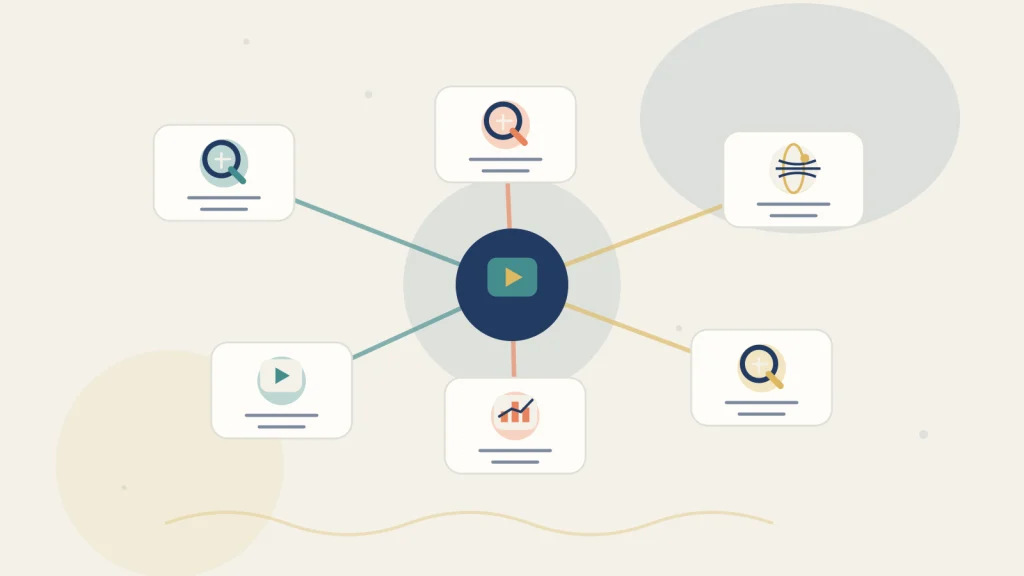
This sequence is a learning workflow. It is not a universal setup recipe, a substitute for current Google Ads help, or permission to launch. A learner should use it to prepare a draft that the appropriate business owner can review.
- Choose one business task. State which buyer need the course exercise addresses and what the learner is expected to produce.
- Confirm product and market facts. Collect approved product statements, supported geographies, language capacity, and any exclusions from the relevant owners.
- Describe the buyer’s language. Build a sourced phrase bank and label each intent interpretation as a hypothesis.
- Group related search themes. Connect each group to a defined offer, a suitable destination, and a list of potentially irrelevant queries to review.
- Draft campaign controls. Document market, language, budget authority, owners, approval gates, and the current platform settings to verify.
- Write and review ad concepts. Match the message to approved evidence and identify who reviews product claims and customer proof.
- Review the landing page. Confirm it answers the searcher’s need, delivers the stated offer, and has an operational follow-up owner.
- Specify the conversion. Define the user action and business meaning, choose the approved measurement method, and document validation and limitations.
- Prepare a search-term decision log. State the review fields, potential actions, approver, and date for the first check.
- Present the draft for approval. Separate facts, hypotheses, open questions, and proposed next steps. Do not publish or spend until authorized.
What a good instructor should make visible
A relevant instructor can explain which parts of the course come from platform documentation, which are their own recommendations, and which depend on the company’s market. Ask for the instructor’s current biography, specific work relevant to export or B2B search, examples of instructional materials, and the date those items were checked. If a provider shows a case study, ask what the business sold, where it operated, what period was measured, how the outcome was defined, and what the instructor personally did. A case example is context, not a promise that another business will get the same result.
Ask whether the course is current and how updates are handled. Google Ads interface details can change; a slide deck with no revision date is difficult to evaluate. A good course gives learners a method to find current official instructions and understand when a strategic principle differs from a product-specific step. It can include the source link and checked date next to screenshots or operational notes.
Find out who reviews student work and what feedback looks like. A reviewer might mark whether product facts are sourced, query groups have a stated intent, each ad has a relevant page, conversions have a defined meaning, and search-term actions are explained. A clear rubric is more informative than a generic completion certificate. The course should say whether feedback is written, live, individual, or limited to selected exercises.
Ask about practice access. Will students use a classroom account, screenshots, a demo, an offline worksheet, or a client account? If it is a real business account, clarify who authorized it, what actions are allowed, who approves changes, whether spending is permitted, how customer data are handled, and how access ends. A provider that cannot answer should not pressure the learner into handing over credentials.
Common gaps in courses for foreign-trade lead generation
- Product terms become the whole keyword plan. Internal catalog language does not automatically match buyer search language.
- Search volume is presented without context. A number needs a source, market, period, match assumptions, and a clear statement of what it does not prove.
- Every form submission is called a qualified lead. Qualification belongs to an agreed business definition and sales process.
- Geography is treated as a setting only. Shipping, serviceability, language, distributor coverage, and follow-up remain business responsibilities.
- Campaign structure is taught as a universal formula. The appropriate structure depends on control needs, offers, markets, account context, and current product behavior.
- Conversion tracking is shown without validation. Learners need to know what the event means and how the team checks it.
- Search-term actions are automatic. Exclusions and expansions need context, rationale, and review.
- Results are promised before the brief is understood. No instructor can guarantee an inquiry or revenue outcome from a generic course.
These are questions for a prospective student to ask, not an accusation against every program. A short course can be a good fit when its scope is explicit—for example, an introductory keyword-research lab or a review of an existing conversion map. Make sure the course duration and support match the breadth of work being promised.
Choose training based on the gap your team has
Different learning formats support different tasks. Self-paced lessons can introduce concepts; a live workshop can let learners produce a draft; office hours can answer bounded questions; account coaching can review work in context; and managed execution can move tasks off the internal team’s plate. Before comparing providers, decide whether the business needs knowledge, feedback, implementation, or temporary capacity.
| Format | Good fit when | Deliverable to request | Boundary to clarify |
|---|---|---|---|
| Self-paced course | Learners need flexible, introductory instruction. | Current syllabus, exercises, and any assessment. | Who answers questions and how current are lessons? |
| Live keyword workshop | A team needs to map one product family and buyer need. | Reviewed phrase bank and query-intent map. | Are real company terms or synthetic examples used? |
| Campaign practicum | Operators need to draft a structured search plan. | Campaign architecture, ad-page match, approval checklist. | Is this a draft exercise or a live account change? |
| Measurement review | The company needs to clarify events and lead definitions. | Conversion specification and validation questions. | Which technical or privacy reviews remain outside scope? |
| Ongoing coaching | In-house staff need recurring review while they execute. | Decision log, feedback cadence, and named owners. | What support ends, and who controls the account? |
| Managed service | The business needs an outside team to carry out agreed work. | Written work scope, reporting, approvals, and handoff plan. | Who approves claims, spend, changes, and access? |
Build a review habit that survives the course
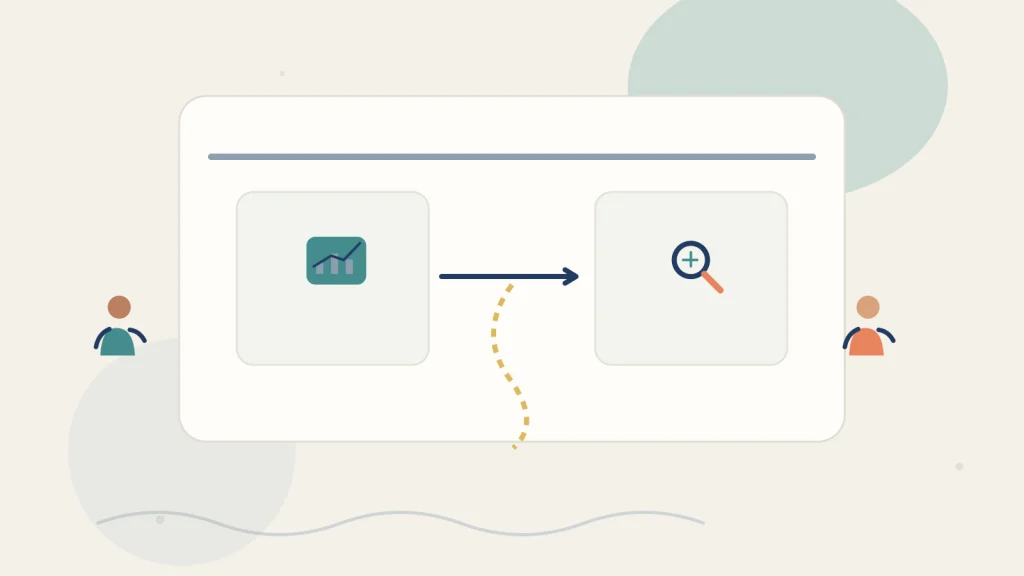
Assign a follow-up task before the first class. The learner might prepare a phrase map for one product, assess one destination page, draft a conversion definition, or review a sample search-term report. Give the student the approved product source and a named reviewer. This allows the course to move from abstract knowledge to an observable piece of work without forcing a live campaign launch.
Keep the query vocabulary current. Sales and support teams can notice new buyer terms; product changes can make an old page incomplete; a distributor may introduce a local expression; and search reports may reveal unexpected wording. Record the source and date for new terms and ask the product owner before expanding claims. Do not turn an anecdote into a demand estimate without other evidence.
Review training quality separately from campaign outcomes. Did learners produce the agreed work? Could they explain the reasoning? Did the instructor flag uncertainty and unsupported claims? Were questions answered within the agreed scope? Campaign results require their own measurement and business interpretation; course attendance alone does not establish causation or future performance.
Questions to ask before enrolling
- Which export-business role and level is the course designed for?
- What should a learner be able to explain or produce at the end?
- Does the syllabus include buyer-language research and search intent, not just platform navigation?
- How do students connect keywords to approved offers, geography, and landing pages?
- How are conversions defined, validated, and distinguished from sales-qualified inquiries?
- Does the course teach how to review search terms and document an action rationale?
- What practice environment is used, and does any activity touch a live account?
- What credentials or work examples can the instructor verify, and what limits apply to case results?
- How are materials updated when Google Ads controls change?
- What feedback and post-course support are included, for how long, and on what tasks?
Frequently asked questions
What should a Google Ads course for export lead generation cover?
It should connect product and market facts to buyer-language research, keyword themes, search campaign planning, ad and page alignment, conversion definitions, and ongoing search-term review.
Do I need keyword research before taking a course?
No, but bring product information, supported markets, and known buyer questions if available. A good course should teach how to develop and verify a phrase map rather than assume one is complete.
Can Google Ads guarantee qualified export leads?
No course or platform setup can guarantee qualified inquiries or revenue. Product fit, market, offer, page, measurement, competition, budget, and sales response all affect business outcomes.
Is a form submission the same as a sales-qualified lead?
No. A form event records an action under a defined setup; the company must define what makes an inquiry qualified and how sales records that decision.
How often should a team review search terms?
The interval should reflect the account’s activity, available evidence, and operating capacity. Avoid a universal cadence; agree on a review owner and use a documented decision log.
Should beginners manage a live advertising account during class?
Only if the business authorizes the access and defines approved changes, spend limits, data boundaries, and a reviewer. A draft or synthetic exercise can teach the workflow without publishing.
What is a useful first assignment after training?
Create a query map for one product and market, connect each theme to an approved page, list missing evidence, and have a product or sales owner review it.
Conclusion: learn the chain from query to qualified conversation
Google Ads training for export leads should teach more than how to create a search campaign. Learners need a method for moving from verified product facts and buyer language to keyword groups, market controls, useful landing pages, conversion definitions, and a reasoned search-term review. The best evidence of practical learning is a reviewed campaign plan or decision log that makes assumptions visible.
Compare course providers by the artifacts students create, the instructor’s verifiable background, the freshness of the material, the practice environment, and the feedback and support boundaries. A course can help an in-house team build skill; it cannot replace commercial judgment, product review, measurement ownership, or sales follow-up. Start with one product family and one supported market, then decide what the evidence justifies next.Review the current training scope:See Marketboo’s hands-on ad coaching service areas and request a dated Google Ads syllabus, trainer details, practice plan, and feedback terms.Need to scope a team learning project?Contact Marketboo with one target product, market, learner role, and the campaign task the team wants to understand.