

Direct answer
TikTok social media management pricing for a small business depends on what the provider is actually doing: planning, filming, editing, posting, moderation, creator coordination, paid-media management, or some combination. Compare proposals only after you define the same deliverables, cadence, review process, rights, and response window. Keep recurring service fees separate from production costs, creator fees, licensing, travel, and ad spend. There is no single public price that fits every market or package. A clear proposal states its assumptions, exclusions, client workload, contract terms, and change-order rules so you can compare the full operating cost rather than a headline number.
TikTok social media management pricing for small business starts with the work hiding behind “management”
The phrase “TikTok management” can describe very different jobs. One quote may cover a strategy call and a few edited clips from footage the client supplies. Another may include concepting, script development, on-site filming, editing, subtitles, publishing, comment moderation, creator outreach, paid campaign coordination, and a report. Both providers can call their work “management,” while the amount of labor and responsibility differs substantially.
That is why TikTok social media management pricing for small business cannot be compared as if every package were a standard product. The first task is to write a small scope that describes the business need. Does the business need creative production because no one can film consistently? Is the owner looking for a content calendar and feedback while keeping execution in-house? Are creator partnerships part of the plan? Does the request include paid advertising or only organic publishing? A price without those distinctions may be low because it excludes the work the business expects.
Small businesses also need to account for their own time. A vendor may charge less when the client provides finished footage, product details, approvals, and replies to technical comments. That may be a sensible arrangement if a staff member has reliable capacity. If the owner is expected to source ideas, film, approve, answer comments, and prepare reports, the apparent savings may simply move the work onto an already busy team.
Why there is no one-size-fits-all benchmark
The workbook that supplied this topic explicitly says real-time keyword metrics are not connected. It therefore gives no verified search-volume figure, and it does not contain a market-wide agency-price dataset. Published social reports do not solve the pricing question: they can describe adoption or reported marketing practice, but they are not a quote survey with consistent scope, geography, sample, and date.
For example, Pew Research Center’s 2026 U.S. fact sheet says 31% of U.S. adults surveyed report ever using TikTok. That is a population-use figure from a survey of 5,511 adults, not a demand forecast, campaign rate, or management-fee benchmark. DataReportal’s global report uses advertising-reach estimates; those are not unique users or a small-business agency cost study. The Content Marketing Institute and MarketingProfs’ 2027 B2B report covers marketer responses, not vendor prices for TikTok packages.
The useful conclusion is not that price is unknowable. It is that a responsible comparison must control the variables. A small shop buying editing from client-supplied clips is comparing a different service from a local filming package with talent, multiple versions, moderation, and paid amplification. State that difference instead of publishing a misleading “average” with no basis.
Build the quote from cost components
Separate the recurring service from inputs that are billed differently. A proposal can list a monthly management fee while production, creators, music, travel, props, and ads sit elsewhere. Ask for the fee structure and a plain-language description for each line. The goal is not to force every provider into one accounting method; it is to make the complete expected commitment visible.
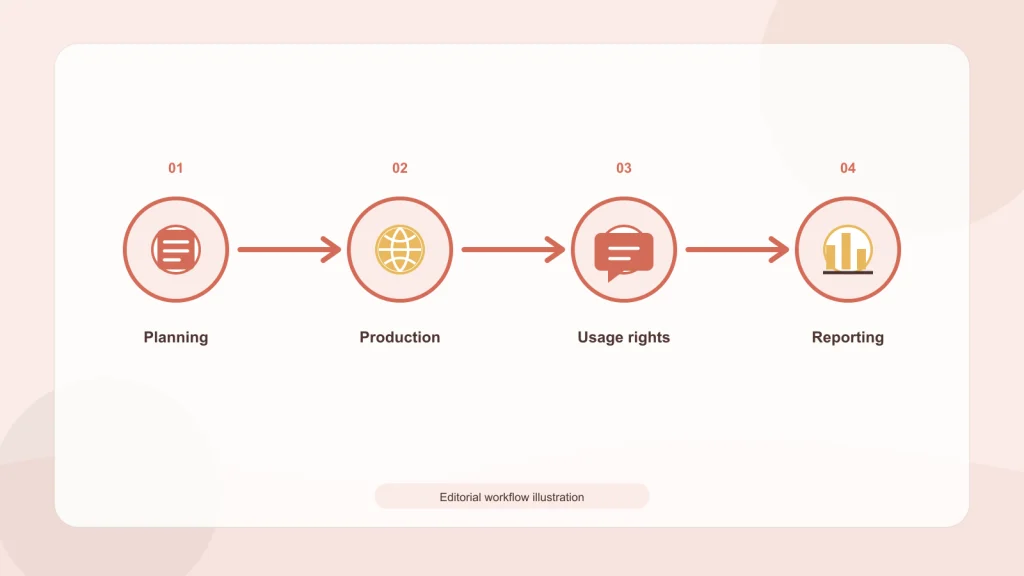
| Cost line | What it may cover | Questions to resolve |
|---|---|---|
| Strategy and planning | Audience, positioning, content pillars, calendar, campaign planning | How often is planning refreshed? What research is included? |
| Creative development | Concepts, scripts, hooks, storyboards, product briefs | How many concepts and revision rounds? Who supplies facts? |
| Production | Filming, editing, voice, subtitles, equipment, location, travel | Are shoots remote or on-site? Who appears? What files are delivered? |
| Publishing and operations | Scheduling, captions, profile upkeep, platform coordination | Which account and channels? Who owns access and approvals? |
| Community moderation | Comment review, inbox triage, response drafting, escalation | Which days, hours, languages, and response boundaries? |
| Creator work | Outreach, negotiation, talent fee, usage license, whitelisting | Which usage rights, territories, duration, edits, and paid uses? |
| Paid media | Campaign setup, optimization, reporting, ad creative | Is the service fee separate from media spend? Who pays the platform? |
| Measurement and review | Performance report, monthly discussion, test recommendations | Which metrics, systems, period, and attribution limits? |
| One-time setup | Account audit, tracking review, access setup, initial strategy | What is delivered once, and what repeats? |
Separate fees, production budgets, and ad spend
A clean proposal makes three broad buckets visible. The service fee pays for the provider’s labor and agreed management responsibilities. The production budget pays for items needed to make content, such as a shoot, creator, location, or licensed asset. The media budget is money paid to the platform for advertising. Some contracts combine a few of these; the quote should still show what is inside each amount and who controls it.
This distinction helps a small business understand why two proposals with similar monthly totals can carry different risks. If one provider includes a limited shoot but excludes travel and talent, while another includes editing but expects the client to film, neither is necessarily more expensive until the assumptions are applied. The business should also ask whether unused production capacity carries forward, expires, or is billed only when used.
Avoid treating an ad budget as agency revenue or as a guaranteed input to organic activity. If paid campaign management is included, get the account owner, billing method, spend approval, and reporting definitions in writing. Ask how much creative testing is part of the scope and what additional work would trigger a change order. The phrase “ads included” can refer to oversight, creative, platform spend, or all three.
Creator work needs its own line of sight. Compensation for creating an asset is different from permission to use it on the business’s account, in an ad, on a product page, or in another country. Rights can depend on the contract. Confirm the creator’s deliverables, approval process, disclosure, usage period, territory, paid amplification, editing, and renewals before the business bases a campaign on that material.
Production cadence changes the real price
Frequency is only one production variable. A single original shoot might produce several useful edits, but not every clip can be cut into a distinct asset without losing context. A product tutorial with multiple steps can need more preparation than a simple visual demonstration. A business that requires a founder on camera may need rehearsal and scheduling. A business with technical products may need an expert present and a longer fact-review cycle.
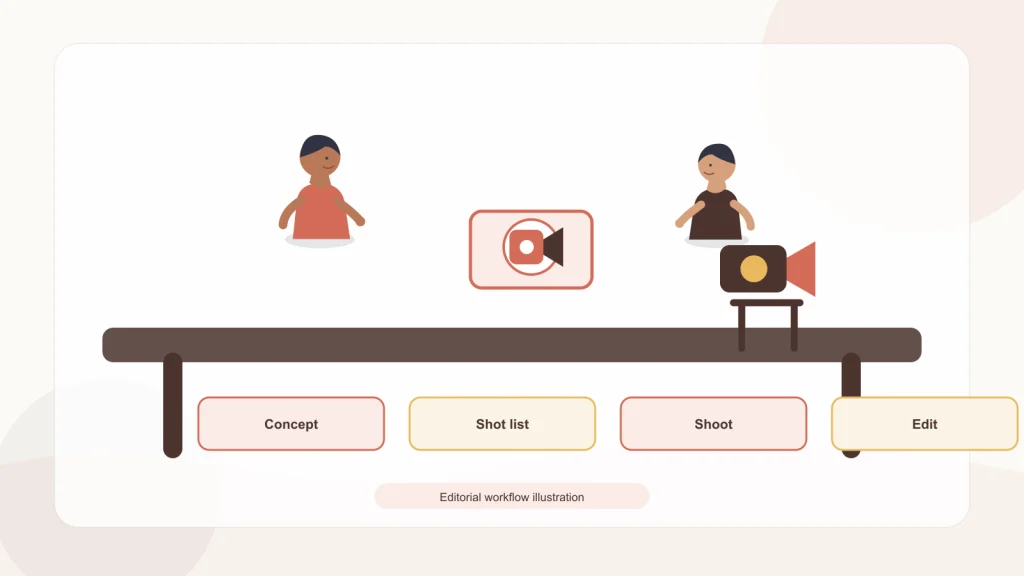
Ask how the team handles source material. Does the client film on a phone and upload files? Does the provider give a shot list? Are raw clips included? Is there a remote recording workflow? What happens if product samples arrive late or fail a quality check? Who gets an additional edit if a claim must be corrected? These are not administrative details; they determine the amount of work and the number of usable assets.
Set expectations for revisions. “Unlimited revisions” sounds generous but can encourage a cycle where nobody agrees on what approval means. A clearer arrangement defines one content review for factual accuracy and one for style or brand preference, then explains what happens when the brief changes or a new stakeholder enters late. Technical and legal changes may need different treatment from subjective line edits.
The business should estimate its own review time too. Each video may require an owner to confirm product facts, check captions, approve a market claim, and verify the landing page. If several people must review every asset, the calendar needs a realistic buffer. A vendor cannot publish efficiently when approval capacity is missing, and a low invoice does not remove that bottleneck.
The questions that expose scope gaps
Use the same questions with each provider. Ask for deliverables per cycle, but also ask what makes a deliverable complete. Does “one video” include a concept, script, shoot, edit, caption, subtitles, thumbnail or cover, publishing, and a source file? Does “community management” mean monitoring, responding, or escalating for approval? Does “creator coordination” mean outreach only or a signed usage license too?
Ask what the provider expects from the business. The answer may include product samples, filming space, staff time, claim approval, customer-service answers, inventory updates, and access to the account. Put those inputs beside vendor outputs. A service scope is a two-sided operating agreement, not a list of work the agency performs in isolation.
Request a sample calendar and a sample report, with any confidential client information removed. The calendar should show how ideas become assets; the report should define its measures. If a provider uses a performance example, ask what the business objective was, which market and period it covered, which changes occurred, and whether the result is directly comparable. An attractive chart is not evidence that your shop will get the same result.
| Proposal check | Good evidence | Follow-up if unclear |
|---|---|---|
| Deliverables | Exact asset types, quantity assumptions, and completion definition | What is excluded from “one video” or “one post”? |
| Client inputs | Named approver, product facts, response owner, filming needs | How much staff time does the vendor assume? |
| Revisions | Rounds, turnaround, and change-order rule | What if the brief changes after filming? |
| Rights | Creator, music, footage, territory, duration, placements | Can the business reuse it after the contract ends? |
| Community | Days, hours, language, escalation, response boundary | Who handles an urgent or technical message? |
| Reporting | Metric definition, data source, date range, platform split | Which conclusions are observed versus attributed? |
| Exit | Files, access removal, open work, renewal and notice | What does handover include and when does it occur? |
Compare the total commitment, not the headline
A useful comparison sheet lists recurring fees, setup charges, production, talent, licensing, travel, media, taxes, and known optional work. It should also record the contract term, renewal trigger, notice period, payment timing, scope assumptions, and client hours. That helps finance compare likely spend and operating effort side by side.
Avoid building a false-precision forecast. If the provider cannot know how many edits will require reshoots or which creator will be selected, show a range or mark the amount as quote-required. If an optional shoot is not guaranteed to happen every month, separate a baseline from an occasional cost. A spreadsheet with precise cents is not more accurate if its inputs are guesses.
The business can normalize offers by asking providers to quote the same scenario. For example: a specified number of original concepts, a stated number of edited assets, a language, a market, client-supplied products, one review cycle, defined moderation windows, rights for owned channels, and a separate ad budget. The scenario is a comparison tool, not a recommended posting prescription. Vendors can then explain the differences in their approach without hiding them in incomparable packages.
When a quote is much cheaper or more expensive than others, investigate rather than assume. The lower proposal may rely on client footage and no community work. The higher proposal may include production capacity, localized review, or usage rights. Either could be correct for the business. Ask what risk or labor remains with the client under each option.
Contract terms that affect what you actually pay for
Review the contract as carefully as the content plan. A short monthly fee may sit inside a longer minimum term. Auto-renewal and notice requirements can change the commitment. Deliverables may be “up to” a number, subject to client materials or approval. Additional revisions, reshoots, urgent posts, or new platform requests may be billed separately. Ask for definitions in plain language before the work starts.
Check who owns the social accounts and who pays the platform directly. The business should retain administrative control and recovery access. Identify whether the provider can publish independently or needs approval. Specify how quickly the business must respond to a draft and what happens if it does not. A late approval should not silently become a public post with unreviewed facts.
Rights and termination deserve special attention. Who keeps raw footage, final edits, scripts, captions, and licensed material? Can the business continue using a creator asset when the contract ends? Does the license include paid placements and all intended markets? If the agreement ends mid-cycle, what work and files are delivered? Ask for removal of access and handover of open conversations.
If creators or customers appear, ensure that the business has the right permissions and disclosures. The FTC’s U.S. Endorsement Guides and Consumer Reviews and Testimonials Rule are sources to review for U.S. campaigns. They do not replace local legal review for an international audience. The contract should assign responsibility for collecting approvals without pretending that a vendor can guarantee universal legal compliance.
How to compare a TikTok management quote in seven steps
- Define what the engagement must cover: strategy, production, publishing, moderation, creator coordination, paid management, or a combination.
- Set the market, language, audience, product, available source material, on-camera participants, and internal claim approver.
- Ask every vendor to price the same deliverables, cadence, revisions, coverage window, usage rights, and handover requirements.
- Separate recurring service fees from setup, production, travel, creators, licensing, paid placement, taxes, and optional additions.
- Review the sample production schedule; record client labor, turnaround assumptions, and delays caused by missing assets or approvals.
- Compare contract term, renewal, notice, account access, raw files, creator rights, termination, and change-order rules.
- Choose the offer that meets the real need within a sustainable budget, then agree on a review date and stop-or-continue criteria.
Before signing, convert the chosen proposal into a one-page scope summary that both the owner and provider can use. Include channels, what counts as a deliverable, who approves, when the business must supply information, what costs can change, and which results are measured. This is especially useful when the original proposal was written by a salesperson and delivery moves to another team.
How Marketboo fits into the comparison
Marketboo’s social media page describes strategy, content planning and creation, community management, publishing/account coordination, and reporting. That page is a first-party service description, not an independent TikTok result or platform-specific price promise. The live page also presents general social-support plan information, but applicability to a small business’s TikTok-specific production and licensing needs is not established by that display alone. Confirm scope directly before relying on any amount.
Next step: If these workstreams match what you are seeking, review Marketboo’s social media management service and ask which pieces fit your platform, market, production capacity, and approval process. Bring the same line-item checklist you use with other vendors.
Next step: A useful discussion begins with the content you can already supply, who can appear or approve, how often the business can review work, and whether creator or paid campaigns are in scope. You can contact Marketboo to request a scoped discussion. The outcome should be a proposal with explicit deliverables and exclusions, not a promise to “go viral.”
Three quote patterns, three different obligations
Consider three hypothetical proposals. The first is a planning-only arrangement: the owner films and posts, while the provider develops ideas and reviews selected drafts. The second includes editing and scheduled publishing from client-supplied footage, but no filming or comment responses. The third includes original filming, creator coordination, moderation during a stated window, and a monthly performance review. These examples illustrate scope differences; they do not represent market packages or typical prices.
The first option may suit a business with an active owner and limited need for outside execution. It should still define how many planning sessions and draft reviews are included, how quickly feedback is expected, and how changes are handled. If the owner cannot film or publish, a strategy-only agreement leaves the central work undone.
The second shifts the production burden to the business. Ask what minimum footage quantity and technical quality the provider expects, what happens if the footage is unusable, whether captions and subtitles are part of editing, and whether the provider stores original files. Also define whether publishing includes profile changes, comment checks, or merely scheduling approved assets.
The third places more coordination and rights work on the provider, but the contract should identify the boundaries. Does a creator’s compensation come from a separate budget? Can the brand use the content in an ad, on its product page, or in another country? Does moderation include responses or only triage? Which party approves claims and handles an urgent issue? A higher quote may reflect real work, but it should be traceable to deliverables and responsibility.
Common reasons the initial quote changes
Scope changes when the business adds a market or language, needs an extra edit, delays a product sample, changes an offer, requests a rush turnaround, or wants to use a creator asset in a paid campaign. Each change can add work or require a new permission. Ask vendors to give examples of what triggers a change order and how they will price it before the request arrives.
Production plans also depend on dependencies. If product samples are shipped from another country, filming dates may move. If an engineer can only review once each month, the content schedule should reflect that. If the owner must be on camera, calendar availability becomes a production input. A proposal is more useful when it names these dependencies than when it assumes they will sort themselves out.
Make a small risk reserve in the internal budget for known unknowns, but do not disguise it as an agency charge. A contingency belongs to the business’s planning. The vendor should separately explain the unit or basis for extra work, such as a reshoot, rush edit, new localization, additional revision, or expanded rights. That makes approval straightforward when a genuine change occurs. Agree who may approve the change and how the revised timing affects publishing, so a rushed request does not quietly displace already approved work.
A low quote can still be expensive to operate
Price comparisons should include coordination time, not just the invoice. A quote that excludes moderation may require an owner to check comments several times a day. A client-filmed package may require a staff member to plan the shot, capture multiple takes, transfer files, and clarify product details. If that work interrupts sales or fulfillment, the business should acknowledge the internal cost even if it does not appear on the vendor bill.
That does not mean outsourced production is always the better choice. A founder with a simple product and a comfortable phone-camera workflow may produce credible material in-house. A provider may add more value through editorial planning, file cleanup, caption writing, or performance review than through a studio shoot. Match the service to the constraint that is actually limiting the business.
Include decision latency in the comparison. If three reviewers need a week to approve each script, a high-frequency publishing package may create unused capacity. If the business can approve quickly but has no one to respond to questions, a publishing-heavy plan may create a moderation gap. The proposal should explain what happens when the business’s own process becomes the bottleneck.
When calculating a monthly commitment, show the expected vendor amount, known outside costs, internal hours, and uncertain costs on separate lines. If the creator budget or media spend is not yet known, mark it as pending rather than filling in a placeholder number that readers might mistake for a typical amount. This preserves a useful financial view without creating false certainty.
Frequently asked questions
How much does TikTok social media management cost for a small business?
There is no responsible universal price range without a defined market, deliverables, production model, usage rights, and response coverage. Ask vendors to price the same scope and disclose exclusions.
What is usually included in a TikTok management quote?
A quote may cover strategy, ideas, scripting, production, editing, publishing, community work, reporting, or paid campaign management. Confirm each item rather than relying on package labels.
Is video production included in the monthly fee?
Sometimes, but not always. Ask whether filming, editing, revisions, travel, props, talent, subtitles, and source files are included or separately quoted.
Should creator fees be part of the agency retainer?
Creator compensation and usage rights are often distinct budget lines. Clarify who contracts the creator, placements and markets covered, and how long the business may reuse the asset.
Is TikTok ad spend included in management pricing?
A proposal should distinguish service fees from paid-media spend. Confirm account owner, billing route, campaign scope, and whether ad creative is included.
What contract terms should a small business check?
Check term, renewal, notice, deliverables, revisions, approval delays, access, rights, reporting, exclusions, and how additional work is priced. Ask for ambiguous terms in plain language.
Can an agency guarantee views or sales?
A proposal can define work and reporting, but should not promise a fixed commercial result as if platform, audience, offer, inventory, and customer behavior were fully controllable.
A sound budget buys a defined process
TikTok social media management pricing for small business should be judged against the work the company needs and the work it can realistically support. Separate the fee from production, creator rights, licensing, media spend, and the owner’s review time. Compare vendors on one shared scope, then examine what each assumes about access, approval, and results.
The best offer is not automatically the cheapest or the most comprehensive. It is the one that makes responsibilities clear, protects the business’s control of its accounts and assets, and gives the team a practical way to learn. Start with a bounded engagement, track agreed signals, and review whether the operating model is sustainable before expanding.
No verified market-wide TikTok management price range or search-volume estimate is available in the source material used here. The workbook itself marks keyword metrics as not connected. Treat any number you receive as a quote for a specified scope, not an industry average.