
B2B website development cost depends on the scope a team must design, build, migrate, integrate and maintain. The main drivers are the number of reusable templates, product-data complexity, CRM or ERP connections, localization, content migration, accessibility and post-launch governance. A quote is comparable only when deliverables, assumptions, exclusions and acceptance tests are written down. There is no reliable universal price range for every B2B website, so this guide uses a transparent cost model instead of unsourced averages. Use it to define a scope, request comparable proposals and budget for ownership after launch.
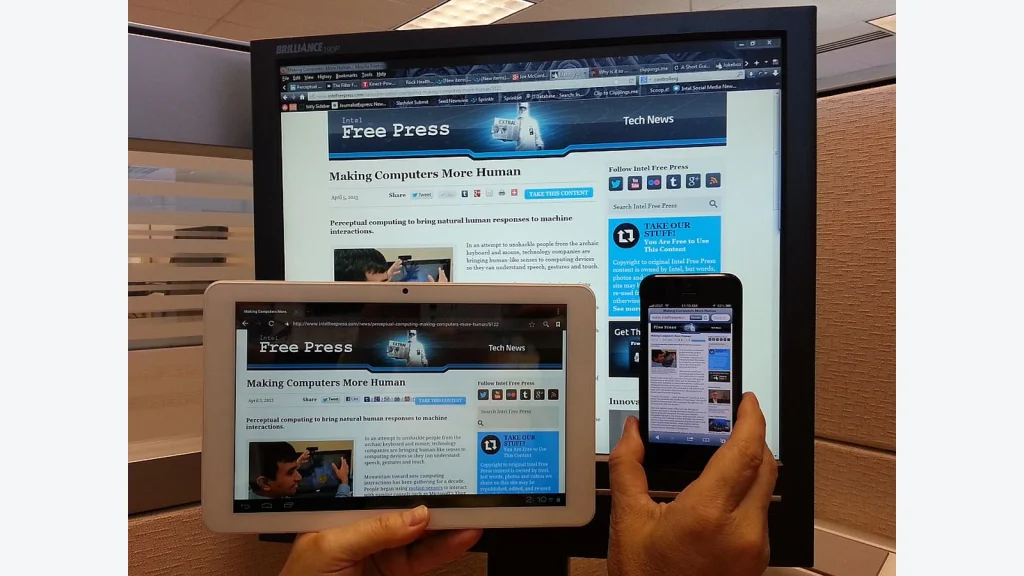
A manufacturer may receive three proposals for “a new website” and find that the totals are far apart. One may cover a small brochure site; another may include product data migration, localized catalogs, CRM routing and technical SEO. Comparing the headline price without comparing the work can create a false economy.
This guide shows how to make the estimate legible. It does not publish a Marketboo price list or a market-wide benchmark. WCAG 2.2 and Google’s Core Web Vitals guidance are included as scope references; neither sets a website project price.
B2B website development: treat the quote as a scope model
A development estimate is the sum of work packages and assumptions. A useful model separates discovery, information architecture, content and product-data preparation, design system, templates, integrations, migration, QA, launch and ongoing support. Every package should state what is included, who supplies inputs, what counts as done, and what happens when an assumption changes.
The model does not need to predict every hour on day one. It should expose the unknowns that could change effort. If the product catalog has inconsistent fields, first measure a sample. If the CRM integration is undocumented, hold a technical discovery. If localization requires legal review, assign that review before the launch date is promised.
Ask each vendor to distinguish an allowance from a confirmed deliverable. An allowance is a planning placeholder; it is not a fixed commitment unless the contract says so. If a provider quotes a precise total before reviewing data, integrations and content, request the assumptions behind that precision.
| Scope driver | Questions that change effort | Evidence to request before pricing |
|---|---|---|
| Templates and journeys | How many unique page types and user paths are required? | Page inventory, wireframes and reusable component list |
| Product data | How many records, attributes and exceptions need cleanup? | Sample export, field map and data owner |
| Integrations | Which systems exchange which data, in what direction and how often? | API or vendor documentation, test credentials and failure cases |
| Localization | How many language/market variants need review and maintenance? | Locale matrix, translation process and regional page inventory |
| Migration | Which pages, files, URLs, reviews and forms must move? | Crawl, content inventory, redirect map and retention rules |
| Governance | Who approves content, technical changes and post-launch fixes? | Ownership matrix, support plan and release workflow |

Count templates and decision paths, not just pages
The number of URLs alone is a weak estimate of build complexity. A site with many products may reuse a stable product template; a smaller site may require distinct workflows for industries, distributors, service requests and technical downloads. Inventory templates, content modules and page behaviors. Count the interactions and exceptions that must work, not only the page list.
A B2B journey may begin on an application page, move to a product family, open a specification, and end in an RFQ. A separate distributor may need a login or a protected resource. Map those paths and identify where each requires custom behavior. That prevents an estimate from overlooking forms, document access, search filters or sales routing.
Reusable patterns can reduce duplicated design and maintenance, but only when the content model is sound. If every page requires a custom exception, the team may need to simplify the information architecture before estimating implementation. Include time for content owners to approve the reusable rules.
Budget for product data and content readiness
Product data is often a hidden work package. Existing records may use inconsistent units, outdated names, missing dimensions or different definitions across business units. A development team can build a template, but it cannot safely invent engineering facts. Assign a data owner, sample the catalog, define required fields and record how exceptions will be handled.
Content migration also includes decisions about what should be retired, consolidated, rewritten or translated. Preserve useful URLs and documents; remove unsupported claims; and ensure that a new page has a clear owner. If source content is in PDFs, spreadsheets or legacy CMS exports, estimate extraction and verification separately from front-end implementation.
A realistic proposal should identify client-supplied content, specialist review and translation responsibilities. If a vendor includes copywriting, ask what interviews, research, revisions and source checks are covered. Do not assume that “content migration” includes technical rewriting or expert validation.
Separate integration complexity from interface polish
An integration can range from a simple link to a reliable two-way data flow with authentication, retries, logging and ownership. List the systems involved and the exact records they exchange. For a CRM, specify what qualifies a lead, which fields are required, how duplicates are handled and who fixes a failed handoff. For an ERP, document product, inventory and pricing source-of-truth rules.
Request a technical discovery if the system owner, API access or data mapping is unknown. A proposal should name the external dependencies and state whether vendor fees, test environments and custom middleware are included. Ask how a failure is surfaced to staff; a “connected” status is not enough if records can silently stop syncing.
Visual refinements and integration work have different risk profiles. A design iteration can often be reviewed in a prototype. An integration needs data and failure tests. Keep them as separate acceptance criteria so the project does not launch a polished interface while the operational path remains unverified.
| Scope tier | Suitable when | Typical outputs to define |
|---|---|---|
| Foundation | The current site has few templates and limited integration needs | Requirements, core templates, essential content migration and launch QA |
| Growth-ready | Product families, lead routes and market pages need reusable structure | Template system, product content model, CRM routing and analytics validation |
| Complex program | Multiple brands, markets, catalogs or system dependencies are involved | Phased architecture, integration tests, localization governance and release controls |
If the estimate varies widely, ask each provider to map its assumptions against the same scope-driver table before negotiating the total.
Plan your B2B website scope with Marketboo
Include accessibility, performance and search QA in the acceptance criteria
Accessibility should be part of the definition of done. WCAG 2.2 is a W3C Recommendation published October 5, 2023. Specify which conformance target and testing responsibilities apply, and include keyboard, screen-reader, contrast, form and responsive checks in the QA plan. A contract should name who fixes issues and how they are retested.
For real-world performance, Google’s Core Web Vitals and web.dev guidance define “good” thresholds at the 75th percentile: LCP at or below 2.5 seconds, INP below 200 milliseconds and CLS below 0.1. These standards give teams a measurable target for user experience; they do not price the project or guarantee ranking outcomes. The implementation and measurement plan should state which field or lab data will be used.
Search QA can include crawlable navigation, descriptive page titles, canonical behavior, redirects, sitemap and structured data checks. Google’s documentation should be used for current requirements, while the content owner verifies product and service facts. Add a representative URL list to the acceptance plan so the team tests pages that reflect actual templates and exceptions.
Compare proposals on the same assumptions
Create a requirements matrix and ask every bidder to respond to the same items. Require separate line items for discovery, design, development, integrations, migration, content, accessibility, SEO and support. Ask vendors to mark “included,” “excluded,” “assumed” or “needs discovery.” This format makes omissions visible and reduces the temptation to compare unlike scopes.
Ask how change requests are estimated, how defects are distinguished from new scope, who owns code and content, and what happens when a third-party system changes. Review payment milestones against accepted outputs. Do not pay for an undefined future outcome such as “improve lead generation” without specifying the pages, analytics and test method involved.
A proposal should explain why a platform or architecture fits the requirements. Ask what alternative was considered and what trade-off the team accepts. If a vendor recommends a custom build, request the maintenance burden and upgrade path. If it recommends a packaged platform, request the exact plan and extension dependencies.
Plan ongoing support before launch
The launch budget is not the total cost of ownership. Plan for hosting or platform fees, extensions, security updates, backups, monitoring, content revisions, new product launches, localization, analytics changes and support. Ask for the response window, escalation path and what is excluded from a maintenance retainer. Assign internal owners for access approvals and source data.
Define how the team will request work after launch. A monthly support plan should specify included hours or tasks, prioritization, release review and reporting. If no retainer is appropriate, document the internal capacity needed to maintain the site and how the team will contact platform or integration vendors.
Post-launch ownership is part of scope because an unmaintained site accumulates broken documents, obsolete product facts, redirects and accessibility regressions. A smaller, supportable launch can be a better investment than a complex architecture that the business cannot maintain.
How Marketboo can help clarify a development scope
The workbook describes Marketboo discovery and proposal support for B2B websites. A useful discovery process should leave the buyer with a page inventory, integration map, product-data sample, locale requirements, acceptance criteria, assumptions and a list of open questions. The proposal should distinguish Marketboo’s delivery responsibilities from client, platform and third-party responsibilities.
Before requesting a proposal, gather one representative product export, a list of the current URLs, named integration owners, target markets and the forms or sales routes that matter. That does not replace discovery, but it makes the conversation concrete. Ask the provider to identify what still needs validation and how each unknown affects the estimate.
If the scope cannot yet be estimated, request a bounded discovery phase with a deliverable and exit decision. That is more transparent than presenting a precise build price on incomplete information.
Use a transparent formula without inventing a price range
A useful budget model is: discovery + content and data preparation + design system and templates + integrations + migration + QA and launch + post-launch support. Each term should be estimated from the actual project evidence. This formula is a planning tool, not a market benchmark. It helps a buyer see which assumptions drive the total and where discovery is still needed.
For example, if product records are incomplete, the estimate should state how many records are sampled, who resolves exceptions and whether cleanup is in scope. If a CRM connection has not been tested, the proposal should include a discovery task or mark the integration as a risk. A precise total that hides those unknowns is not more accurate.
Plan dependencies as carefully as deliverables
A development schedule depends on decisions arriving in sequence. Information architecture may depend on product taxonomy; integration tests may depend on credentials; localization may depend on final source copy; launch may depend on legal review. Put these dependencies on the project plan with an owner and decision date.
Ask the vendor to distinguish its delivery time from elapsed time. A task can require a short implementation window but wait for an approval or data export. This distinction helps the business understand why a schedule moves and which internal decisions can prevent delay.
Define acceptance before work begins
An acceptance criterion should describe an observable result. “Build a fast website” is not testable. “On the listed representative templates, the product details render on mobile, forms route to the agreed CRM queue, and critical WCAG checks pass” is closer to an acceptance condition. The team must still define exact thresholds and test responsibilities.
Separate a defect from a new request. If a page fails an agreed test, the correction may be part of the original scope. If the business adds a new language or integration after approval, that may change price and schedule. Document the change process so both sides can evaluate the impact before work proceeds.
Include the client’s internal effort in the estimate
A project budget can understate the true work if it excludes employee time. Product owners need to verify fields; engineers need to review specifications; sales needs to define lead routing; marketers need to approve content; IT may need to manage access. Estimate this effort by role and decision period so leadership can protect the necessary capacity.
If the organization cannot provide the required reviewer, either budget an external specialist or reduce the scope. A delivery partner should not invent technical facts to keep a schedule. A clear approval dependency protects both the project and the customer.
Use a sample sprint to expose unknowns
For a large or uncertain site, define a bounded pilot around one representative product page, one integration and one conversion path. Ask the vendor to deliver a prototype, data mapping, technical test and remaining-risk list. The pilot should have a fixed purpose and an exit decision; it should not become an open-ended paid discovery with no accepted output.
A successful pilot does not prove that every edge case is solved. It provides evidence about the chosen template and integration. Use that evidence to update the remaining estimate and identify additional product or market exceptions before approving the full build.
Estimate the work behind the initial build price
A useful B2B website estimate separates discovery, information architecture, design, templates, content migration, integrations, accessibility, quality assurance, training and ongoing support. Each line should have an assumption, an owner and an acceptance condition. A low price can still be appropriate for a narrow scope; it becomes difficult to compare when important work is silently excluded.
Add recurring costs such as hosting, platform fees, extensions, analytics, maintenance and content updates to the decision model. WooCommerce’s server recommendations are one example of platform-specific technical requirements that can affect implementation scope. Use the organization’s own vendor quotes rather than a generic “industry average.” If an integration or content migration is not yet defined, label the estimate as provisional and state what discovery is needed to replace the assumption.
Turn requirements into acceptance tests
A requirement is easier to price and verify when it describes an observable result. “Mobile friendly” is vague; “the product specification remains readable at the agreed viewport widths, and the quote action is reachable by keyboard” can be tested. Define representative page types, supported languages, content ownership, form routing, analytics events and accessibility checks before the design is approved.
Use a small acceptance set that includes edge cases: a long product name, missing image, empty result, invalid form entry, translated page, and a restricted resource. Record who signs off each test. If the scope changes, update the price and timeline assumptions rather than expecting the original estimate to absorb unlimited additions.
Keep implementation risk visible in the proposal
The most expensive uncertainty is often an assumption hidden in the brief. A legacy database may have inconsistent product identifiers; a sales form may route to an unowned inbox; a translation may need engineering review. Ask the vendor to identify dependencies and state how each one will be discovered, priced and approved.
A risk register does not need to be elaborate. Record the issue, likelihood, consequence, owner, mitigation and decision date. Review it at project milestones and separate client dependencies from delivery-team work. This makes trade-offs explicit and gives executives a clearer basis for choosing a phased launch, a pilot template or a broader rebuild.
Use a scope worksheet to compare unlike estimates
Put the same work categories into every proposal review: discovery, design, content, templates, integrations, migration, accessibility, analytics, testing, training and support. For each category, record whether it is included, assumed, excluded or still unknown. Add a person responsible for supplying each input so that vendor estimates do not quietly depend on unavailable client time.
The worksheet is not a substitute for a contract or technical specification. It gives the team a shared view of what it is buying and where uncertainty remains. Before approval, ask the vendor to reprice material changes and identify the acceptance test for each important deliverable. Keep the signed scope and estimate assumptions together for later change control.
How to prepare a comparable B2B website development estimate
Use this preparation sequence before requesting proposals. The result should make scope and assumptions comparable, not produce a fabricated market price.
- Inventory the current site. List URLs, templates, forms, documents, markets and business owners for the pages that matter.
- Choose representative page types. Select product, application, capability, resource and conversion pages that expose distinct behavior.
- Sample product data. Provide a safe export with field definitions, units, exceptions and the owner of each fact.
- Map integrations. Record systems, data direction, update frequency, dependencies and failure-handling needs.
- Define localization. List languages, regions, review process, localized URLs and who approves each version.
- Write acceptance criteria. Include functional, accessibility, performance, search and content checks for representative URLs.
- Request itemized proposals. Ask bidders to mark included, excluded, assumed and discovery-dependent scope consistently.
- Budget ongoing ownership. Estimate the support, platform, hosting, update and content work required after launch.
FAQ
How much does a B2B website cost?
There is no reliable universal price for every B2B site. Cost depends on templates, product data, integrations, localization, migration, QA and support. Request a scoped estimate based on your actual requirements.
What is the biggest driver of website development cost?
It varies by project. Product-data cleanup, custom integrations, unique page behaviors, migration and localization can materially change effort. Sample the actual systems and content before assuming one driver dominates.
How long does B2B website development take?
The schedule depends on scope, approvals, source-data readiness, integrations and stakeholder availability. Ask for dependencies, decision dates and acceptance milestones rather than relying on a universal timeline.
Should SEO be included in a website development proposal?
Clarify whether the scope covers information architecture, page metadata, migration, redirects, crawlability, structured data, analytics and content. “SEO included” is too vague to compare.
How much should I budget for website maintenance?
Use the actual platform, hosting, extension, update and support requirements to build an annual plan. Obtain current vendor quotes and assign internal responsibilities; generic percentages may not fit your setup.
Can I compare agency quotes by total price?
Only after deliverables, assumptions, exclusions, ownership and acceptance tests are aligned. A lower quote may omit migration, content, integration QA or post-launch support.
What information should I prepare for a proposal?
Share a URL inventory, representative product data, target markets, integration owners, conversion paths, content responsibilities and known technical risks.
A scoped discovery can turn an uncertain quote into a list of work packages, dependencies and decisions your team can evaluate.
Discuss a B2B website proposal with Marketboo
A defensible estimate begins with comparable work
B2B website development cost becomes easier to assess when templates, product data, integrations, localization, migration, accessibility and support are described separately. There is no universal price that can replace those details. Prepare representative evidence, align acceptance criteria and compare itemized proposals on the same assumptions. Then budget for the people and services that will keep the site accurate after launch.