

Prepared by the Marketboo Editorial Team. Technical claims are linked to primary documentation; planning advice is identified as guidance.
An answer engine optimization agency should help a company make accurate information easier to retrieve and cite in answer-led experiences. SEO helps eligible pages become discoverable and useful in search. The work overlaps: clear pages, crawlable content, reliable sources and a strong answer matter in both. What changes is the surface and the measurement. A traditional result may earn a click; an AI answer may summarize or cite a page without sending the same visit. No agency can guarantee a mention. Build the shared foundation first, then test how each channel surfaces the information.
The debate is often framed as a replacement: either optimize for search rankings or rewrite everything for AI answers. That choice is too blunt. A company still needs pages that load, state their subject clearly, answer a human question and support claims with evidence. It also needs to understand whether an answer interface is citing the source, paraphrasing it, or leaving it out. Those are related problems with different outcomes.
Google’s AI features guidance says the existing fundamentals remain relevant to appearance in AI-powered search experiences, and Google added a guide on generative AI features on May 15, 2026, according to its dated documentation update log. This article uses “AEO” as a practical editorial label, not as a certified technical standard or a promise of citation.
What an answer engine optimization agency should define
Search engine optimization is the work of improving the technical accessibility, relevance and usefulness of pages that may appear in search results. AEO is used by different vendors to describe efforts to make content answer-ready for interfaces that provide direct responses. The label is not uniform across the industry. Ask an agency to define the systems, queries, content and measurements it includes before comparing proposals.
A useful distinction is the task being optimized. SEO asks whether the right page can be discovered and earns a relevant search visit. AEO asks whether a trustworthy source is selected, represented accurately and attributed in an answer-led result. Some systems may provide citations, some may show links, and the interface can change. A page may help a reader even when the system does not send a visit; a citation alone does not prove that the visitor understands or prefers the brand.
Keep the language precise. “We can structure this answer clearly” is within an editorial team’s control. “We will make ChatGPT cite us” is not. The Google AI features documentation was updated December 10, 2025; Google’s documentation update page, last updated October 16, 2026, reports later guidance on generative search. Use current source pages for implementation and avoid turning a shifting industry term into a guaranteed deliverable.
| Question | SEO view | AEO view |
|---|---|---|
| Primary task | Help a useful page be found for a relevant search | Make a source passage easy to interpret and cite in an answer |
| Shared foundation | Clear purpose, crawlable pages, helpful content and credible sources | The same foundation, plus passages that stand alone without losing context |
| Typical visible outcome | A result impression, click or landing-page visit | A citation, mention, summarized fact or no visible attribution |
| Useful measurement | Search Console query and page data, plus qualified site actions | Recorded prompts, cited URL, mention context and referral or assisted actions |
| What cannot be promised | A fixed position or amount of traffic | Selection, citation, sentiment or a guaranteed AI referral |
Keep the shared foundation intact
An answer system still depends on material it can discover and interpret. Google’s current guidance for AI features points site owners back to its core search requirements and helpful-content principles rather than a separate AI-only technical file. That does not prove every engine behaves the same way. It does show why rewriting a page into a pile of short answers is not a substitute for sound site architecture, accessible HTML, original detail and clear source attribution.
Start with the question the visitor is trying to resolve. State the direct answer near the relevant section, define any term with multiple meanings, and explain the limits. Then provide the reasoning and evidence. A passage such as “A canonical URL is the preferred URL a site owner signals for a set of duplicate or similar pages” is easier to quote than a vague paragraph about “technical optimization.” The next sentence should add the context that prevents the definition being misused.
Do not flatten the entire article into a template. A compact answer block is useful when it resolves a real question; it becomes noise when every heading repeats the same formula. Use tables for comparisons, ordered steps for procedures and prose for trade-offs. Make the page helpful if no answer engine ever selects it.
Make evidence travel with the answer
A direct answer should identify who or what it applies to, what conditions matter, and where the supporting evidence came from. If a recommendation depends on a jurisdiction, platform version or business model, name that boundary in the passage. If the statement is your team’s method rather than an external rule, label it as a recommendation. This keeps a quotable paragraph from becoming a misleading snippet when extracted on its own.
Use primary sources for platform behavior, standards and laws. Link near the claim instead of placing every source in an unrelated footer. Give reports a publication date and a correction route. If an example uses invented numbers, label it as a hypothetical calculation; do not present it as a case result. If the organization has first-hand research, explain the sample, period and method so a reader can assess what the numbers represent.
Google’s people-first guidance, updated October 5, 2026, asks site owners to consider whether content provides original value and demonstrates how it was produced. That is a practical test for both channels: if a page contains only definitions found everywhere, it offers little reason for a person or an answer system to prefer it. Add the specific comparison, operating detail or evidence that your organization can stand behind.
Measure each surface without confusing visibility and business value
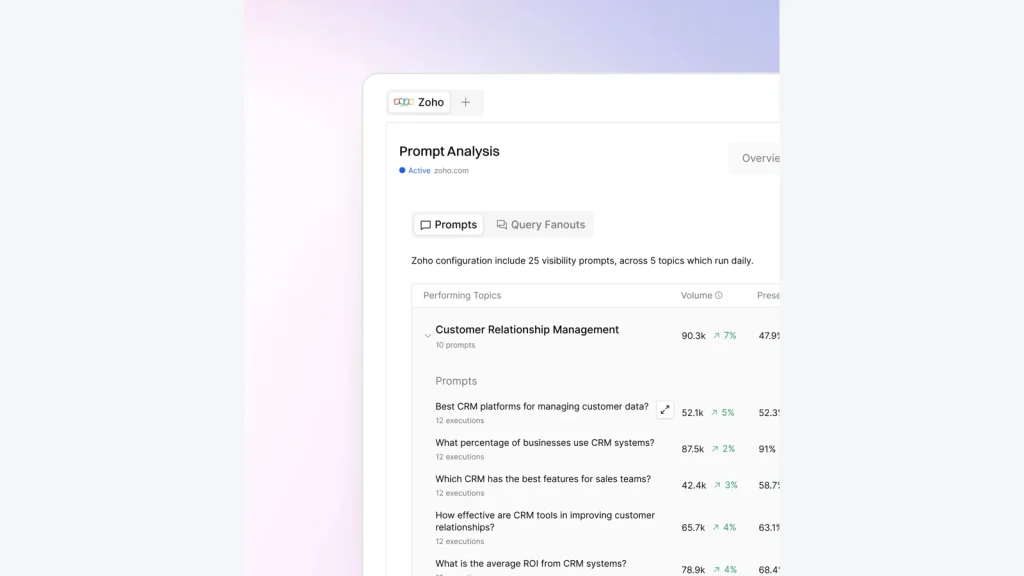
Traditional search reporting can show impressions, clicks, query patterns and page behavior. Answer-led reporting needs a separate observation record: the exact question tested, date, location, account state, interface, answer text, cited sources and whether the brand was mentioned. A prompt sample is a snapshot, not a population estimate. Results can vary between sessions and products, so disclose the test method and repeat queries before drawing conclusions.
Track the actions that matter to the business as well: qualified visits, assisted conversions, branded searches or sales conversations. Be careful with referral traffic. Some answer interfaces may not send a click even when a source informed a response, and a single referral does not establish that a content change caused the visit. Combine observed citations with owned analytics and CRM records, but do not force them into one metric if the systems cannot reconcile identities.
For traditional search, keep the chosen report’s definitions and date range visible. Those measures are not a universal measure of AEO. Choose a small reporting set that names its source and window. If a vendor presents a single proprietary “AI score,” ask for the underlying observations and repeatable method before using it to allocate budget.
| Measurement layer | Example record | Decision it can support |
|---|---|---|
| Organic discovery | Query, landing page, impressions, clicks, date range | Whether a page is being discovered for its intended topic |
| Answer citation check | Prompt, platform, response, cited URL, test date | Whether the source appeared in this documented test |
| On-site behavior | Landing session, next page, form start and completion | Whether the page helped a visitor continue a task |
| Lead quality | Sales acceptance and disqualification reason | Whether the inquiry fits the agreed commercial definition |
| Change attribution | Change log, release date, other campaigns and comparison window | What can and cannot be attributed to the work |
Choose work by the bottleneck, not by the acronym
If an important page cannot be crawled or its canonical is inconsistent, fix the technical foundation before funding a content-format experiment. If visitors arrive but cannot find evidence, improve the page and its internal links. If the content is useful but the company is absent from answer tests, confirm the source set, query scope and platform before concluding that a rewrite is needed. The diagnostic step protects the team from buying the same SEO work under a new label.
An AEO or GEO agency should be able to show the exact deliverables: query research, source review, entity consistency checks, page edits, technical recommendations, citation monitoring and reporting definitions. Ask what remains outside scope, who approves factual claims, how changing product rules are refreshed and what happens when a test gives a different answer. Reject guarantees of specific AI placement or citations.
A coordinated SEO and GEO engagement can combine content planning and on-site improvements while reporting traditional search separately from observed answer citations. When considering Marketboo or another provider, ask for the scope, source set and measurement method. A focused technical specialist may still be the better choice when a narrow platform defect is the real blocker.
If an agency proposal uses “AEO” or “GEO,” ask it to name the systems, evidence and reporting method before committing budget.
Compare your SEO and GEO priorities with Marketboo
What Google’s 2026 documentation changes mean for FAQ and GEO claims
Google’s documentation update log says the FAQ rich-result feature was deprecated beginning May 7, 2026, and its FAQ rich-result documentation was removed on June 15, 2026. That is a concrete reason not to sell FAQ markup as a guaranteed Google search enhancement. A visible FAQ can still help readers and answer systems when the questions are real and answers are accurate; the content should stand on its own without a promise of special display.
The same update log records a new guide on optimizing for generative AI features on May 15, 2026, including guidance on non-commodity content and common AEO/GEO misconceptions. The lesson is not that the acronym has become settled. It is that platform owners publish changing instructions, so a current source check matters more than a vendor slide deck or an older checklist.
Before a release, record the page version and the platform documentation checked. If a claim cannot be verified in a current primary source, either remove it, label it as an editorial recommendation, or ask a qualified reviewer to resolve it. A dated evidence trail is more useful than a broad statement that a page is “AI optimized.”
A practical decision: what should the team do next?
For a site with technical problems, start with crawlability, indexation, canonical consistency and user experience. For a site with thin or repetitive copy, choose one important page and add unique evidence. For a site whose visibility is strong but the sales path is weak, improve the next action and qualification process. For an organization that needs AI-search insight, define a prompt set and citation log before comparing agencies.
These paths can overlap, but budget should follow evidence. A planning meeting should end with the problem, owner, page or system affected, proof needed, metric and review date. It should not end with a promise to “win AI search.” That phrase describes an aspiration, not an operational scope.
The decisive question is whether a proposed AEO service changes an identifiable problem in a way the organization can inspect. If the proposal cannot name the source pages, change set, evidence policy and measurement limitations, ask for a narrower pilot. A small, documented test is easier to evaluate than a broad promise.
Build answer passages that survive being quoted
A quotable passage should name its subject, scope and source. “The platform supports localization” is too broad if the statement applies only to one plan or market. A stronger passage states which market configuration was tested, the date and the source that confirms the behavior. If the answer is based on company policy rather than an external standard, say so.
Place caveats close to the claim they qualify. When a paragraph is extracted, the qualifier should travel with it. A definition can be followed by the decision rule, exception or next step. This is useful for a human reader as well as a summarization system because it reduces the need to search elsewhere for context.
Make citations useful to a skeptical reader
A source link should take the reader to the evidence that supports the specific sentence. Prefer a primary document over a blog that paraphrases it. For data, identify the period, geography, sample and calculation. For platform features, name the product and version where the vendor documents them. If a page is undated, record its access date and avoid presenting it as a timeless rule.
A source list at the end can help someone continue researching, but it does not rescue unsupported claims in the body. Link citations near the statement and explain why the source applies. If sources disagree, describe the disagreement or narrow the claim rather than silently selecting the more convenient result.
Avoid formatting that looks quotable but says little
A page filled with one-sentence answers can appear scannable while offering no original value. Useful answer blocks need specific context, reasoning and evidence. A comparison table should state its criteria; a checklist should explain what counts as complete; a FAQ should resolve a real uncertainty. Repeating the same short claim under many headings creates length without depth.
Use the article’s natural form. A buyer comparison needs a balanced matrix and scenario-based recommendations. A technical guide needs a diagnostic sequence and rollback conditions. An editorial explainer needs definitions and evidence. The structure should follow the reader’s task, not a template designed solely to make excerpts easy to extract.
Set an observation protocol before measuring citations
A citation test should preserve the exact prompt, date, system, language, region, logged-in state if relevant and full answer. Note whether the system cited a page, named the brand without a link, or used a third-party source. Store the result in a way that respects platform terms and does not include unnecessary personal information.
Repeat the same prompt on a later date and retain both outcomes. If the answer changes, report the variation rather than averaging it into a false precision. A small prompt set can help detect a content problem; it cannot estimate the share of all AI answers that cite a company. Keep that limitation visible in management reports.
Treat answer optimization as an editorial layer on sound SEO
A useful answer-engine program begins with the same foundations as useful search content: accessible pages, clear topic coverage, accurate descriptions and a strong reason for the page to exist. The additional editorial task is to make important answers easy to identify, understand and attribute. This is a practical working definition of answer engine optimization, not a separate Google ranking system or a promise that a model will cite a page.
Google’s published guidance for AI features says that existing Search fundamentals remain relevant and that there are no special technical requirements for appearing in those experiences. That supports a restrained strategy: improve the page for the human question first, then make its evidence and structure easy to interpret. Do not create thin question pages just to imitate the wording of an AI answer.
Build a question-to-evidence matrix before rewriting copy
List the questions a buyer asks at each stage: what the service is, when it fits, what evidence supports a recommendation, what alternatives exist and what the next step involves. For each question, identify the page that should answer it, the fact owner, the source and the qualification the answer needs. This reveals gaps that a keyword list alone will not show.
Use the matrix to avoid unsupported generalizations. If a question asks whether an agency can improve a particular outcome, describe the variables and measurement required instead of asserting a universal result. A good answer can be decisive about the process while remaining careful about results. Link to primary documentation where the claim concerns a platform rule or technical requirement.
Measure citation opportunities without inventing a score
AI answer visibility is difficult to summarize with one stable number because systems, prompts, markets and source selections change. Keep a dated sample of the questions tested, the platform, locale, answer observed and any cited sources. Treat the sample as a directional observation, not a market-wide measurement. Separate brand mentions, linked citations, referral sessions and qualified enquiries.
A useful review asks whether the page states its evidence clearly, whether a cited claim remains accurate, and whether the intended audience can take the next step. If a page is not cited, inspect discoverability, authority, freshness and answer fit before rewriting it for a single prompt. Preserve the observation conditions so the team can compare later checks without implying a controlled ranking experiment.
How to build an SEO and AEO work plan
This sequence keeps channel goals separate while sharing the same factual and technical foundation.
- Name the audience task. Write the real question and the decision a visitor needs to make, then identify the page that should help.
- Audit the existing page. Check crawlability, intent fit, unique evidence, source links, page experience and the current next action.
- Define AEO scope. Name which answer surfaces, query set, locations and observation dates will be included.
- Build a source ledger. Map each factual claim to a dated primary source or clearly label it as editorial advice.
- Rewrite for context. Place a direct answer near the top of each relevant section, then add boundaries, reasoning and evidence.
- Verify structured data and access. Make sure visible content matches markup and check current platform crawler documentation if access rules matter.
- Record a baseline. Save Search Console data and a reproducible answer-citation sample before changes.
- Review outcomes separately. Compare search visits, answer citations, referral behavior and qualified business actions without collapsing them into one score.
FAQ
What is the difference between AEO and SEO?
SEO focuses on making useful pages discoverable in search; AEO focuses on making accurate information easy to retrieve and cite in answer-led interfaces. Their technical and editorial foundations overlap.
Does AEO replace SEO?
No. Crawlable, relevant and trustworthy pages remain useful for search and answer experiences. The additional work is to understand citation behavior and direct-answer contexts without abandoning the broader site.
Is AEO a formal Google ranking factor?
Google’s current documentation does not establish “AEO” as a separate ranking factor. It describes guidance for AI features and points to existing search fundamentals. Do not treat a vendor-defined score as a Google signal.
Can an agency guarantee ChatGPT or AI Overview citations?
No credible agency can guarantee a third-party system will select, cite or mention a page. It can improve content quality, accessibility and measurement, then report documented observations.
Should every page start with an answer block?
Use a direct answer when it helps the reader resolve the section’s question quickly. Avoid forcing a formula onto pages where a different structure better serves the task.
Does FAQ schema improve AI visibility?
No reliable evidence in the cited Google guidance establishes FAQ schema as a way to guarantee AI citations. Use visible FAQs when they answer real questions, and follow current structured-data rules.
How do I measure AEO?
Keep a dated test log with the platform, exact question, answer and cited URLs, then compare it with Search Console, analytics and qualified lead records. A prompt sample is not a population estimate.
A useful first review can map one page to its search intent, evidence gaps and an answer-citation baseline.
Ask Marketboo to scope an evidence-led visibility review
The acronym matters less than the evidence and the task
An answer engine optimization agency should work from the same factual, technical and editorial foundations as SEO while keeping outcomes distinct. Improve the page for the person who needs an answer, link claims to primary evidence and measure the surfaces that matter to the business. Treat citations as observations rather than promises. That gives the team a practical program even as answer interfaces and industry terminology continue to change.