
Direct answer: A Google Ads landing page should make the ad promise easy to recognize, help the visitor judge fit, provide credible proof, explain the next step, and record a defined conversion without avoidable friction. When clicks do not become useful enquiries, review the path in order: query and ad promise, headline and offer, proof, form, mobile experience, speed, tracking, and sales follow-up. Marketboo can connect ad and landing-page review with website, analytics, and lead-routing work; illustrative examples should not be treated as client results.
How to evaluate Google Ads landing page
Evaluate this choice against the reader’s decision, the evidence available, the owner who will maintain the work, and the next action the business can verify. The framework below keeps the keyword topic tied to a practical decision instead of a generic service description.
Start with the promise a buyer clicked
A B2B visitor arriving from an ad has a question in mind. The landing page should make it obvious whether the supplier can answer that question and what happens next. When the page opens with a vague company statement, the visitor has to reconstruct the reason for clicking.
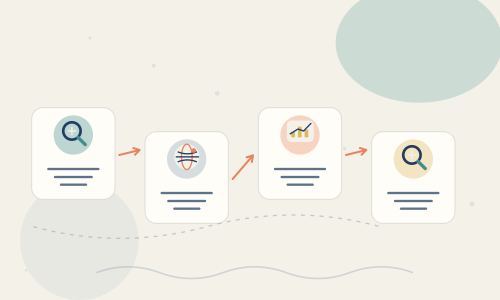
A Google Ads landing page review should follow the whole path: query, ad, page, action, recorded event, sales response, and qualification. This article uses a before-and-after critique of a fictional industrial-service offer. The example illustrates a review method; it is not a tested result or a Marketboo case study.
Assume the ad offers an assessment of an existing production line. The old page says “Innovative solutions for global industry,” lists every service, and ends with “Submit.” The issue is not that those words are short or long. They fail to explain the assessment, who it suits, what evidence is needed, and who will respond.
The improved version would name the task: “Discuss an assessment of your current production line.” It would explain eligible applications, required information, the review process, and any exclusions the business approves. That gives a visitor a reason to start a useful conversation without inventing a performance claim.
Headline and offer: preserve meaning, then qualify
Message match is the alignment of intent and promise. Repeating the keyword can help orientation, but it cannot repair a different offer. A click about maintenance support should not arrive at a page focused only on new equipment sales.
Use the headline to state the service and the subheading to clarify fit. A B2B page often needs qualification near the top: territory, application, system type, or project stage. These limits may reduce raw submission volume while making the enquiry more useful. Treat that as a tradeoff to measure, not a defect to hide.
Describe the next action in concrete terms. “Request a technical review” should lead to a review request. “Book a demonstration” should indicate whether booking is immediate or subject to confirmation. “Get a quotation” should explain which information is needed before pricing can be prepared.
Remove claims the business cannot substantiate. Words such as fastest, guaranteed, certified, and approved can carry material meaning. Use verified facts or a precise explanation of the process. A clearly scoped service is persuasive without an unsupported superlative.
Google’s Quality Score documentation discusses ad relevance and landing-page experience as diagnostic components. Use that context when reviewing the path, but judge the page against qualified enquiries and buyer understanding rather than treating a score improvement as the business result.
The body: answer the questions sales hears repeatedly
A useful landing page follows the buyer’s uncertainty. What is the service? Does it fit my situation? What information will you need? What will I receive? What is outside scope? Who handles the next step? These questions determine the content more reliably than a fixed template length.
For the fictional production-line assessment, the page could explain the types of line covered, the information required for an initial discussion, the stages of assessment, and the boundary between preliminary advice and a paid engineering engagement. The commercial owner must approve the actual conditions.
Use specific section labels. “What the assessment covers” is more useful than “Our excellence.” “Information to prepare” helps an engineer or procurement colleague take the next action. Short, concrete headings also make excerpts easier to understand when the page is shared outside its original context.
A long page should give a reader several ways to inspect evidence, but every route should serve the same offer. Do not make the visitor choose between five unrelated services halfway through a focused campaign. Related links can be useful where they answer a real objection or explain a technical boundary.
Keep essential facts in the page, not only in an image or downloadable file. A buyer on mobile may be unable to open a large document. Summarize the decision-relevant point, label the file clearly, and provide a useful next step for detailed review.
Proof: attach evidence to the risk it reduces
Proof works when it answers a specific concern. A buyer worried about compatibility needs technical conditions. A buyer worried about project coordination needs a clear process and responsible roles. A buyer worried about reliability needs relevant, authorized evidence, not an unrelated collection of logos.
Distinguish a documented capability from a measured outcome. A service description can explain what the company does. A case study needs a situation, intervention, period, measurement definition, conditions, permissions, and limitation. Do not convert a fictional example into an implied customer result.
Place proof near the claim it supports. If a section explains how a review is conducted, show the required inputs or a blank deliverable example. If a section states a product limit, link to the approved technical document. This lets the buyer evaluate the statement without searching through the whole site.
Use transparent authorship when real information is available. Name an actual technical reviewer only after that person has reviewed the relevant material and agreed to attribution. An invented title such as “senior conversion expert” adds apparent authority without evidence.
Google’s helpful-content guidance encourages clear sourcing and information that demonstrates knowledge. The practical editorial implication is straightforward: give readers enough detail to evaluate the offer, and keep the strength of the wording within the strength of the evidence.
Form: collect enough context to act
Begin with the sales task, then choose fields. For the assessment example, the team might need a company, contact route, application, location, and a short description of the problem. A required budget field may be useful in some businesses and premature in others. Decide from the process rather than copying another form.
Explain difficult questions. If a model number helps routing, show where a visitor can find it and allow an unknown state. If an upload is optional, say so. Avoid making a buyer abandon the form because they cannot supply information that could be collected during the first call.
W3C WAI’s forms guidance covers labels, instructions, validation, and notifications. In practice, test empty fields, invalid values, upload limits, keyboard use, mobile controls, and errors returned after submission. A field label should remain understandable when placeholder text disappears.
Give the success state the same care as the form. Confirm receipt, describe the next step, and provide an alternative contact route where appropriate. Set a response expectation the business can meet. Do not display “Your appointment is booked” when the team has only received a request.
Protect the event definition. Count a successful submission rather than a click that may fail. Keep enquiry records and tracking consistent without putting personal information into analytics URLs. Form design, measurement, and routing should be reviewed together.
| Symptom | Likely questions | First evidence |
|---|---|---|
| Clicks, no forms | Is the offer and action clear? | Ad-to-page path test |
| Forms, poor fit | Does the page qualify the visitor? | Lead sample and sales status |
| Form abandonment | Where does friction appear? | Field, error, and mobile review |
| Good leads, slow sales | Is the handoff and response owned? | CRM timestamps and routing |
| Volatile results | Did traffic or the test change? | Date, query, and change log |

Mobile friction: inspect the actual task
Open the page on a small viewport and perform the intended action. Read the headline, inspect proof, open a document, fill the form, correct an error, and find the confirmation. Check the task itself rather than asking whether the screenshot looks attractive.
Sticky elements can cover labels or error messages. A large image can push the offer far below the first screen. A specification table can force sideways scrolling. A chat widget can obscure the button. These are concrete observations that can be repaired and rechecked.
Keep meaningful content visible when scripts fail or load slowly. The offer, scope, evidence, and links should not disappear behind a decorative animation. A video can demonstrate the service, but the page still needs a readable explanation for users who cannot play it.
WCAG 2.2 provides an accessibility standard, including criteria relevant to forms and interaction. A conversion review can identify obvious issues, but it should not be represented as a complete accessibility certification. Escalate specialist questions to the appropriate reviewer.
Choose changes that reduce friction without hiding conditions. Removing an eligibility statement can raise submissions while lowering sales fit. The goal is a clearer path to a valid enquiry, not merely fewer visible words.
Speed: trace the resource that delays understanding
Performance work should begin with the content or interaction a visitor needs first. Inspect large images, font loading, scripts, third-party widgets, and layout shifts. The most useful fix is the one that lets the buyer understand and act sooner under the stated test conditions.
Web Vitals separates loading, responsiveness, and visual stability through LCP, INP, and CLS. Use that vocabulary correctly. A page can load its main content promptly while responding poorly to form interaction, or feel unstable when a late widget moves the button.
Use compressed images with explicit dimensions, reserve space for embeds, and defer nonessential work where the implementation permits. Test after adding measurement and service widgets, not only before them. A page that was fast before launch can change substantially once operational scripts are present.
Document device, network, viewport, environment, and date. Lab and field measurements answer different questions. Do not claim a global performance improvement from a single desktop run, and do not remove useful proof solely to improve a synthetic score.
Retest the conversion task after performance changes. A delayed script might contain form validation or a booking control. Better loading behavior should preserve correct interaction and evidence, otherwise the apparent improvement creates a new business defect.
Testing: write a hypothesis with a quality condition
The useful hypothesis is specific: explaining the assessment’s eligibility near the first call to action will improve the rate of qualified enquiries from this traffic cohort. The quality condition prevents the test from rewarding raw form volume at any cost.
Keep a pre-test brief with traffic source, audience, offer, conversion definition, primary measure, quality check, review period, and change. When volume is low, the result may remain directional or inconclusive. Do not claim statistical certainty without an appropriate design and analysis.
Avoid several simultaneous changes unless the purpose is a broad repair rather than causal isolation. If the headline, form, audience, bidding, and follow-up all change, the team may know the new system works better but not which edit caused it. Describe the evidence accordingly.
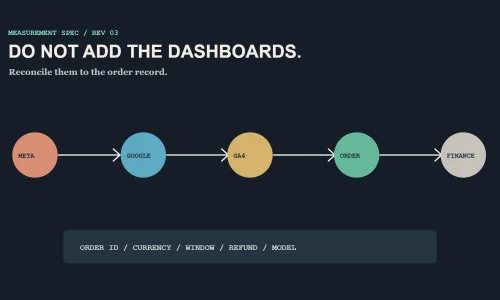
Google Analytics event documentation helps define interaction recording, but the commercial team must decide what success means. A lead event should be reconciled with accepted enquiries and qualification where possible. Keep reporting windows and denominators explicit.
Preserve the result and the version. Note which hypothesis was supported, which remained unresolved, and what should happen next. An inconclusive test can still reveal a broken event, inadequate sample, or missing sales feedback; those are useful findings rather than reasons to invent a winner.
After the form: design the follow-up experience
An enquiry is valuable only if the team can use it. Define the owner, fallback, response target, required context, and status updates. A technically successful form that reaches an unattended inbox creates a conversion in the dashboard and a poor experience for the buyer.
Give sales the page and campaign context where permitted. An assessment request and a product quotation need different first responses. A concise lead record should show the offer, submitted information, time, and next step without forcing sales to reconstruct the journey.
Create a feedback route from sales to the page owner. Repeated requests outside scope may indicate misleading qualification. Repeated questions about process may indicate missing explanation. Use patterns rather than one anecdote to decide whether the page needs revision.
Marketboo’s website-development services include UX, search, and conversion work. A proposed ad-to-page review can connect those services with tracking and follow-up, but the exact deliverables, access, technical changes, and sales responsibilities should be confirmed in the scope.
The improved fictional page is not simply more persuasive copy. It expresses the actual offer, qualifies the reader, presents evidence, records a valid action, and supports a clear handoff. That is the standard to apply before buying more traffic.
Diagnose the gap before changing the headline
When a Google Ads landing page system underperforms, begin with the mismatch rather than a cosmetic edit. Ask where a visitor’s expected action diverges from the page experience. That question separates a message problem from an offer problem, a tracking problem, a routing problem, or a sales qualification problem.
Inspect query, ad, headline, offer, proof, form, tracking, response, and sales acceptance in the order a visitor or lead experiences it. A short, representative path is more useful than a long list of opinions. Mark where the expected action becomes unclear, slower, riskier, or harder to verify, and describe the condition that produced the observation.
The repair is a before-state path map, followed by a controlled recheck. Do not generalize from one page or one week when a low conversion rate does not identify the cause by itself. Marketboo can connect ad, landing page, analytics, and follow-up work, but the business must define a valid conversion and decide which lead or revenue outcomes matter.
Message match is a meaning test
When a Google Ads landing page system underperforms, begin with the mismatch rather than a cosmetic edit. Ask whether the page preserves the ad’s intent and qualifies the right visitor. That question separates a message problem from an offer problem, a tracking problem, a routing problem, or a sales qualification problem.
Inspect query language, ad asset, headline, subhead, offer, exclusions, and next action in the order a visitor or lead experiences it. A short, representative path is more useful than a long list of opinions. Mark where the expected action becomes unclear, slower, riskier, or harder to verify, and describe the condition that produced the observation.
The repair is a message-match comparison, followed by a controlled recheck. Do not generalize from one page or one week when repeating a phrase cannot repair a different promise. Marketboo can connect ad, landing page, analytics, and follow-up work, but the business must define a valid conversion and decide which lead or revenue outcomes matter.
Build the offer around a B2B decision
When a Google Ads landing page system underperforms, begin with the mismatch rather than a cosmetic edit. Ask what the buyer must know to decide whether a conversation is worth starting. That question separates a message problem from an offer problem, a tracking problem, a routing problem, or a sales qualification problem.
Inspect use case, fit, scope, process, timeline, evidence, limitations, and commercial next step in the order a visitor or lead experiences it. A short, representative path is more useful than a long list of opinions. Mark where the expected action becomes unclear, slower, riskier, or harder to verify, and describe the condition that produced the observation.
The repair is a concise offer brief, followed by a controlled recheck. Do not generalize from one page or one week when more copy is not automatically more clarity. Marketboo can connect ad, landing page, analytics, and follow-up work, but the business must define a valid conversion and decide which lead or revenue outcomes matter.
Use proof that answers risk
When a Google Ads landing page system underperforms, begin with the mismatch rather than a cosmetic edit. Ask which proof reduces a specific concern at the moment it matters. That question separates a message problem from an offer problem, a tracking problem, a routing problem, or a sales qualification problem.
Inspect named expertise, process evidence, relevant examples, documentation, constraints, and reviewer context in the order a visitor or lead experiences it. A short, representative path is more useful than a long list of opinions. Mark where the expected action becomes unclear, slower, riskier, or harder to verify, and describe the condition that produced the observation.
The repair is proof-to-risk mapping, followed by a controlled recheck. Do not generalize from one page or one week when unverified logos or outcomes can damage trust. Marketboo can connect ad, landing page, analytics, and follow-up work, but the business must define a valid conversion and decide which lead or revenue outcomes matter.
Design the form and next step together
When a Google Ads landing page system underperforms, begin with the mismatch rather than a cosmetic edit. Ask what the sales team needs and what the visitor can comfortably provide. That question separates a message problem from an offer problem, a tracking problem, a routing problem, or a sales qualification problem.
Inspect fields, labels, privacy context, validation, error state, confirmation, routing, and response expectation in the order a visitor or lead experiences it. A short, representative path is more useful than a long list of opinions. Mark where the expected action becomes unclear, slower, riskier, or harder to verify, and describe the condition that produced the observation.
The repair is a form and handoff test, followed by a controlled recheck. Do not generalize from one page or one week when a submission count is not a qualification definition. Marketboo can connect ad, landing page, analytics, and follow-up work, but the business must define a valid conversion and decide which lead or revenue outcomes matter.
Reduce friction without hiding important detail
When a Google Ads landing page system underperforms, begin with the mismatch rather than a cosmetic edit. Ask which steps can be removed and which information must remain visible. That question separates a message problem from an offer problem, a tracking problem, a routing problem, or a sales qualification problem.
Inspect navigation, distractions, form length, CTA wording, policy links, mobile layout, and error recovery in the order a visitor or lead experiences it. A short, representative path is more useful than a long list of opinions. Mark where the expected action becomes unclear, slower, riskier, or harder to verify, and describe the condition that produced the observation.
The repair is a friction inventory, followed by a controlled recheck. Do not generalize from one page or one week when hiding conditions can create poor-fit demand. Marketboo can connect ad, landing page, analytics, and follow-up work, but the business must define a valid conversion and decide which lead or revenue outcomes matter.
Treat speed and accessibility as conversion conditions
When a Google Ads landing page system underperforms, begin with the mismatch rather than a cosmetic edit. Ask whether the page remains usable under the agreed device and network. That question separates a message problem from an offer problem, a tracking problem, a routing problem, or a sales qualification problem.
Inspect LCP/INP/CLS context, image dimensions, scripts, keyboard path, labels, contrast, and focus in the order a visitor or lead experiences it. A short, representative path is more useful than a long list of opinions. Mark where the expected action becomes unclear, slower, riskier, or harder to verify, and describe the condition that produced the observation.
The repair is a repeatable task test, followed by a controlled recheck. Do not generalize from one page or one week when performance and accessibility require appropriate specialist review. Marketboo can connect ad, landing page, analytics, and follow-up work, but the business must define a valid conversion and decide which lead or revenue outcomes matter.
Test one meaningful change at a time
When a Google Ads landing page system underperforms, begin with the mismatch rather than a cosmetic edit. Ask which hypothesis is being tested and how success is defined. That question separates a message problem from an offer problem, a tracking problem, a routing problem, or a sales qualification problem.
Inspect traffic source, audience, event, sample, time window, quality outcome, and change log in the order a visitor or lead experiences it. A short, representative path is more useful than a long list of opinions. Mark where the expected action becomes unclear, slower, riskier, or harder to verify, and describe the condition that produced the observation.
The repair is a test brief and result record, followed by a controlled recheck. Do not generalize from one page or one week when short tests can be inconclusive. Marketboo can connect ad, landing page, analytics, and follow-up work, but the business must define a valid conversion and decide which lead or revenue outcomes matter.
The after-state: a page sales can use
When a Google Ads landing page system underperforms, begin with the mismatch rather than a cosmetic edit. Ask whether marketing and sales agree on what a good enquiry looks like. That question separates a message problem from an offer problem, a tracking problem, a routing problem, or a sales qualification problem.
Inspect conversion event, CRM state, response time, qualification, feedback, and next page or call in the order a visitor or lead experiences it. A short, representative path is more useful than a long list of opinions. Mark where the expected action becomes unclear, slower, riskier, or harder to verify, and describe the condition that produced the observation.
The repair is a shared page and sales acceptance note, followed by a controlled recheck. Do not generalize from one page or one week when a landing page cannot guarantee sales capacity or market demand. Marketboo can connect ad, landing page, analytics, and follow-up work, but the business must define a valid conversion and decide which lead or revenue outcomes matter.
Evidence note: Recommendations are conditional. Verify account-specific settings, current platform documentation, permissions, market assumptions, and the owner’s data policy before implementation.
| Page element | Job | Review question |
|---|---|---|
| Headline | Orient the visitor | Does it answer the ad’s intent? |
| Proof | Reduce perceived risk | Is it relevant and supportable? |
| Form | Collect useful context | Are fields necessary and clear? |
| CTA | Name the next action | What happens after the click? |
| Confirmation | Set expectation | Who responds and when? |
How to put this into practice
Use this sequence as a reviewable implementation path. Keep the evidence, owner, and verification point beside each step.
- Define the campaign, query, audience, conversion, sales outcome, device, and review window.
- Capture the current ad-to-page path and mark every promise, condition, proof point, and action.
- Rewrite the offer around fit, value, risk, process, evidence, and the next conversation.
- Review form fields, validation, consent context, confirmation, routing, response time, and CRM status.
- Test mobile layout, images, scripts, keyboard path, labels, errors, and agreed performance conditions.
- Choose one high-confidence hypothesis and document the change, sample, metric, and quality check.
- Review conversion and lead-quality evidence with marketing and sales before expanding the change.
- Keep the winning or inconclusive result in a page change log and schedule the next review.
FAQ
What is a Google Ads landing page?
It is the page a visitor reaches after an ad click, designed to help that visitor understand the offer, assess fit, and complete a defined next action under the same promise as the ad.
What is message match?
Message match is the alignment between the search or ad promise and the landing page’s headline, offer, proof, and next step. It should be assessed for meaning, not just repeated wording.
How much information should a B2B landing page include?
Include enough to answer fit, value, proof, risk, process, and next-step questions. The right length depends on the decision and evidence, not a universal word count.
What should a B2B form ask?
Ask for information needed to route and qualify the enquiry, explain why it is requested, set expectations, and provide clear error and success states.
How fast should a landing page be?
Set a device, network, viewport, and test method, then improve the resources that block the visitor’s task. A lab metric alone does not describe the complete conversion experience.
How does Marketboo review PPC landing pages?
Marketboo can connect ad promise, page structure, proof, form, analytics, follow-up, and testing into one review. Examples should be labelled as illustrative unless supported by a verified case.
Can a landing page guarantee conversion rates?
No. A page can reduce avoidable friction and make the offer clearer, but traffic quality, demand, timing, pricing, competition, and sales response affect conversions.
Conclusion
The right Google Ads landing page decision is the one the team can explain, implement, measure, and maintain under its real market and operating conditions. Use the framework above to choose the next controlled action, record what the evidence can and cannot show, and assign the review trigger before expanding the scope. Marketboo can support the planning and implementation path, while the business remains responsible for its claims, approvals, data, permissions, and commercial decisions.