
Direct answer: Google Ads conversion tracking for lead generation works when the business defines each event, implements the trigger and parameters, tests the path, and connects later qualification to the original enquiry where the available identifiers and platform rules permit. Begin with a measurement dictionary, not a tag. Separate micro-actions, form submissions, qualified leads, opportunities, and revenue. Then document duplicate, delayed, consent-limited, failed, and offline cases. Marketboo can build the event map, QA pack, and lead-quality report while the technical owner approves access, data handling, and production release.
How to evaluate Google Ads conversion tracking
Evaluate this choice against the reader’s decision, the evidence available, the owner who will maintain the work, and the next action the business can verify. The framework below keeps the keyword topic tied to a practical decision instead of a generic service description.
| Event state | Use | Do not assume |
|---|---|---|
| Micro-action | Diagnose engagement | It is a qualified lead |
| Form submit | Record an enquiry | The data is complete or valid |
| Qualified lead | Inform optimization and sales | Every platform can observe it immediately |
| Opportunity | Connect to pipeline | Attribution is exclusive |
| Revenue | Evaluate commercial outcome | The ad caused the whole result |
Specification first: a lead is a state, not a tag
If Google Ads reports fifty conversions and the CRM contains thirty enquiries, neither number explains the difference by itself. One system may count button clicks, another accepted submissions, and another unique contacts. Begin Google Ads conversion tracking by defining the business states before configuring tags.
Use distinct terms for form start, successful submission, contacted lead, qualified lead, opportunity, and won outcome. Write the exact trigger and owner for each. A qualified lead should have a sales definition that can be applied consistently rather than a label created by marketing to improve a dashboard.
State implementation assumptions. This runbook assumes a website enquiry path and a CRM or controlled lead log, with access approved by the business. It describes a review method, not a tested implementation on your account. Platform settings, consent requirements, identifiers, and integration capabilities must be checked in the actual environment.
Google’s conversion-tracking overview documents how recorded actions can inform advertising measurement. The system still needs an accurate event, appropriate configuration, and a usable connection to lead quality. Adding more tags does not solve an undefined outcome.
Write the measurement dictionary
For every event, record its business meaning, trigger, source system, parameters, timestamp, duplicate rule, owner, and reporting use. Include whether it is diagnostic or intended for optimization. This dictionary should be short enough that a developer and sales manager can agree on it.
An illustrative event called enquiry_submitted means the server or form system has accepted the enquiry and produced a confirmation. It does not mean the button was clicked, the record passed sales qualification, or the visitor became a customer. A separate lead_qualified state means an authorized reviewer applied the agreed definition.
Keep parameters purposeful. Form identity, product interest, page locale, and an internal nonpersonal reference may help interpretation where appropriate. Do not pass names, email addresses, phone numbers, free-text messages, or other personal data into general analytics simply because those fields exist on the form.
Decide how values are assigned. A fixed estimated lead value, qualified-stage value, and realized sale value represent different things. Document the method and owner. A precise-looking amount is not credible if nobody can explain its commercial basis.
Google’s primary and secondary conversion-action guidance is relevant to goal configuration. Review the actual campaign goal settings rather than assuming all events in an account influence bidding in the same way. Keep diagnostic micro-actions separate from the business signal.
Map the event through four systems
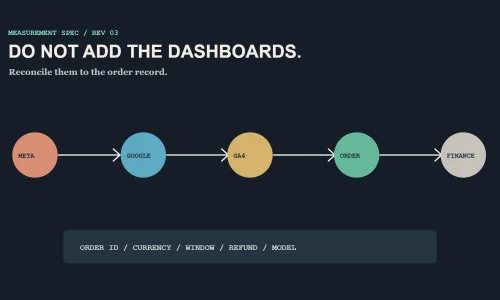
Draw the path from browser or application to analytics, Google Ads, and CRM. At each boundary, record the identifier, trigger, timing, allowed data, and failure mode. The same business action can appear differently because the tools have different attribution and processing rules.
For a conventional website form, a confirmed success state may trigger an event. A thank-you page can be one implementation path, but reloads and direct visits need attention. An inline success message can be another path, but its event listener should distinguish success from a failed submission. Verify the implementation instead of prescribing a universal trigger.
If a GA4 key event is imported into Google Ads, document the source and use. Google explains creating Ads conversions from GA4 key events. Avoid counting a direct Ads action and an imported equivalent as separate business wins without reviewing configuration and reporting intent.
The CRM should preserve a traceable record of the accepted enquiry. Where approved identifiers are available, they can help reconcile later outcomes. Do not store an identifier merely because it might be useful someday; the technical and privacy owners should approve the collection and purpose.
Keep system time zones and date meanings explicit. Submission date, ad interaction date, CRM creation date, qualification date, and import date can differ. A daily report needs to say which one it uses before the team tries to make counts match exactly.
Consent and data handling are release dependencies
Tracking behavior must follow the organization’s approved rules for the relevant users and jurisdictions. This article does not establish lawful processing or certify a setup. The business should involve qualified privacy or legal review when the implementation requires it.
Google’s consent-mode documentation describes how tags respond to consent states. It is technical documentation, not proof that a particular collection practice is permitted. Test the actual defaults, updates, storage behavior, and deployment with the responsible owner.
Do not treat server-side tracking as a way to avoid consent or user choice. Moving an event to another transport changes the architecture, not the need for appropriate data handling. Explain what is sent, why, who receives it, and how the approved rules apply.
Include a limited-data scenario in QA. The event or attribution result may differ when consent is denied, browser protections apply, or a connection is interrupted. Record expected behavior and reporting limitations rather than hiding the difference as a technical failure.
Use test data carefully. Avoid real customer details when a synthetic record can verify the path. Keep account credentials out of the QA report, limit access to logs, and dispose of test records according to the approved process. A reviewable tracking system should not create unnecessary data exposure.
How to put this into practice
Use this sequence as a reviewable implementation path. Keep the evidence, owner, and verification point beside each step.
- Define the lead journey, business outcome, event owners, platforms, and data limitations.
- Write the measurement dictionary with trigger, parameters, value, currency, timestamp, and status.
- Map browser, analytics, Google Ads, CRM, and later-stage states with identifiers and windows.
- Implement consent-aware tags, forms, thank-you states, deduplication, and error handling.
- Run success, failure, refresh, back, duplicate, mobile, delayed, blocked, and CRM handoff tests.
- Reconcile a dated sample of platform conversions, form records, CRM leads, and qualification states.
- Document eligible offline outcomes, import rules, corrections, and owner approvals where applicable.
- Publish a maintenance calendar and retest after forms, templates, consent, CRM, or platform changes.
Build a QA matrix that includes failure
A valid submission is one row in the test matrix. Add an invalid email, missing required field, server error, duplicate click, browser refresh, back navigation, mobile interaction, delayed response, and failed CRM handoff where those scenarios apply. Write the expected event and record state before testing.
Use a nonpersonal test reference to correlate observations across the permitted systems. Record the environment, form version, consent state, event name, parameters, timestamp, and CRM outcome. The reference should identify the test without exposing an actual buyer.
GA4 DebugView documentation describes one way to inspect analytics events. Tag Manager’s overview describes the management layer. Neither confirms the business event by itself; compare debugging output with the form’s accepted state and the lead record.
For duplicate testing, inspect both the trigger and the platform’s counting configuration. Google documents conversion counting choices. Selecting a counting option does not automatically fix a tag that fires on every reload or two pipelines that represent the same action.
Record pass, fail, not applicable, and not tested separately. A system outside your access remains not tested. Do not turn that limitation into a pass because no error appeared in the tools you could inspect.
| QA case | Expected result | If it fails |
|---|---|---|
| Valid submit | One event and one CRM record | Inspect trigger and deduplication |
| Validation error | No conversion; clear message | Review error state and event listener |
| Refresh/back | No duplicate conversion | Check thank-you and session logic |
| CRM delay | Status remains traceable | Document timing and retry |
| Consent limit | Behavior follows approved rule | Escalate to privacy/technical owner |
Evidence note: Recommendations are conditional. Verify account-specific settings, current platform documentation, permissions, market assumptions, and the owner’s data policy before implementation.Audit your conversion tracking
Reconcile with the CRM using a dated cohort
Choose a submission cohort and a review date. Compare accepted form records, CRM creations, contacted leads, qualified leads, and opportunities. State the rules for duplicates, spam, internal tests, out-of-territory requests, and deleted records.
An illustrative cohort contains forty accepted submissions. Four are duplicates, six are invalid or spam, and thirty are distinct valid enquiries. Of those, eighteen have been contacted by the review date and ten qualify under the agreed definition. These are fictional counts for explaining reconciliation, not a campaign benchmark.
The numbers answer different questions. The accepted submission count helps verify recording. The valid enquiry count helps assess data quality. The contacted and qualified counts depend on sales timing and process. Do not demand that the ad platform’s conversion total equal every downstream stage.
Inspect discrepancies by source. A CRM record may be missing because of a sync failure; a conversion may be absent because of consent or attribution limits; a lead may qualify after the review window. Preserve those distinctions so the media team does not optimize against a reporting artifact.
Use a reconciliation queue with reason, owner, affected date, and disposition. The queue can reveal recurring issues such as field mapping, repeated tags, or delayed sales status. Fix patterns and retest the relevant path rather than manually adjusting a dashboard total to look consistent.
Offline outcomes: add quality without inventing precision
Offline conversion import can connect a later-stage outcome to advertising when the required data and platform conditions are available. Google’s documentation describes supported approaches. The implementation should be chosen after checking current requirements, identifiers, timing, consent, and the CRM’s ability to produce reliable status changes.
Define the outcome once. If “qualified lead” means a completed review by sales, a scheduled call alone should not qualify unless that is the agreed definition. Keep the distinction between qualification and opportunity creation even if both eventually become useful signals.
Document corrections. Leads can be duplicated, invalidated, merged, or reopened. A pipeline that only adds positive outcomes can overstate quality. Review how changes are represented in the chosen integration and who verifies them before uploading or synchronizing.
Google’s enhanced-conversion documentation explains relevant features, but a feature name does not prove compatibility with every CRM or permission to use every field. The technical owner should confirm what the actual account supports and retain the implementation evidence.
Start with a controlled sample and compare expected imports with observed results. Keep error logs, rejected records, processing delay, and matching limitations visible. A green integration screen does not prove that the downstream signal represents trustworthy commercial data.
Fault isolation: locate the layer before fixing it
If conversions exceed accepted enquiries, inspect premature triggers, reloads, duplicate tags, imported equivalents, and report filters first. If accepted enquiries exceed recorded conversions, inspect consent states, blocked requests, tag deployment, source configuration, and attribution windows.
If CRM leads are missing, test field mapping, API permissions, notification routing, retry behavior, and required CRM values. A valid website event does not prove successful CRM delivery. Give the business a fallback process when the integration is delayed.
If qualified leads appear late, compare sales response and review dates with conversion windows. Google’s conversion-window documentation helps explain account rules. The business may need a cohort-based report for sales quality alongside daily media reporting.
If optimization seems to favor low-quality actions, review the goal and value design. The campaign may receive a plentiful diagnostic event while the useful outcome is absent or delayed. Treat the proposed change as an account-specific decision and monitor the resulting cohort.
Every fix should include a repeatable verification. “Tracking repaired” is too vague. Say which event, form, environment, duplicate scenario, CRM stage, and report were tested, and preserve what remains outside the observation.
Maintenance: keep the specification alive
Retest after changes to forms, thank-you pages, consent tools, CRM fields, goal configuration, site templates, and integrations. Small website edits can change event listeners or page URLs. Give those releases a measurement checkpoint instead of waiting for a monthly report to reveal missing data.
Keep one owner for the dictionary and separate owners for implementation, privacy, media configuration, and sales status. They should share a change log. This prevents a developer from changing an event that media still uses under the old definition.
Marketboo’s coaching service provides a starting point for account-level discussions. A measurement engagement should explicitly name event mapping, technical access, QA, CRM responsibility, and reporting. Confirm the scope rather than implying that every integration is included.
Google Ads conversion tracking is dependable when the organization can explain its definitions and reproduce its tests. The useful deliverable is a maintained event map, QA record, reconciliation routine, and owner handoff, with limits that are visible to the people making budget decisions.
Define the lead journey before the tag
For Google Ads conversion tracking, quality assurance starts with a written event or state definition. Agree on which action should inform optimization and which actions are diagnostic only before implementation. A name such as ‘lead’ or ‘conversion’ is not enough unless the team can identify the exact trigger, parameters, owner, and downstream use.
Test the definition against form start, submit, booked call, qualified lead, opportunity, sale, identifiers, and ownership. Run success, failure, duplicate, delayed, consent-limited, and handoff scenarios where they apply. Keep the expected result beside the observed result, then record whether the discrepancy is caused by the page, tag, platform, CRM, or reporting window.
Close the loop with a measurement dictionary. Schedule a maintenance check after platform releases, form changes, CRM changes, and campaign restructures. The implementation can still be useful when a tag cannot decide what the business means by a lead; the record should say what was not tested. Marketboo can build the map and QA pack, while the technical owner approves production changes.
Choose event names that preserve meaning
For Google Ads conversion tracking, quality assurance starts with a written event or state definition. Agree on whether event names and parameters describe the state without collapsing quality before implementation. A name such as ‘lead’ or ‘conversion’ is not enough unless the team can identify the exact trigger, parameters, owner, and downstream use.
Test the definition against trigger, source, market, value, currency, lead type, form, and timestamp. Run success, failure, duplicate, delayed, consent-limited, and handoff scenarios where they apply. Keep the expected result beside the observed result, then record whether the discrepancy is caused by the page, tag, platform, CRM, or reporting window.
Close the loop with an event specification. Schedule a maintenance check after platform releases, form changes, CRM changes, and campaign restructures. The implementation can still be useful when similar labels can hide different actions; the record should say what was not tested. Marketboo can build the map and QA pack, while the technical owner approves production changes.
Map browser, analytics, ads, and CRM states
For Google Ads conversion tracking, quality assurance starts with a written event or state definition. Agree on how a visitor action becomes an analytics event, ad conversion, CRM record, and later outcome before implementation. A name such as ‘lead’ or ‘conversion’ is not enough unless the team can identify the exact trigger, parameters, owner, and downstream use.
Test the definition against client and server paths, IDs, deduplication, timezone, attribution, and status mapping. Run success, failure, duplicate, delayed, consent-limited, and handoff scenarios where they apply. Keep the expected result beside the observed result, then record whether the discrepancy is caused by the page, tag, platform, CRM, or reporting window.
Close the loop with a system map and test IDs. Schedule a maintenance check after platform releases, form changes, CRM changes, and campaign restructures. The implementation can still be useful when systems have different windows and observability; the record should say what was not tested. Marketboo can build the map and QA pack, while the technical owner approves production changes.
Build a consent-aware implementation
For Google Ads conversion tracking, quality assurance starts with a written event or state definition. Agree on what the implementation should do when consent, privacy settings, or browser behavior limits data before implementation. A name such as ‘lead’ or ‘conversion’ is not enough unless the team can identify the exact trigger, parameters, owner, and downstream use.
Test the definition against consent state, tags, storage, modeling, redaction, access, and policy owner. Run success, failure, duplicate, delayed, consent-limited, and handoff scenarios where they apply. Keep the expected result beside the observed result, then record whether the discrepancy is caused by the page, tag, platform, CRM, or reporting window.
Close the loop with a documented assumption and test. Schedule a maintenance check after platform releases, form changes, CRM changes, and campaign restructures. The implementation can still be useful when hedging is not a substitute for policy review; the record should say what was not tested. Marketboo can build the map and QA pack, while the technical owner approves production changes.
Run a complete QA matrix
For Google Ads conversion tracking, quality assurance starts with a written event or state definition. Agree on whether the event fires once and carries the expected data in every important path before implementation. A name such as ‘lead’ or ‘conversion’ is not enough unless the team can identify the exact trigger, parameters, owner, and downstream use.
Test the definition against success, error, refresh, back, duplicate, mobile, delayed, blocked, and CRM failure cases. Run success, failure, duplicate, delayed, consent-limited, and handoff scenarios where they apply. Keep the expected result beside the observed result, then record whether the discrepancy is caused by the page, tag, platform, CRM, or reporting window.
Close the loop with expected-versus-observed QA table. Schedule a maintenance check after platform releases, form changes, CRM changes, and campaign restructures. The implementation can still be useful when one successful test is insufficient; the record should say what was not tested. Marketboo can build the map and QA pack, while the technical owner approves production changes.
Reconcile platform conversions with CRM leads
For Google Ads conversion tracking, quality assurance starts with a written event or state definition. Agree on why reported conversions do not equal received or qualified leads before implementation. A name such as ‘lead’ or ‘conversion’ is not enough unless the team can identify the exact trigger, parameters, owner, and downstream use.
Test the definition against form logs, CRM timestamps, duplicate records, invalid leads, filters, timezones, and attribution windows. Run success, failure, duplicate, delayed, consent-limited, and handoff scenarios where they apply. Keep the expected result beside the observed result, then record whether the discrepancy is caused by the page, tag, platform, CRM, or reporting window.
Close the loop with a reconciliation sample. Schedule a maintenance check after platform releases, form changes, CRM changes, and campaign restructures. The implementation can still be useful when different systems can be correct about different definitions; the record should say what was not tested. Marketboo can build the map and QA pack, while the technical owner approves production changes.
Use offline outcomes carefully
For Google Ads conversion tracking, quality assurance starts with a written event or state definition. Agree on whether later-stage outcomes can be sent back with the required identifiers and timing before implementation. A name such as ‘lead’ or ‘conversion’ is not enough unless the team can identify the exact trigger, parameters, owner, and downstream use.
Test the definition against eligibility, consent, match key, status, upload process, corrections, and review owner. Run success, failure, duplicate, delayed, consent-limited, and handoff scenarios where they apply. Keep the expected result beside the observed result, then record whether the discrepancy is caused by the page, tag, platform, CRM, or reporting window.
Close the loop with an offline outcome protocol. Schedule a maintenance check after platform releases, form changes, CRM changes, and campaign restructures. The implementation can still be useful when platform rules and account capability must be checked close to release; the record should say what was not tested. Marketboo can build the map and QA pack, while the technical owner approves production changes.
Troubleshoot the common mismatch patterns
For Google Ads conversion tracking, quality assurance starts with a written event or state definition. Agree on which layer creates the discrepancy and what evidence proves it before implementation. A name such as ‘lead’ or ‘conversion’ is not enough unless the team can identify the exact trigger, parameters, owner, and downstream use.
Test the definition against trigger, browser, analytics, ad platform, CRM, import, dashboard, and date window. Run success, failure, duplicate, delayed, consent-limited, and handoff scenarios where they apply. Keep the expected result beside the observed result, then record whether the discrepancy is caused by the page, tag, platform, CRM, or reporting window.
Close the loop with a fault-isolation log. Schedule a maintenance check after platform releases, form changes, CRM changes, and campaign restructures. The implementation can still be useful when a changed report may reflect a changed window; the record should say what was not tested. Marketboo can build the map and QA pack, while the technical owner approves production changes.
Schedule maintenance instead of one-time setup
For Google Ads conversion tracking, quality assurance starts with a written event or state definition. Agree on what changes should trigger retesting and re-approval before implementation. A name such as ‘lead’ or ‘conversion’ is not enough unless the team can identify the exact trigger, parameters, owner, and downstream use.
Test the definition against forms, thank-you pages, consent tools, CRM fields, campaign goals, platform releases, and site templates. Run success, failure, duplicate, delayed, consent-limited, and handoff scenarios where they apply. Keep the expected result beside the observed result, then record whether the discrepancy is caused by the page, tag, platform, CRM, or reporting window.
Close the loop with a maintenance calendar and change log. Schedule a maintenance check after platform releases, form changes, CRM changes, and campaign restructures. The implementation can still be useful when tracking decays when ownership is unclear; the record should say what was not tested. Marketboo can build the map and QA pack, while the technical owner approves production changes.

FAQ
What is Google Ads conversion tracking for lead generation?
It is a defined system that records a chosen action, passes the necessary context to the ad platform and analytics tools, and connects that action to later qualification or revenue where the implementation permits.
What counts as a conversion?
The business must define the action and quality threshold. A form submit, booked call, qualified opportunity, and sale are different events and should not be treated as interchangeable.
Why do CRM leads and ad conversions differ?
Differences can come from event definitions, duplicate fires, attribution windows, consent, offline timing, invalid leads, timezone, filters, or data that the platform cannot observe.
Should every form interaction be a conversion?
Usually no. Track meaningful states separately, then choose the event used for optimization based on quality and volume. Keep micro-actions available for diagnosis without treating them as the business goal.
What is offline conversion import?
It is a way to send eligible later-stage outcomes back to an advertising platform when the required identifiers, timing, consent, and implementation are available. Verify current platform requirements before launch.
How does Marketboo help with tracking?
Marketboo can map events, document assumptions, test tags and forms, review CRM handoffs, and build lead-quality reporting. The technical owner approves production access and data handling.
Can conversion tracking guarantee campaign performance?
No. Better measurement can improve decisions, but it cannot create demand or guarantee that an optimization system will produce a particular cost or revenue result.
Conclusion
The right Google Ads conversion tracking decision is the one the team can explain, implement, measure, and maintain under its real market and operating conditions. Use the framework above to choose the next controlled action, record what the evidence can and cannot show, and assign the review trigger before expanding the scope. Marketboo can support the planning and implementation path, while the business remains responsible for its claims, approvals, data, permissions, and commercial decisions.Build a lead-quality measurement map with Marketboo