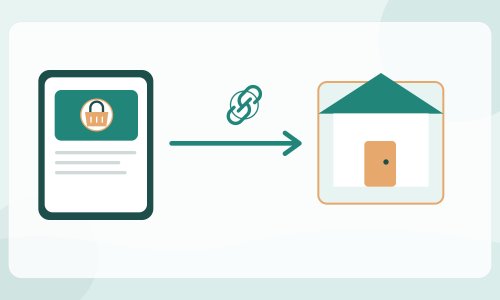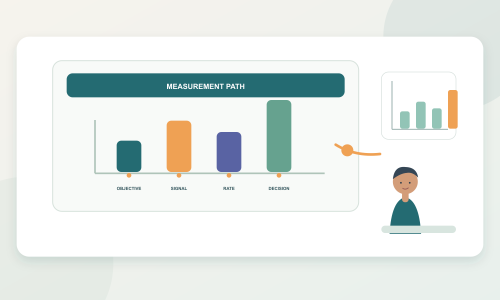

Quick answer: To choose a social media management agency for B2B exporters, define the target markets, buyer roles, platform jobs, and business outcome before comparing vendors. Then verify who handles strategy, original content, localization, publishing, community replies, reporting, account access, and licensing. Do not rank proposals by post volume or follower-growth promises alone. Give each finalist the same non-confidential product brief and ask for a sample post, its rationale, a tracked-link plan, and a response path for a real buyer question. The agreement should name deliverables, approvals, response windows, rights, access, reporting definitions, change fees, and exit handoff. A small, bounded pilot can test the operating process before the company commits to more platforms or production capacity.
Scope and reading note
This guide is for teams planning social media work for an export business. Workflow examples are editorial recommendations, not platform requirements, client case studies, or performance promises. The workbook did not include live keyword metrics, so this draft does not claim verified search volume. Check current platform settings, rights, and market-specific requirements before publishing.
What a social media management agency for B2B exporters should do
A request for “social media management” can hide three different needs. A team may have ideas and product expertise but lack the capacity to write and publish consistently. It may have production capacity but lack native-language editing, market context, or platform judgment. Or it may need someone to monitor conversations and route inquiries while internal sales and technical staff remain responsible for answers. Those needs can be combined, but they should be scoped separately. A proposal that says “full service” without naming the work leaves both sides guessing.
Before speaking with agencies, write a short business brief: target countries, language variants, buyer roles, sales cycle, priority products, approved product facts, topics that require technical review, current accounts, website destinations, lead owners, and approval contacts. A manufacturer seeking qualified distributor inquiries needs content about supply terms, application fit, customization limits, relevant certifications, and support. A consumer-facing exporter may need product discovery and retailer traffic. The desired audience and decision are different, so the content plan and reporting model should be different too.
Separate what the vendor can control from what it cannot. It can usually control the agreed work, editorial quality, response process, publishing accuracy, and measurement setup. It cannot guarantee an algorithmic distribution outcome, a fixed number of qualified inquiries, or a sale that depends on product, market, pricing, and sales follow-up. A useful brief defines a business aim while leaving room to test the path toward it.
Turn “full service” into an acceptance checklist
Social programs may include market research, platform strategy, editorial calendars, copy, design, filming, editing, translation, localization, scheduling, community management, creator partnerships, paid media, analytics, and account governance. A company does not have to buy every service. It does need to know which items are included, which are client responsibilities, and which trigger additional fees. Ask for a deliverable, owner, review point, due date, and acceptance condition for each workstream.
For example, “localization” could mean direct translation, or it could mean a target-language editor checks terminology, tone, units, date conventions, cultural references, and the call to action. “Community management” could mean watching for comments, or it could include replying, categorizing messages, handling weekends, and escalating complaints. Those are different labor commitments. Likewise, a monthly content calendar may be a list of titles, or it may include platform, audience problem, asset request, approval owner, destination URL, target time zone, and KPI.
Ask vendors to mark the boundary between included revisions and new scope. A late product change, an extra language, a reshoot, a weekend moderation shift, a new product line, and an additional creator usage license can all affect the work. Written boundaries make the proposal easier to compare and reduce conflict after launch.
Choose platforms by role, not by logo count
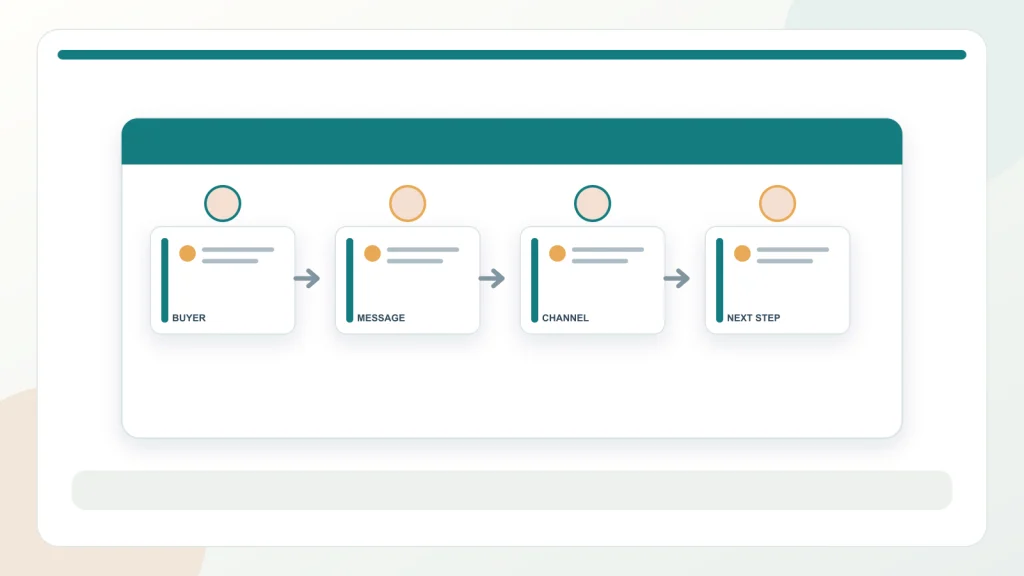
A vendor that can access five platforms has not yet shown that it understands five audiences. For every proposed channel, ask: which buyer or influencer is it meant to reach, what information will that person seek there, what format can carry that information, what should the viewer do next, and what evidence will tell the team whether the channel is useful? Those answers should be specific enough that the company could decide to pause a channel without abandoning the entire strategy.
A B2B exporter might use a professional network for industry perspectives, YouTube for demonstrations and longer explanations, Instagram for visual applications, or short-form video for a concise problem-and-solution story. These are possible roles, not universal platform rules. The right mix depends on the target market, buyer research, sales feedback, available experts, and production resources. Do not assume the same graphic and caption can be copied everywhere without adaptation.
Start with one primary channel and, if capacity permits, one supporting channel. Give each an independent job. The supporting channel might make technical ideas easier to discover, provide visual proof, or reach a different stakeholder. Define what evidence would justify adding another channel, such as relevant visits or qualified conversations, rather than expanding because a competitor has an account there. A narrow, maintainable program is easier to learn from than six neglected profiles.Considering outside social media support? Review Marketboo’s social media management service against your markets, production capacity, approval process, and account-governance needs.
| Workstream | Possible deliverable | Acceptance question |
|---|---|---|
| Strategy and platform roles | Markets, audiences, channel jobs, quarterly themes | Does every channel have a distinct purpose and review condition? |
| Planning and production | Topics, scripts, graphics, video, captions | How are original, adapted, and client-supplied assets identified? |
| Localization and approval | Target-language copy, terminology list, approvals | Who checks language, product facts, and sensitive claims? |
| Publishing and moderation | Calendar, post log, categorized replies | What are the response window, escalation path, and holiday plan? |
| Measurement | Platform metrics, tagged traffic, lead quality | Can the report distinguish reach, clicks, and qualified inquiries? |
| Access and rights | Permission register, license log, exit checklist | Does the company control the account, source files, and licenses? |
Use one sample brief to see how a vendor thinks

A polished portfolio shows finished work, but not how the team got there. Give each finalist the same non-confidential product sheet and ask for one sample concept, the intended buyer, the problem it answers, the format choice, the evidence it relies on, a proposed next step, and the facts it still needs from the client. The exercise is not a request for free campaign work. It is a way to see whether the vendor asks useful questions and knows when a claim requires approval.
Suppose a product page says that a component is suitable for several production environments. An editor should not turn that into “works in every factory.” The claim needs limits, specifications, and technical confirmation. The sample can expose whether the team turns vague positioning into a concrete buyer question or merely adds superlatives such as “leading,” “best,” and “revolutionary.” Ask the vendor to identify which lines are facts, which are editorial framing, and which require a product specialist.
Have the vendor explain how the sample would change for another platform. The underlying product fact can remain consistent while the opening, visual pacing, copy length, subtitle treatment, and destination differ. If every answer is “we can repurpose it,” ask what is actually adapted and who performs that work.
Treat localization as an editorial process
Correct translation is not the same as localized communication. Review address and formality, spelling variants, industry vocabulary, units, currencies, date formats, product naming, customer expectations, and support boundaries. The wording that works for an engineer may not help a procurement manager. A phrase that sounds ordinary in one English-speaking market can feel awkward or too promotional in another. Localization should be assigned to a named role and checked against a client-maintained terminology list.
Ask who owns target-language proofreading, who approves product claims, how versions are tracked, how urgent revisions are handled, and whether the editor sees the destination page in context. For regulated, safety-sensitive, environmental, performance, or comparative claims, the appropriate company specialist should review the wording. An agency’s language skill is not a substitute for technical or legal approval.
Keep a record of the source copy, localized version, reviewer, approval date, final published asset, and any correction. That record makes it possible to correct a translated specification without searching chat threads for the last version. It also helps the next vendor inherit a consistent voice instead of translating the same terms from scratch.
Write community responsibilities before messages arrive
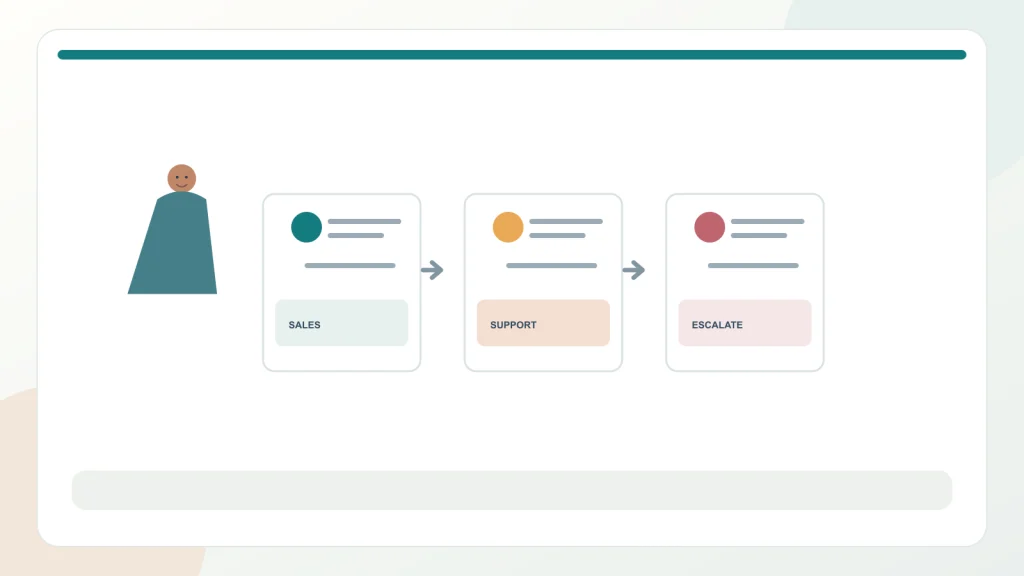
Engagement is not just a count of likes. A workable response system sorts messages into categories such as product specifications, distributor interest, sample or quote requests, service issues, recruiting, spam, and complaints. The agency may acknowledge a message, collect approved information, link to a verified resource, and route the inquiry. Pricing, inventory, delivery promises, certification status, technical suitability, refunds, and legal conclusions should be answered only by an authorized company representative.
Put the response window in the scope. State the business days and time zone, whether weekends are covered, what happens on regional holidays, and who receives an urgent escalation. Clarify whether the service is monitoring only or includes approved replies. A log can record arrival time, category, owner, status, and resolution without collecting more personal information than the business needs.
Protect privacy in public threads. Do not ask a customer to post an order number, phone number, address, or other sensitive detail publicly. Route the conversation to an approved secure channel and follow the company’s privacy process. A social platform’s messaging feature does not itself satisfy the company’s obligations for privacy, customer care, or record retention. The agreement should also define what the agency may hide, report, or escalate when a conversation becomes abusive or sensitive.
Keep the company in control of accounts and creative rights
Treat social accounts as business assets. The company should retain control of the primary business identity, recovery email, billing details, and long-term administrator access. Give an outside vendor only the permissions it needs for its role. Do not circulate passwords in group chats or leave a former employee or contractor as the only administrator. Platform role names and interfaces change, so check the live account and current help material at onboarding rather than relying on old screenshots.
Creative rights need the same specificity. The agreement should address original images, fonts, music, talent likenesses, creator posts, customer-provided footage, factory filming, raw files, editing projects, usage channels, territory, duration, paid amplification, and takedown obligations. Publicly visible content is not automatically licensed for a brand’s advertising or product page. Record the source and permission for each third-party asset.
Write the exit handoff before signing: revoke access, transfer scheduled posts, export the calendar and post links, deliver approved source files, list active licenses and expiry dates, hand over tracking conventions, and route unresolved messages. A clear exit process protects continuity if the relationship ends or the internal team changes.
Make reports traceable from attention to business action

A useful report separates stages: attention (impressions, reach, views), interest (reactions, saves, profile visits, meaningful comments), site behavior (tracked visits, product-page activity, forms), and business outcomes (qualified inquiries, sales acceptance, quotes, orders, or assisted conversions). For each metric, name the source, period, denominator, deduplication rule, and attribution method. “Engagement rate” is ambiguous unless the formula and denominator are stated.
Google Analytics Help documents campaign parameters for custom URLs. A consistent UTM dictionary can identify source, medium, campaign, and content, but it does not remove every attribution gap. Users may switch devices, decline tracking, or return later through another route. Social-platform reporting and website analytics may credit a conversion differently, so the figures should not simply be added together.
Test the tracking path before the first campaign: click a tagged link, verify the landing page, inspect analytics collection, submit a test form if appropriate, and confirm that the lead reaches the right owner. In the monthly review, pair the platform’s attention data with sales feedback. A small number of inquiries that match the target buyer may matter more than a large volume of unrelated reactions.
Use survey data as context, not as a buyer forecast
Pew Research Center’s report, published January 31, 2024, describes a survey fielded in May 2023 among U.S. adults. It reported that 83% of respondents used YouTube, 68% Facebook, 47% Instagram, and 33% TikTok. These are public-use estimates for the survey population; they are not percentages of international procurement buyers, a measure of B2B purchase intent, or current global audience shares.
The data can prompt a question about broad platform context in the United States. It cannot tell an exporter how many purchasing managers in Germany, Mexico, or Singapore use a given network, or what fraction will see a company’s post. A market plan should combine target-country buyer research, CRM roles, sales conversations, website sources, and small content tests.
When a report includes a third-party statistic, preserve its fieldwork date, publication date, population, and limitation next to the number. That makes the paragraph useful to a reader and less likely to be quoted out of context. The workbook also states that live keyword metrics were not connected, so this draft makes no verified search-volume claim.
Normalize proposals before you compare prices
Price differences may reflect the number of posts, filming location, editing complexity, language versions, moderation hours, creator licenses, approval rounds, reporting depth, or travel. Ask each vendor to quote the same work breakdown: strategy and management, production, third-party creator or asset costs, media spend, travel, tools, and taxes. Require quantities and change fees for each line. There is no single public “standard agency price” that can be inferred from one proposal.
Use a weighted scorecard based on the project. Possible dimensions include understanding of the product and buyer, platform-specific thinking, localization, factual review, community process, measurement, account governance, project management, and quote transparency. Weight them according to business needs. A vendor with strong visual polish but no plan for lead routing may not fit a company whose primary outcome is distributor inquiries.
Ask for context behind past performance figures: time period, industry, account baseline, paid budget, customer approval, and attribution method. A result without those details should not be treated as a forecast. If a supplier cannot disclose client data, ask for a process demonstration or anonymized work sample rather than demanding confidential information.
Pilot the operating system before scaling it
The first month is a good time to check the process, not to declare success or failure from a small change in reach. Review account access, audience assumptions, content approvals, publishing accuracy, response windows, UTM collection, and sales handoff. Then examine a sample of posts that performed differently and ask what the team learned. Record whether delays came from the vendor, product review, missing assets, or internal approvals.
A bounded pilot can specify a limited number of posts, formats, markets, and working hours. Set an observation date, a few process measures, data availability requirements, and a stop-or-adjust condition. Do not write an unverified follower or inquiry target as a guaranteed result. The pilot’s job is to establish whether the team can deliver good work, learn from evidence, and communicate limitations.
After the review, decide whether to keep the scope, change the content mix, add a market, or pause a platform. Document the reason. That decision record will help the business avoid repeatedly restarting from intuition whenever a social manager or agency changes.
A procurement decision rubric that survives the meeting
A short scoring rubric keeps the loudest presentation from deciding the purchase. Give independent scores for strategy, sample quality, localization, product-fact handling, moderation, measurement, account control, rights, and cost clarity. Use a consistent scale and require a written reason for each score. A zero in a critical area—such as business-owned account access or rights to a creator asset—may be a disqualifier rather than a low score that can be averaged away.
Invite the people who will use the service to review the proposal. Sales can assess whether inquiries will be actionable; product or engineering can judge fact-review steps; marketing can review voice and platform adaptation; operations can examine response coverage and permissions. Procurement can check scope and change terms. The final decision should state the business case and the unresolved assumptions.
This is more useful than rating a presentation on charisma. It also creates a trail for the first quarterly review: what the company expected, what the supplier agreed to deliver, and which evidence will inform renewal or expansion.
Run a handoff workshop before the pilot begins
A proposal can be excellent and still fail when the agency cannot get approved product information, usable footage, or timely decisions. Before publishing, hold a short handoff workshop with the people who will supply facts, approve copy, route inquiries, and maintain accounts. Walk through one sample from brief to post. Identify who answers technical questions, who can approve a revised specification, and who can make the final call when an event or launch date changes.
Use a shared asset register rather than relying on messages. For each file, capture a clear name, product version, owner, usage permission, language, expiration if any, and the date it was checked. The register need not be elaborate; a well-maintained spreadsheet is more useful than a sophisticated library no one updates. Link the approved file to the calendar item so the designer and reviewer use the same source.
Agree on a correction process as well. If a product detail changes after a post is scheduled, the team needs to know who can stop publication, edit the caption, update the linked page, or remove an older asset. This is especially important for evergreen content, which can remain visible long after the person who wrote it has moved to another role.
Finally, decide where the monthly report and decision log will live. Keep one version of the KPI definitions, campaign naming rules, and action items. The goal is not to add paperwork; it is to make the work portable when the internal team grows, the agency changes, or a new market is added.
Conclusion: choose a partner that leaves the business stronger
Choosing a social media management agency for B2B exporters is ultimately a question of operating control and evidence. Select a team that can turn market understanding into work the company can review, track, and take over: a clear platform role, accurate localized content, bounded moderation, usable reporting, licensed assets, and business-owned accounts.
Start with the buyer and business objective, compare the same sample task and scope, then run a limited pilot. Evaluate the quality of the decisions and handoff as well as the visible post. A good partnership should leave the company with stronger content records, cleaner measurement, and clearer buyer questions—even if the company later chooses to bring the work in-house.
| Channel role | Possible job | Example content | Evidence to review |
|---|---|---|---|
| Professional conversation | Explain an industry issue to decision-makers | Expert note, buying checklist, event recap | Relevant roles engaged and resource visits |
| Video explanation | Demonstrate a product or process | How-to, FAQ, facility walkthrough | Qualified viewing and destination-page actions |
| Visual discovery | Show product application or design | Application photo, carousel, short clip | Relevant saves, profile visits, tagged traffic |
| Short-form discovery | Present one problem and one useful point | Concise product demonstration | Target-market views, site actions, inquiry fit |
Operating checklist
- Write down the quarter’s business objective, target markets, buyer roles, and approved product facts.
- Audit accounts, website destinations, existing content, available assets, and administrators.
- Break the proposed service into strategy, content, localization, moderation, reporting, access, and extra costs.
- Give every finalist the same product brief and request a sample plus its factual-review rationale.
- Compare scope, approvals, response windows, rights, account permissions, and exit handoff line by line.
- Define each KPI’s source, formula, owner, observation period, and business action.
- Run a limited pilot and verify content quality, link tracking, moderation, and asset filing.
- Review what to continue, adjust, or stop before adding channels or budget.
FAQ
What should an exporter evaluate first when choosing social media management?
Start with the provider’s understanding of the target buyer, market, and sales cycle. Then review scope, moderation, account control, and reporting definitions.
Is the lowest agency quote the best value?
Not by itself. Compare filming, localization review, coverage hours, licensing, reporting, and extra fees on the same scope.
Should a company share its social media passwords with an agency?
Use the platform’s available permission system and grant only the access needed. Keep company control and verify access removal when the engagement ends.
How can I tell whether an agency does more than publish posts?
Look for a publishing log, message triage, escalation process, tracked links, lead routing, and recommendations tied to evidence.
How long does social media management take to generate export inquiries?
There is no universal timeline. Sales cycles, budget, content, market demand, and landing pages all affect outcomes; avoid unsupported fixed-inquiry promises.
How many platforms should an exporter manage?
Choose based on buyer journey and production capacity. Make one primary channel and its lead path work before adding channels with a clear role.
How should I compare two agencies’ reports?
Align the period, metric definition, denominator, attribution method, and source. Show platform data, site visits, and qualified inquiries separately.
Conclusion
Choosing a social media management agency for B2B exporters is ultimately a question of operating control and evidence. Select a team that can turn market understanding into work the company can review, track, and take over: a clear platform role, accurate localized content, bounded moderation, usable reporting, licensed assets, and business-owned accounts.
Start with the buyer and business objective, compare the same sample task and scope, then run a limited pilot. Evaluate the quality of the decisions and handoff as well as the visible post. A good partnership should leave the company with stronger content records, cleaner measurement, and clearer buyer questions—even if the company later chooses to bring the work in-house.
Align the marketing objective and follow-up path first. To discuss your cross-border marketing needs, contact Marketboo.