

Quick answer: Facebook Page management for export businesses starts with a clear first screen: what the company sells, which markets it serves, and how a visitor can take the next step. Build content pillars around product applications, technical questions, production or delivery evidence, industry education, and events. There is no universal posting frequency; choose a pace the team can sustain and schedule review and replies for the audience’s time zone. Tag important links, then report reach, relevant interactions, site behavior, qualified inquiries, and follow-up separately. Keep business ownership of the Page, grant outside operators limited access, and define escalation rules for technical, service, privacy, and reputation issues before the first message arrives.
Scope and reading note
This guide is for teams planning social media work for an export business. Workflow examples are editorial recommendations, not platform requirements, client case studies, or performance promises. The workbook did not include live keyword metrics, so this draft does not claim verified search volume. Check current platform settings, rights, and market-specific requirements before publishing.
Facebook Page management for export businesses starts with three visitor questions
A Facebook Page is neither a smaller copy of a corporate website nor a product catalog pasted into a profile. A first-time visitor should quickly understand what the business does, whether it serves the visitor’s market, and where to learn more or contact the team. The profile description, category, profile image, cover image, contact details, pinned post, and website link should tell a consistent story.
Use concrete, supportable language. A line such as “manufacturer of stainless-steel food-processing valves for export markets” gives a reader more context than “a world-leading partner for every solution.” Avoid absolute claims unless the company can substantiate them. Use the Page to introduce the business and route people to a detailed product or service page for specifications, limits, certifications, and application details.
Check the visitor path on mobile as well as desktop. Is the call to action visible? Does the link load the correct language and product? Does a user know what information to include when asking for a quote? If the Page is tied to the wrong site URL or shows an outdated product line, more frequent posts will not solve the underlying problem.
Build content pillars around buyer decisions
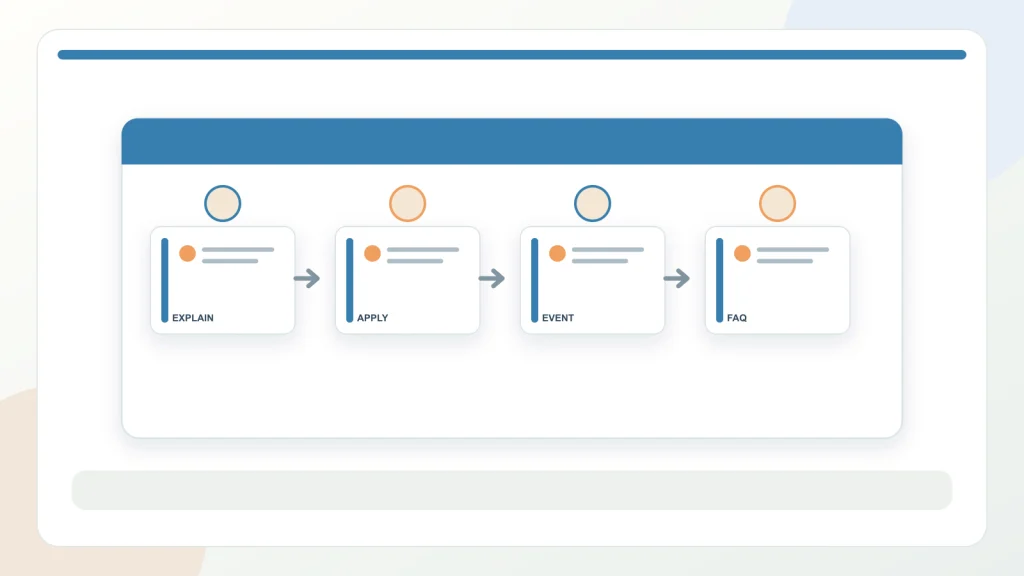
An export Page can organize content around the questions buyers ask as they move from awareness to evaluation. Early-stage topics explain applications, industries, terminology, and the problem a product addresses. Evaluation topics clarify specifications, customization boundaries, testing or quality processes, and what a buyer should check before comparing suppliers. Later-stage topics can explain how to request a quote, what details help the sales team respond, or what the sample process involves.
Each post should do one job. A post about material choice does not also need to announce a trade show, list every product, and ask for a quote. If a piece contains several ideas, split it into a short series or link to a more complete resource. Product claims should be confirmed by a technical owner; the social editor should not infer performance from a photograph or competitor post.
Use company news sparingly and connect it to audience value. A factory milestone may be relevant if it helps a buyer understand a process, capacity, or quality system and if those details are approved. An internal celebration with no buyer context is usually better suited to an employee channel than the public Page.
Plan a rolling four-week calendar instead of scrambling on publish day
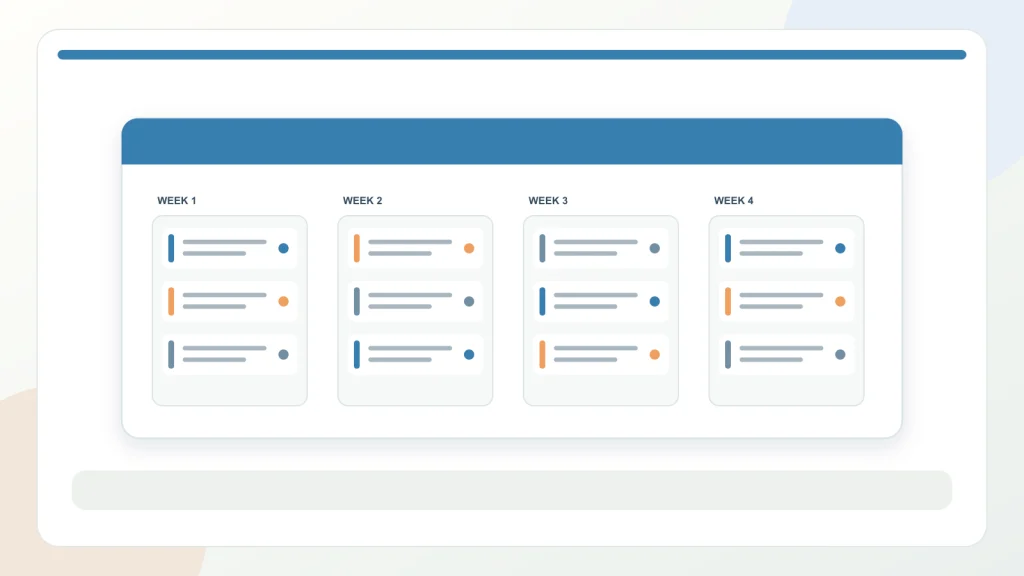
A Page often goes quiet because assets and approvals were never scheduled, not because the team has no ideas. Maintain a rolling four-week queue with topic, audience question, content pillar, asset owner, approval deadline, destination, target-market time zone, and backup idea. Topics might include a technical explanation, an application, a documented process, a trade-show update, a buyer checklist, and an FAQ. The calendar should show status rather than simply hold a list of captions.
Set the approval lead time based on who must check the content. A product expert may need several days to confirm a specification. A localized version may need a separate language review. Sales may need to approve the lead destination or offer. Put a cutoff date on each dependency so the publishing manager has time to replace a delayed post rather than publish unverified copy.
A calendar is a working tool, not a promise that every idea must go live. Mark why a post was delayed or removed—missing source, product change, expired event, legal review, or insufficient asset quality. Those notes help the team improve planning and avoid republishing an obsolete announcement.Considering outside social media support? Review Marketboo’s social media management service against your markets, production capacity, approval process, and account-governance needs.
| Pillar | Example question | Possible format | Next step |
|---|---|---|---|
| Product explanation | Which specifications affect a buying decision? | Image, simple diagram, short video | Review the specification page or ask a question |
| Application | What should a buyer confirm for this use case? | Illustration, demo clip, Q&A | Share application details |
| Process evidence | What checks are included in this process? | Approved facility or process footage | Request relevant documentation |
| Buyer education | What should be ready before a quote request? | Checklist, carousel, concise post | Download a resource or contact sales |
| Events and people | What will the team discuss at the event? | Event notice, short recap | Book a meeting or send a question |
Set a cadence the team can maintain
There is no single weekly posting frequency that is right for every export business. A team can use two useful posts per week as an initial planning hypothesis if it can support the research, visual production, review, publishing, and response work. That number is not a Meta rule or a proven benchmark. If the team can properly approve and answer one post per week, begin there and protect the quality of that work.
The cadence can change around a trade show, product launch, or seasonal buying period, but an increased publishing schedule also increases the need for approval and reply coverage. Do not schedule a post just to meet a quota when the information is outdated or the landing page is not ready. Use the first few weeks to see which themes attract relevant visitors and questions, then make a documented adjustment.
A sustainable calendar should account for the team’s home time zone and the audience’s time zone. If buyers are most active outside the operator’s normal hours, decide whether the business will cover that window, provide an approved acknowledgment, or state when a reply will arrive. Expectations are easier to meet when they are visible in the workflow.
Treat comments and messages like a shared service desk
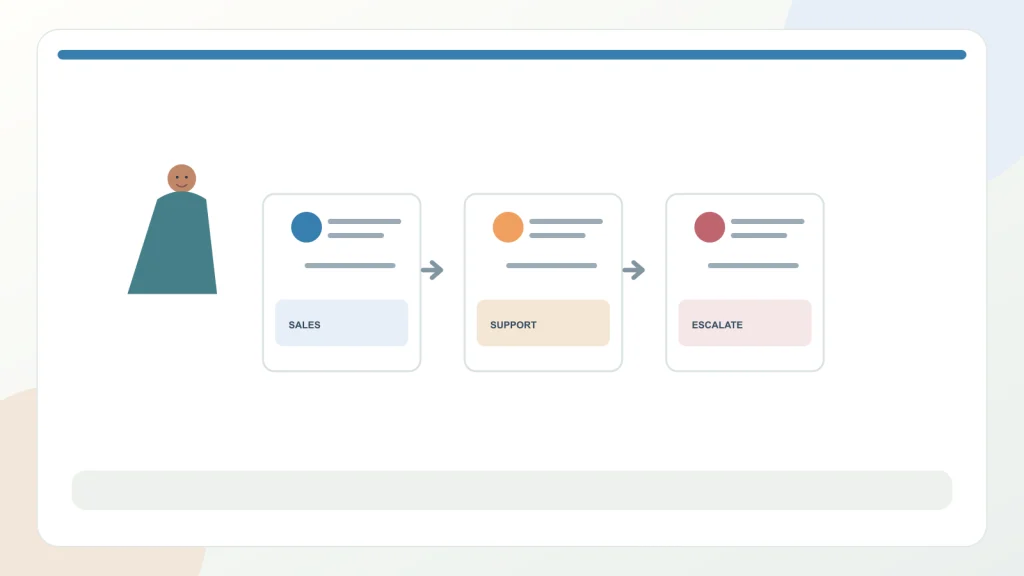
Classify incoming messages before deciding who responds. Common categories include product specifications, distributor interest, quote and sample requests, after-sales issues, hiring, spam, and complaints. A social operator can acknowledge a message, ask an approved clarifying question, send a verified link, and route the inquiry to the right person. Technical suitability, pricing, stock, lead time, certification, refunds, and warranty promises should be confirmed by someone authorized by the company.
Create a response matrix with category, first responder, backup owner, expected response window, and escalation contact. Distinguish between “we have received your question” and “we have resolved it.” A response log should track arrival, handoff, status, and outcome, but should not collect personal data that is not necessary for the business task.
Never ask someone to put a phone number, order number, address, or private technical drawing in a public comment. Move the conversation to a company-approved secure channel and follow the company’s privacy process. A platform’s message function is a communication tool, not a replacement for customer-service, data-protection, or recordkeeping policies.
Use a sample post to test the editorial standard
Imagine an exporter that sells industrial pumps. “Reliable quality—contact us today” gives a buyer little basis for a decision. A more useful post might explain that a buyer should confirm the fluid, temperature, flow rate, head, and available power before selecting a configuration. A verified diagram could show where each detail appears in the specification sheet, and a link could route the visitor to a product page or sales contact. This example is an editorial illustration, not a recommendation for a particular pump model.
The purpose is to make the next step easier while remaining within the company’s technical limits. If the product team has not approved the operating conditions, the post should say what information must be confirmed rather than imply a universal fit. A helpful post can still be concise; clarity does not require a long caption or an aggressive sales claim.
Before publishing, ask whether the visual supports the copy, whether the target reader can understand the terminology, whether the CTA matches the landing page, and whether the post has a responsible owner for replies. If any answer is no, fix the workflow rather than relying on a stronger hook.
Use UTMs to distinguish posts from other traffic sources
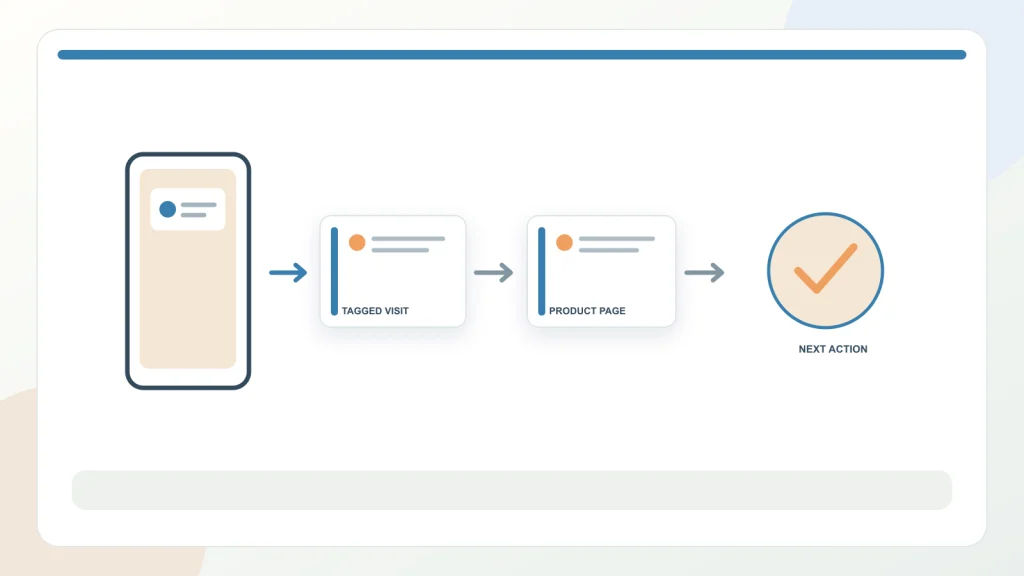
Google Analytics Help describes using campaign parameters in custom URLs. A company can establish a naming dictionary in which source identifies the platform, medium describes the channel type, campaign identifies the initiative, and content distinguishes a specific creative or post. Keep spelling, case, and separators consistent. If one operator writes “facebook,” another “Facebook,” and a third “fb,” the reports may fragment a single source into several labels.
Test a tagged link before publishing. Open the URL, confirm that it reaches the correct page and language, check that the page loads on mobile, and verify that the analytics setup receives the expected source information. If a lead form is involved, submit a test and confirm that the lead reaches the right team. Do not assume the presence of query parameters proves that the data pipeline works.
UTMs help identify some visits; they do not resolve every attribution question. A buyer may see a post, return later through search, change devices, or contact sales offline. Report tagged sessions, form submissions, and sales-confirmed leads separately. Explain the period and attribution model so a social report is not presented as a complete revenue ledger.
Make the time zone part of the publishing and response schedule
Record both the team’s operating time zone and the target audience’s local time. That includes editorial approval deadlines, planned publication time, and moderation coverage. If a team based in Asia serves buyers in North America, a message may arrive after the office closes. The business can assign coverage, use an approved acknowledgment, or set a clear next-business-day expectation; the important point is to plan rather than silently promise instant replies.
For trade shows and local holidays, verify the date, location, language, website page, and sales owner before the post is scheduled. Time zones can change the calendar day, and regional holidays do not always align with the headquarters schedule. A global calendar should show the relevant market and local date, not merely a head-office timestamp.
Build a backup plan for urgent or reputational issues. The person monitoring the Page should know how to reach a manager if a product safety concern, a customer complaint, or a misleading claim appears. Spell out what the operator may hide or report, what should remain visible for a company response, and who approves an official statement.
Review account access and brand details quarterly
Assign at least two long-term internal owners and check recovery routes, company email, billing control, and login security. Give external staff only the permissions required for their tasks. Do not share passwords or make an agency the sole administrator. Meta’s available tools and permission roles can change, so verify the current account and current help material rather than relying on a static set of instructions.
Review the Page name, profile and cover images, description, service area, website URL, contact path, and pinned content. Check for old product names, expired event references, links to the wrong language, and inconsistent company details. If the business operates multiple regional Pages, document which one owns local updates and how brand standards are maintained.
At a supplier transition, transfer the calendar, post URLs, source artwork, video files, subtitle files, license records, and tracking dictionary. Revoke the former provider’s access only after the company has confirmed the new owner can operate the account. This sequence reduces the risk of losing access or rights during a handoff.
Read performance in stages, not as a follower-count contest
A useful monthly review separates visibility, interest, site behavior, and business outcomes. Reach and impressions show whether content was displayed; they do not show whether the audience matched the target buyer. Relevant comments, profile visits, and message quality may signal interest. Tagged clicks and landing-page activity show part of the path beyond the platform. Qualified inquiries and sales acceptance reveal whether the effort reached people the business can serve.
Define every KPI before the campaign. If the report uses an interaction rate, state whether the denominator is reach, impressions, or followers. Note whether users or events are counted, how repeat actions are handled, and what period is compared. Pair quantitative results with a short human review: which buyer questions appeared, which posts were misunderstood, what sales heard, and what should change next month.
Pew Research Center reported that 68% of U.S. adults surveyed in May 2023 used Facebook; the report was published January 31, 2024. This is a broad public-use estimate, not the share of industrial buyers or an estimate of Page reach. It provides context, not proof that Facebook is the right channel for a particular exporter. Check the company’s target market, buyer roles, site traffic, and conversations with sales before choosing a platform.
Create a weekly run sheet that survives staff changes
A simple weekly routine can prevent last-minute work. On Monday, confirm the objective, post status, and target-market timing. On Tuesday, collect product or event facts. On Wednesday, finalize copy and visuals. On Thursday, complete product and brand review. Before publication, verify the link, mobile landing page, captions, locale, and response owner. The calendar should show the backup post if an asset or approval is delayed.
At the end of the week, record whether each post went live, whether any messages remain open, and what must be escalated. At month end, review which content pillars are still useful and whether the Page is answering the questions sales hears. Do not automate the republication of expired announcements or information that changed.
A run sheet is valuable even when a vendor runs the channel. It keeps the company informed, makes approval dependencies visible, and gives a new team enough context to continue without rebuilding the process from scattered messages.
Practice the workflow with three realistic message cases
Before the Page goes live under a new process, run a short tabletop exercise. Use three fictional messages: a buyer asking whether a product fits a specific operating condition, a distributor requesting a price and territory discussion, and a customer reporting a service problem. For each message, identify the first response, the information the operator may collect, the internal owner, the response deadline, and the condition that requires escalation. The exercise exposes missing owners before a real customer is waiting.
The technical question should not be answered from a general marketing sheet if the stated condition falls outside its examples. The social operator can thank the buyer, request only approved context, and route the question to an engineer. The distributor inquiry may need a sales region owner and a qualified lead record. The service complaint may require a private support path and a manager who can make a service decision. Different messages deserve different responses; a single canned reply can make the business seem inattentive.
Write a few approved acknowledgment templates in the relevant languages, but keep them human and easy to personalize. Avoid making a template sound like a resolution when it merely confirms receipt. Include a realistic expectation such as when the team will follow up, and make sure the business can meet it. Review the templates whenever product support hours or regional ownership changes.
After the exercise, update the routing matrix and test the actual notification path. A named owner is only useful if the alert reaches them, the backup knows what to do, and the original operator can see when the issue is resolved. This small rehearsal connects publishing work to the company’s real customer-service system.
Use a post-mortem to repair weak links in the path
When a post receives attention but few useful visits, do not automatically rewrite the caption. Trace the path as a buyer would: read the Page description, open the post link on a phone, choose the language, find the product details, and locate a contact route. Note every step where the destination is unclear, slow, or inconsistent with the post. A high drop-off may be a page issue, a broken link, an unavailable product, or a mismatch between the promise and the content.
Ask sales to review a sample of the leads that did arrive. Were they in the target market? Did they understand the product? Did the form request enough detail without creating unnecessary friction? Did the sales owner follow up within the expected time? Social publishing cannot compensate for a contact form that routes nowhere or a lead inbox no one checks.
Keep the review proportionate. A small number of visits is not enough to make a broad causal claim, and a single comment is not a representative survey. Use the post-mortem to generate a specific next test—such as clarifying the destination, changing the CTA, or adding a buyer checklist—then record what changed. Over several cycles, the team can distinguish recurring process failures from normal variation in individual posts.
Close the loop by updating the calendar and the owner checklist. If a product page is the problem, assign a web fix. If the CTA is vague, improve the copy. If inquiries are irrelevant, revisit audience assumptions and sales qualification. The report is useful only when somebody is responsible for the next action.
Conclusion: make the Page a useful front door
Facebook Page management for export businesses works best when positioning, content, publishing, moderation, and lead tracking are one maintainable operating process. Make the first screen clear, publish useful buyer answers at a sustainable pace, staff replies for the relevant time zone, tag the links, and keep the account under company control.
The Page does not need to look busy to be useful. It should reduce the effort a qualified buyer spends understanding the company and finding the next step. Review the process monthly, fix broken paths, and use sales feedback to decide what the next post should explain.
| Stage | Examples | Question to define | Possible action |
|---|---|---|---|
| Visibility | Reach, impressions | Which market and reporting period? | Review audience or topic fit |
| Interest | Profile visits, relevant interactions | What is the denominator? | Improve Page details or CTA |
| Site behavior | Tagged visits, engaged sessions | Were UTMs and analytics tested? | Check link and landing-page fit |
| Business | Qualified inquiries, sales acceptance | How are leads qualified and deduplicated? | Improve handoff or content |
Operating checklist
- Define the Page’s target countries, languages, buyer roles, products, and business objective.
- Check the description, imagery, contact route, website link, and pinned content for accuracy.
- Build a four-week topic queue with a buyer question, owner, asset, CTA, and destination for each post.
- Set product-fact review, brand review, publishing checks, and time-zone coverage.
- Assign message categories, response owners, escalation contacts, and holiday coverage.
- Create consistent UTM names and test them in Analytics, the destination page, and the lead system.
- Review publishing and message status each week, then review site visits and lead fit monthly.
- Audit Page ownership, permissions, licenses, and exit handoff each quarter.
FAQ
How often should an export business post on Facebook?
There is no universal cadence. Start with a sustainable schedule based on team capacity, then adjust using relevant engagement, site behavior, and lead quality.
Why is the Page active but not generating inquiries?
Check Page clarity, buyer relevance, the call to action, landing-page fit, and message routing before simply increasing post frequency.
What should an exporter post on Facebook?
Consider product applications, technical explanations, buyer checklists, approved process evidence, team expertise, and event information. Verify facts and asset rights first.
Does Facebook’s U.S. usage rate prove buyers are there?
No. Pew’s figure describes U.S. adults overall, not a specific industry’s international buyers. Validate the target audience with company and market evidence.
Can an agency answer product questions directly?
It can acknowledge a message and collect approved information. Authorized company staff should verify specifications, price, delivery, and product commitments.
How do I track traffic from a Facebook post?
Use consistent UTM parameters and test collection in the company’s Analytics setup and lead path. UTMs do not eliminate all attribution gaps.
How can a company avoid losing control of its Page?
Keep internal account owners and recovery access, grant vendors limited permissions, and verify revocation and asset handoff at the end of the engagement.
Conclusion
Facebook Page management for export businesses works best when positioning, content, publishing, moderation, and lead tracking are one maintainable operating process. Make the first screen clear, publish useful buyer answers at a sustainable pace, staff replies for the relevant time zone, tag the links, and keep the account under company control.
The Page does not need to look busy to be useful. It should reduce the effort a qualified buyer spends understanding the company and finding the next step. Review the process monthly, fix broken paths, and use sales feedback to decide what the next post should explain.
Align the marketing objective and follow-up path first. To discuss your cross-border marketing needs, contact Marketboo.
