Direct answer
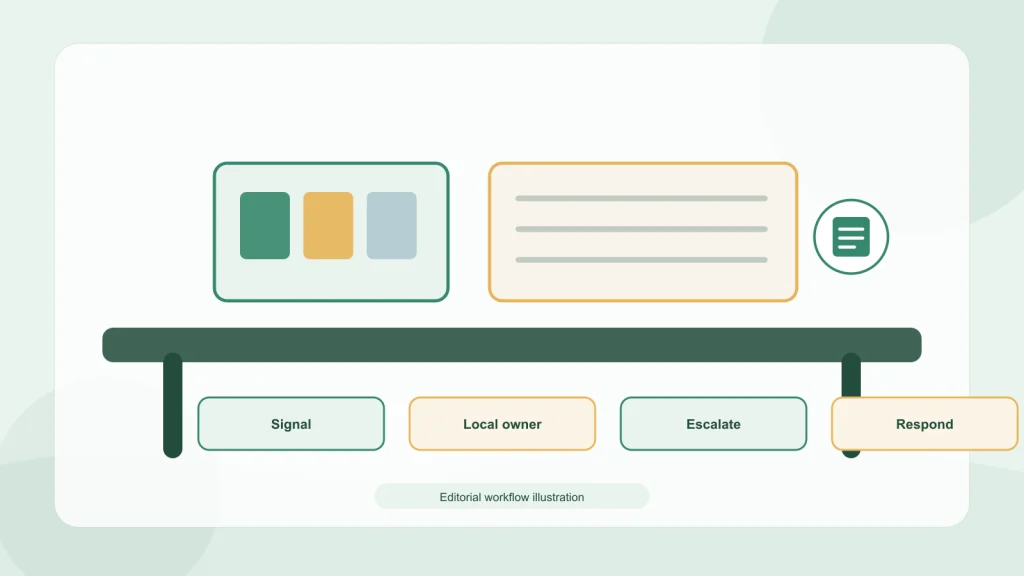
Facebook page management for international brands needs a clear division between global governance and local judgment. Define which facts, policies, and brand standards stay consistent, then assign regional owners to adapt language, examples, calendars, and responses. Set coverage windows by market, give moderators an escalation matrix, and document who can pause or correct a post. Report each page and market separately before drawing a global conclusion. The operational test is simple: can a customer in each market understand the page, receive a timely and accurate answer during stated coverage, and reach the right local team? A page network without accountable owners is not international management.
Facebook page management for international brands starts with accountable ownership
For a multinational brand, a Facebook page is more than a publishing destination. It can be where customers check a product update, ask a regional question, look for a service contact, or assess whether a business appears active in their market. The page carries expectations that extend beyond the feed. If a local-language post points to an English-only form or an outdated distributor, the brand experience breaks at the handoff.
Facebook page management for international brands therefore starts with operating design. Which pages exist? Which markets do they represent? Who owns each language? What happens to a comment outside local business hours? Which team approves a product statement or regional promotion? What if the global office needs to pause scheduled content while a local service issue is unfolding? These questions should be resolved before the calendar fills up.
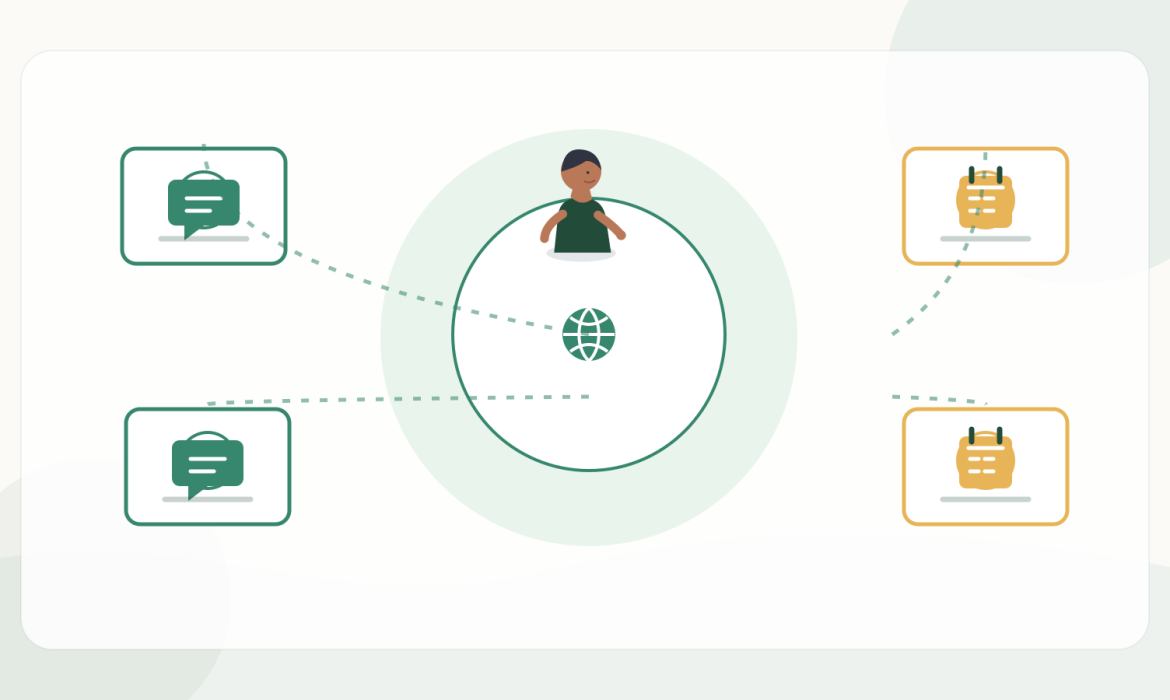
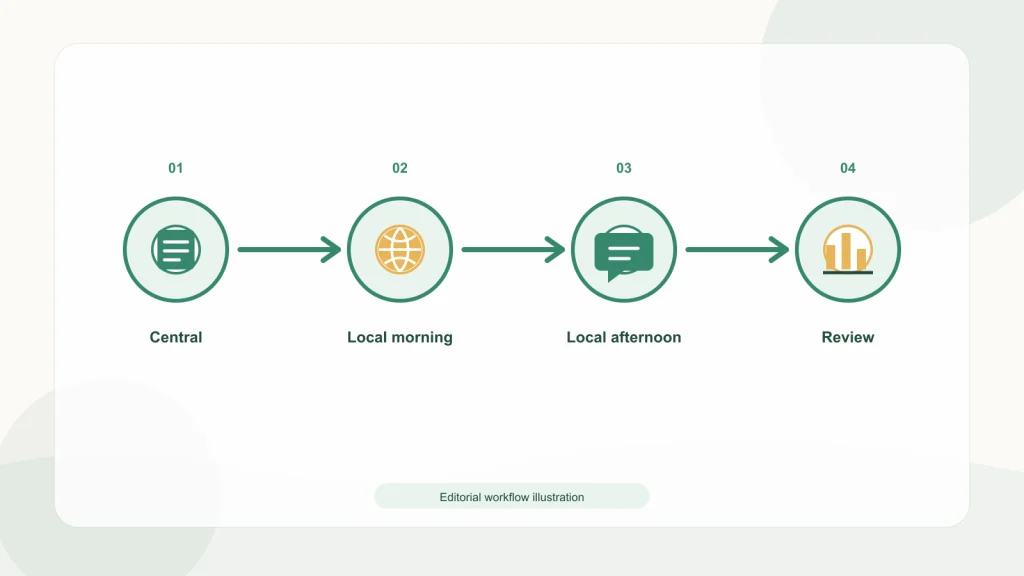
A simple governance model has a central layer and a local layer. The central layer defines approved facts, visual identity, escalation principles, access controls, and reporting definitions. The local layer supplies market context, language review, relevant examples, current service information, and the people who can resolve a local issue. The central team should not improvise on behalf of a market it does not know; a local team should not inadvertently change a fact that must remain consistent.
The model works best when decision rights are written down. A global social lead may approve a brand template while a country manager approves a local date, distributor, or service detail. Product specialists approve technical claims. Customer support handles order or warranty questions. Legal reviewers may need to review a regulated claim or promotion. A named owner can coordinate without being the authority for every decision.
A population statistic is not a page plan
Pew Research Center’s 2026 U.S. fact sheet reports that 70% of U.S. adults surveyed say they ever use Facebook. The finding comes from a survey of 5,511 U.S. adults conducted January 30 to June 18, 2026; Pew reports an overall margin of error of ±1.8 percentage points. This is useful context for the United States. It does not establish page reach in other countries, the distribution of customers across languages, the likelihood of a response, or the number of commercial inquiries a brand will receive.
DataReportal’s Digital 2025 report compiles global digital behavior and platform advertising-reach estimates from cited sources. Advertising reach should not be called a count of unique active users or an estimate of organic delivery. An international brand should combine this kind of context with local customer research, first-party page insights, sales questions, support contacts, and referral data. One region’s account performance cannot stand in for another region’s audience.
The Content Marketing Institute and MarketingProfs’ 2027 B2B report, published November 4, 2026, draws on 861 B2B marketers within 1,132 global responses; fieldwork ran June 23 through August 11, 2026. This survey can frame how marketers describe their work, but it does not establish the right staffing model or response time for your Facebook pages. Those decisions depend on your pages, audiences, support obligations, and internal coverage.
| Evidence source | Appropriate use | Important limit |
|---|---|---|
| Pew U.S. adult survey | Broad U.S. adoption context | Not a country-by-country customer or B2B reach forecast |
| DataReportal reach estimates | Global platform scale context | Not unique users or organic impressions |
| Page insights | Observed activity on a specific managed page | Definitions and audiences differ by page and period |
| CRM and support records | Local inquiries, customer needs, and handoffs | May omit untagged, offline, or assisted interactions |
| Regional interviews | Language, expectation, service context, and local events | Not representative without a defined sampling approach |
Decide whether the brand needs one page or several
More pages do not automatically create better localization. A separate page may make sense when there is a meaningful local audience, a distinct language, an accountable owner, and a reason to publish or respond differently. It can also create duplicate work, uneven quality, stale posts, and confusion about which page represents the brand. The decision should be based on operational capacity, not on a desire to make the brand look larger.
Start with a page inventory. Record page name, URL, region, language, business owner, administrative owner, audience purpose, last review date, and status. Include unofficial, legacy, or duplicated pages where they exist. If a page has no current owner, decide whether to claim, merge, redirect users, or retire it using the platform’s current procedures. Verify the account-specific options rather than assume a universal control is available.
For each active page, write a short charter: whom it serves, what it publishes, which inquiries it handles, what it routes elsewhere, and how it connects to the local website or contact path. Keep the charter visible to both global and regional teams. A customer should not have to guess whether a page is a local service desk or a global brand feed.
Page structure also affects language. One page may work if the brand has a shared language and can reliably serve users across markets. Several pages may be warranted for distinct languages, offers, or support arrangements. A mixed-language feed can be confusing if posts have no clear language cues or if only some comments receive a local response. Test the experience on mobile, where users may arrive directly at a post rather than browse the profile.
Global standards and local adaptation
Create a source-of-truth library for approved product names, specifications, claims, safety language, brand terminology, imagery, and current links. Mark each item with an owner and a review date. This is the global layer. Local teams can then adapt examples, seasonal timing, dialect, vocabulary, and calls to action without guessing which facts are negotiable.
Localization is more than translation. A promotion may have different terms; a service may be available in one country and not another; a local holiday may affect response coverage; a product photo may show a configuration not sold in the market. The regional reviewer should be able to check meaning and commercial context, not just grammar. Provide the source copy, the post’s purpose, relevant product details, and any claim constraints.
Use a two-column review where it helps: source wording and local adaptation. Note what changed and why. Some adaptation may be stylistic, while another may alter the offer or product promise and therefore need a different approval. A local team should not modify a technical specification to sound more natural. The central team should not reject a useful local expression solely because it differs from the global template.
Keep visual examples local too. A post about a local distributor, store, product version, or customer story must use accurate current details and permissions. If the image is globally reusable but the caption is local, document the allowed markets and time period. This prevents an old local asset from circulating after its availability or rights have expired.
| Governance item | Global owner | Local owner | Evidence to retain |
|---|---|---|---|
| Product facts | Product or brand authority | Market reviewer flags local differences | Current source and approval date |
| Language and examples | Brand voice guidance | Qualified local editor | Source and adapted copy |
| Offers and availability | Commercial approver | Country or regional lead | Terms, dates, and market eligibility |
| Community response | Escalation policy | Local responder | Coverage, route, and resolution note |
| Page access | Security/account owner | Named local admins | Role register and review date |
| Reporting | Metric definitions | Market analyst or lead | Source, period, language, and caveats |
Cadence needs to account for time zones
Publishing cadence is not only about how often the brand posts. It is also a promise about when the page is active. A post inviting questions may create a short burst of replies. A regional launch may need an approver in another time zone. A local holiday can leave an inbox unattended. The calendar should show both publication and coverage windows.
Avoid turning “always on” into a vague expectation. Specify the business hours, days, languages, and response channels covered by the team. If the agency monitors weekdays in one time zone, say so. If a local page does not receive weekend coverage, provide a route for urgent service issues and do not imply that every message will receive a prompt reply. The right service level depends on business need and available staffing.
Build a calendar with local holidays, product releases, regional campaigns, and global moments. Let the market owner flag cultural and operational dates. A global campaign can be adapted or withheld in a region if product availability, claims, or service readiness differ. The brand should define who can make that decision and how quickly scheduled posts can be paused.
Cadence should be tied to content capacity. If a market has no reviewer for a language, reduce planned output while the brand finds a workable process. Publishing more often does not solve missing approval. A smaller number of accurate, useful posts with a functioning response path can create a better customer experience than a high-volume schedule no one can maintain.
Moderation matrix: match the response to the issue
Create a response matrix before the page receives a difficult message. Routine product questions may have an approved answer. A commercial inquiry may need a local sales route. A delivery complaint may belong to service. A technical claim may need a product specialist. A safety concern, threat, personal data disclosure, or rapidly spreading issue may need immediate escalation. The moderator should know what to do without being asked to invent policy in public.
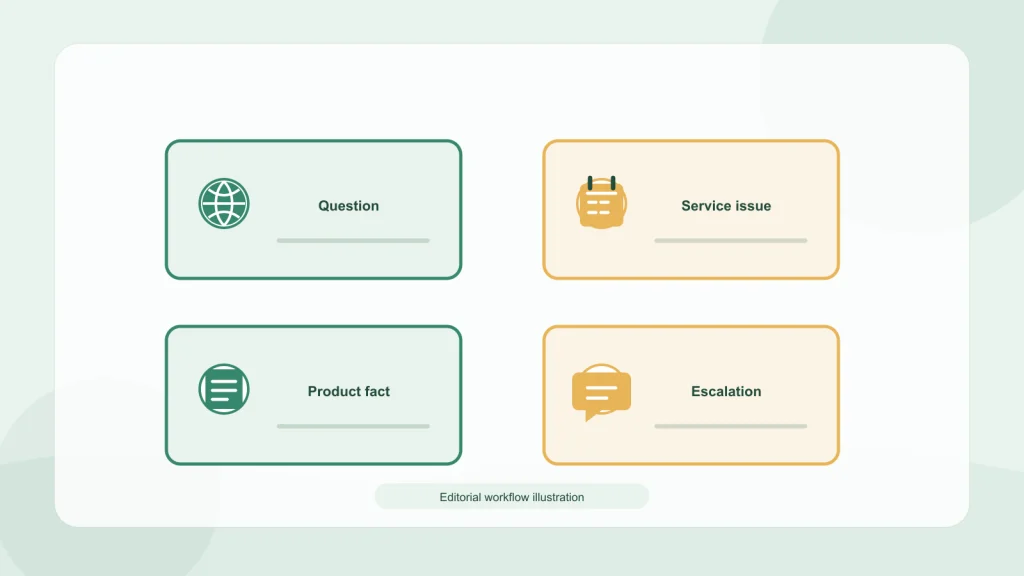
The matrix should distinguish “answer,” “acknowledge and route,” “hide or report under platform policy,” and “escalate immediately,” with a named decision owner. It should also include what information the moderator may collect privately and what must not be requested in public. Keep response templates flexible enough for a human to answer the actual message. Repeated canned replies can make a global brand sound indifferent even when the operational intent is good.
Set a process for sensitive issues. A moderator should preserve the relevant link or screenshot internally according to company policy, notify the right owner, and avoid promising an outcome before the company confirms it. Do not ask users to post order details or personal information in a public comment. The appropriate next step depends on the organization’s privacy policy and local rules, so have qualified reviewers approve the workflow.
Use practice scenarios during onboarding. A fictional customer says the product overheated; a distributor asks about a local price; a user complains about an unavailable service; a comment includes a personal phone number. Ask the team to show the first response, the evidence needed, the private route, and the escalation owner. Record where the process was unclear and revise it before launch.
| Incoming issue | First action | Escalation owner | Public-response boundary |
|---|---|---|---|
| Routine product question | Use current approved answer or source | Product/customer-support contact | Do not infer unverified specifications |
| Sales or distributor inquiry | Acknowledge and route to local sales | Regional sales owner | State the next contact step accurately |
| Service complaint | Recognize the concern and move details to the proper channel | Local service lead | Do not promise a remedy before review |
| Technical or safety claim | Preserve context and escalate promptly | Product/safety authority | Avoid speculation or diagnosis |
| Spam or suspicious link | Follow platform and brand moderation rules | Page administrator | Do not amplify the link |
| Sensitive personal information | Follow approved privacy workflow | Privacy or support owner | Do not request more data publicly |
Crisis escalation needs a decision clock
Not every negative comment is a crisis, but a response plan should help the team recognize when the normal workflow is no longer enough. Define triggers based on the organization’s actual exposure: safety reports, a service interruption, an inaccurate public claim, an impersonation concern, a coordinated complaint, or a post that is spreading rapidly. The criteria should be specific enough that a moderator knows when to stop normal replies and notify leadership.
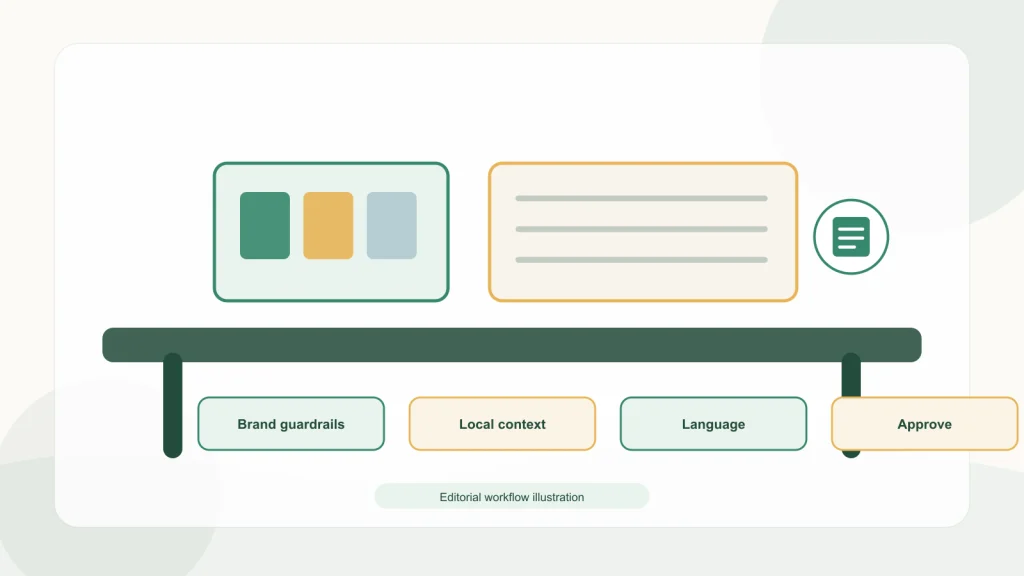
The plan should identify who can pause scheduled content, who can approve a public statement, who speaks for the company, and which regional leaders need to know. Use a decision clock: acknowledge internally within a defined period, route to the decision owner, and provide a status update if the issue cannot be resolved immediately. Public holding language must not imply that the company has verified facts it has not checked.
Prepare a contact tree with primary and backup owners by region. Include actual coverage times and a method for reaching someone when the usual channel is unavailable. Review the tree before campaigns and staff changes. A crisis plan that names a person who left the organization is worse than no plan because it can create false confidence.
After an issue, record what happened, which page and language were involved, what the team knew at each stage, what was communicated, and what should change. The purpose is operational learning, not blame. The record can reveal a recurring translation issue, an outdated FAQ, or a missing escalation contact. Keep retention and access in line with company policy and applicable requirements.
Reporting: compare markets without flattening them
Global reporting can produce a tidy total that hides local problems. A single engagement rate may combine pages with different audience sizes, languages, publishing volumes, and goals. Report the global picture, but retain the market-level view needed to decide what changes. Show the metric definition, data source, date range, page, language, and relevant campaign context.
Separate platform measures from business actions. Reach, reactions, comments, video views, clicks, and follower changes describe different interactions. Tagged referral sessions, inquiries, qualified opportunities, and sales outcomes belong to other systems and may be incomplete. A branded search or distributor introduction may follow a social exposure without carrying the same tracking label. Report observed paths and attribution limits rather than crediting all outcomes to a page.
Keep local context in the review. A drop in replies may reflect a holiday, a change in moderation coverage, a product issue, or a shift in the audience. A rise in comments may represent customer questions or a complaint, not necessarily positive engagement. The regional owner can interpret what the raw chart cannot explain.
The monthly discussion should end with a decision: repeat the asset, adapt it, retire it, investigate a market issue, or gather more evidence. Record the reasoning. This keeps reporting connected to operating improvements rather than turning it into a scoreboard that rewards activity regardless of usefulness.
Set up Facebook page management in seven steps
- Create a market register with page, language, audience, local owner, timezone, business hours, approved topics, and escalation contact.
- Define a common content brief and separate fixed facts from examples, language, dates, and calls to action that require local adaptation.
- Set a publishing calendar with review windows, approval deadlines, backup owners, and pause rules for holidays, incidents, or product changes.
- Build a moderation matrix separating routine questions, commercial inquiries, technical claims, complaints, spam, safety concerns, and sensitive personal information.
- Agree on response coverage by market, including what a moderator may answer, what needs company approval, and when to escalate.
- Use consistent campaign links and reporting definitions while keeping market, language, page, and time period visible.
- Run a tabletop exercise for an inaccurate post, service disruption, and fast-moving complaint; record who decides, communicates, and logs the resolution.
Access, ownership, and vendor boundaries
The company should maintain ownership of its business presence and recovery contacts. Give providers permissions needed for their tasks and review access when roles change. Keep a list of who can publish, edit, moderate, manage advertising, or change page settings. Verify the current platform role system in the actual account because labels and controls can change.
Document what a provider may do independently. A contract may authorize scheduling approved content but require company approval for crisis statements, promotions, sensitive replies, or changes to page details. The team should also know who can pause posts and how to handle a disputed response. A vendor should not be expected to make business, legal, or product decisions outside its mandate.
At handover, collect the current page inventory, access status, content calendar, approved templates, local terminology, escalation contacts, open messages, report definitions, and rights records. Remove unnecessary access using the company’s process. Include a review date for pages and administrators so governance does not depend on memory.
When an agency helps—and how Marketboo describes its service
An agency may help organize strategy, publishing, content production, community monitoring, and performance review when the company lacks time or specialist capacity. It cannot provide local judgment without local input, make unsupported product claims true, or guarantee inquiries from every market. The brand remains responsible for product facts, service readiness, account ownership, and decisions about sensitive issues.
Next step: Marketboo’s current social media service page describes strategy, content planning and creation, community management, publishing/account coordination, and performance reporting. This is a first-party service description. If you are comparing those workstreams with your internal model, review Marketboo’s social media management service and ask which markets, languages, response windows, approval roles, and escalation procedures are available in a proposed engagement.
Next step: Bring a page inventory, target markets, languages, coverage constraints, recurring questions, and examples of issues that need escalation. You can contact Marketboo to discuss international page operations. Evaluate the proposal against your own governance requirements; the article does not establish a universal service level.
The office-hours handoff across regions
A global page team can publish centrally while responding locally, but the handoff needs a clear schedule. Convert every coverage window to a named time zone and identify the responsible person for the period. Avoid shorthand such as “EST” when teams may interpret it differently during daylight-saving changes. State the time-zone name and review the schedule when local time rules change.
Write down what happens to an inquiry that arrives after the local team signs off. It may receive an approved acknowledgment and enter a queue for the next business period. A service emergency may use a separate escalation path. A routine question may wait. The public response should not suggest that someone is actively investigating if the message has only been queued.
Cross-border handoffs can lose context when they rely on translation alone. Record the original message, market, page, relevant product, prior interaction, and requested next action in the internal case. If a regional responder sees only a translated excerpt, they may miss tone or an earlier promise. Keep the handoff concise but sufficient for the local owner to make a decision.
Before a campaign launch, simulate a weekend or holiday arrival. Confirm which queue receives the message, what acknowledgment may be sent, who owns the next reply, and whether the campaign should keep running if response capacity is unavailable. This small exercise connects publishing plans to actual service operations.
Seasonal planning without global calendar assumptions
International calendars are rarely synchronized. A global promotion may overlap with a local holiday, inventory transition, or service shutdown. The editorial calendar should give local owners time to flag these events before assets are translated and scheduled. Store the local date and time-zone context with the post so teams can verify it after handoff.
Separate globally fixed moments from locally selected ones. A product launch may have a single public date, while a seasonal theme, retail event, or distributor promotion may differ by market. Let regional teams propose local moments with enough lead time to check the offer, product availability, permissions, and service coverage. Do not publish a global post everywhere simply because a central calendar has an empty slot.
Keep a pause mechanism available to the page owner. If an outage, recall, or public issue emerges, the scheduled queue may need a hold while the facts are checked. The plan should name who can stop content, how paused items are reviewed, and who authorizes rescheduling. A pause rule protects the brand from appearing tone-deaf while the company is handling a serious issue.
What does Facebook page management for international brands include?
It can include page governance, localized content, scheduling, moderation, inquiry routing, escalation, reporting, and regional coordination. Confirm page coverage and response windows in the scope.
Should every country have its own Facebook page?
Not automatically. Decide based on language, audience, local ownership, service capacity, and ability to keep each page current. A page network without owners creates risk.
How do global brands localize Facebook content?
Keep verified product facts consistent while adapting terminology, examples, dates, offers, language, and response context with a qualified local reviewer.
How quickly should a brand answer Facebook comments?
Set an expectation that matches staffed coverage and issue severity. Do not publish a universal response-time promise unless every relevant team can meet it.
Who should handle complaints or a crisis?
A named company owner should lead decisions with local communications, service, product, and legal input as needed. An agency can monitor and route issues under an agreed plan.
How should international Facebook performance be reported?
Show page, market, language, content role, period, platform measures, tagged referrals, inquiries, and CRM outcomes separately. Explain data gaps and attribution limits.
Can Facebook page management guarantee inquiries in every market?
No. Page operations can be scoped, but response and qualified inquiries depend on demand, content, offer, product, local conditions, and follow-up.
Run one network with accountable local owners
Facebook page management for international brands succeeds operationally when each page has a reason to exist, a person responsible for it, a realistic response window, and a route for questions the moderator cannot answer. Global consistency is valuable when it protects facts and brand standards; local adaptation is essential when it makes the page accurate and useful in its market.
Start by inventorying pages and access. Agree on decision rights, content review, response boundaries, escalation, and reporting. Test the process with real scenarios, then review it after a product change or staffing shift. The data should help the team decide what to do next without turning broad audience figures into a promise of local performance.
The spreadsheet marks keyword metrics as not connected, so search-volume demand for this topic is unvalidated.