
Quick answer: Hands-on Facebook Ads coaching for an exporter should make the company’s own decisions easier to inspect. Before buying, agree on whether the provider will review an account, help build a campaign, review creative, examine tracking, train a team, or only answer questions. Then put the working cadence, people involved, account access, deliverables, feedback, fees, follow-up, and exclusions in writing. A useful engagement leaves the company with a documented plan and clearer ownership, whether or not it publishes a campaign. Coaching does not guarantee inquiries, sales, or a profitable result; product fit, market conditions, creative, measurement, and sales follow-up remain material. This guide helps procurement teams distinguish coaching from a course or agency execution.
For market context, IAB and PwC reported $259 billion in U.S. digital advertising revenue in 2024, a 15% year-over-year increase. [7] That industry figure does not show whether coaching works, whether an exporter should outsource, or what a specific campaign will return.
Imagine an exporter reviewing a proposal beside last month’s ad invoice. The provider says, “We’ll optimize the account.” The buyer’s next question should not be how many meetings come with the package. It should be: what work will the provider perform, what will our team do, and how will we decide whether the engagement was useful?
First, name the service you are buying
“Coaching,” “consulting,” “training,” and “management” are often used loosely. They can describe very different responsibilities. A recorded lesson transfers information; a workshop teaches a group through planned exercises; coaching applies guidance to a team’s goals or account; managed services may involve the provider performing campaign work. The contract and actual deliverables determine the boundary—not the label on a sales page.
| Format | Typical work pattern to confirm | Exporter may prefer it when | Questions to put in writing |
|---|---|---|---|
| Self-paced course | Recorded modules, templates, or knowledge checks | The team needs shared platform vocabulary | Revision date, access term, instructor, updates, refunds, and whether questions are answered |
| Live group workshop | Scheduled teaching with shared exercises | Several employees need a common process | Class size, time zone, interaction, recordings, and how company-specific cases are handled |
| One-to-one coaching | Scheduled meetings that may review decisions or submitted work | A marketer needs guided practice and feedback | Session length, preparation, review between sessions, assigned work, rescheduling, and support limits |
| Account consulting | Diagnosis and recommendations about an identified account or campaign | The team has a specific setup or measurement problem | Access needed, audit scope, findings format, permissions, and who implements recommendations |
| Agency management | Provider may handle ongoing planning or campaign operations | The exporter lacks internal execution capacity | Decision rights, budget authority, account ownership, media spend, fees, reporting, and exit/transition plan |
These are comparison categories, not guarantees about a provider’s package. Some engagements combine formats; the buyer should ask for a clear responsibility matrix. An exporter may want coaching on the company’s campaign and still retain account ownership and execution internally. Another exporter may lack the staff to apply advice and need an execution partner. The choice should match the gap.
What is different about an export account?
International advertising adds practical questions that a general course may not address. Can the company fulfill orders or respond to leads in the chosen market? Is the product allowed there? Are the product page and support team ready to handle the market’s language? Who responds to a trade inquiry, in what time zone, and with what product documentation? What evidence can the business provide for its claims? These questions belong in the coaching scope because campaign structure cannot answer them by itself.
Suppose a machinery exporter wants inquiries from two regions. One has a distributor who can service incoming prospects; the other is only being explored. A capable coach should ask which market is operationally ready, what counts as a qualified inquiry, whether the destination page explains installation and support, and how sales will report follow-up. Those are questions to investigate, not assumed facts about the company. The example does not imply that one region will outperform the other.
Meta has described updates to its “Why am I seeing this ad?” tool that explain, at a high level, how on-platform and off-platform activity may inform machine-learning systems used to shape and deliver ads. This transparency example can help a buyer discuss audience and delivery concepts with a coach. It does not establish a specific account’s targeting settings, guarantee how any individual ad will be served, or substitute for current platform documentation. A dated source note appears below.
Exporters should bring a concise market brief rather than a box of unreviewed customer data. It can state the destination market, product category, buyer type, approved product claims, serviceability constraints, language coverage, sales response owner, and unresolved questions. If sample lead or customer records are needed, the company’s data/privacy reviewer should define what is appropriate before sharing. Do not hand over passwords through email or an intake form.
The proposal should answer how the coaching will adapt to the exporter’s actual constraints. If a target country cannot be served yet, the engagement might focus on readiness and a future test brief instead of campaign launch. If the team has no usable product-page translation, the coach should identify that dependency rather than hide it inside a vague “optimization” task. Document each prerequisite and the person who can resolve it; otherwise, client and supplier may disagree later about why the work paused.
What a productive coaching cycle can look like
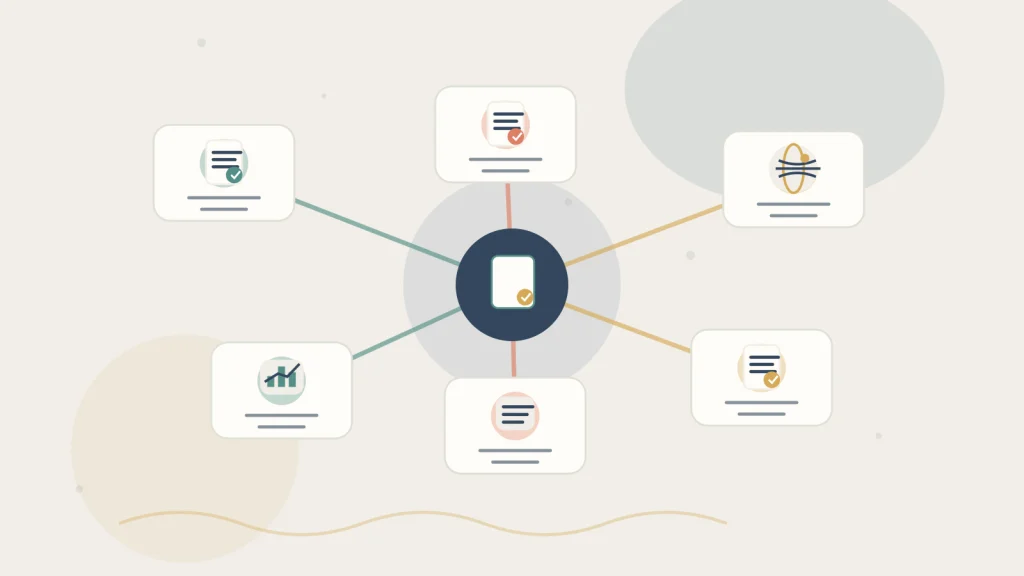
A clear coaching plan generally turns a question into an artifact, reviews the artifact, and leaves a named next step. It may be a short cycle, recurring sessions, or a fixed project; the right format depends on what the exporter is trying to learn. The provider should state which steps are included and which fall to the client.
- Agree on the business question. Write the objective in plain terms, such as understanding whether a destination page and lead form are ready to test in one export market. Avoid vague goals such as “scale globally.”
- Set scope and authority. Identify the accounts, campaigns, websites, reports, and personnel included. Specify who can view, edit, approve, or publish work and who can authorize spend.
- Collect a minimum useful brief. Share product facts that are approved, market service constraints, the current offer, destination page, lead definition, response owner, and available measurement information.
- Review the baseline. The coach and team should document what is known, what is missing, and which observations are reliable enough to inform the next action. Label assumptions plainly.
- Create a working artifact. Depending on scope, this could be an account audit, campaign draft, creative brief, tracking map, test plan, or reporting template. A deliverable should have an owner and date.
- Get actionable feedback. Ask the provider to explain the reasoning and limitations, not merely make edits. The team should know which points are platform rules, observations, or recommendations.
- Apply only approved changes. Confirm the internal approver, budget limit, product-claim review, and release process before a live change. Coaching alone should not confer spending authority.
- Review and close the loop. Set a date to review what was implemented, what was learned, and which question remains unresolved. Define whether future help is included or a new engagement.
For a good learning loop, record the question, evidence checked, proposed decision, person responsible, approval status, and follow-up date. Do not count “we had three calls” as the principal deliverable unless that is what the organization intended to buy. The useful outcome is a team that can explain its choices and retain the work product.
How to evaluate the proposal without overbuying
| Proposal item | Ask for | Reason to clarify before signing |
|---|---|---|
| Provider identity | Named coach, relevant dated biography, and who will attend sessions | Salesperson and actual delivery lead are unclear |
| Scope | Platforms, markets, campaigns, deliverables, exclusions, and review depth | “Full support” has no defined boundaries |
| Access | Least-privilege roles, duration, permitted data, and removal process | Provider requests passwords or broad permanent control without explanation |
| Cadence | Meeting schedule, prep work, response windows, and cancellation rules | “Unlimited access” is not defined |
| Measurement | Data sources, event definitions, attribution context, and what cannot be inferred | A promised result depends on an unstated denominator or reporting window |
| Fees | Coaching fee, ad spend, tools, creative work, taxes, and change requests separated | Media spend and service fee are combined or ambiguous |
| Ownership and exit | Account owner, retained files, transition notes, and removal of access at the end | The client cannot access its own assets or retrieve the work product |
| Claims | Evidence and limits behind any case study, testimonial, credential, or guarantee | Results are attributed to the provider without period, market, or context |
Pricing should be compared on like terms. A per-session fee, monthly coaching retainer, project audit, group workshop, and managed campaign fee buy different things. Ask the supplier to separate media budget from professional fees and list any third-party tools or production work. Then compare the total commitment, not only the headline price. Without current written pricing from each provider, do not use generic market averages as a substitute for a quote.
Also ask what “optimization” means in this proposal. It might mean explaining changes for the team to make, recommending a test, reviewing results, or directly changing campaign settings. Each has a different risk and access level. Make the distinction explicit, especially where the business must approve copy, claims, budget, or market availability.
Set a realistic working rhythm during scope review. The client may need time to supply approved product claims, collect landing-page changes, obtain access approval, and have sales review lead definitions. The coach may need a stated review window for submitted work. Put both sides’ tasks and due dates on a shared plan so a missed dependency is visible early. This is especially useful when the exporter and service provider work in different time zones or when product owners, legal reviewers, and sales staff have separate approval steps.
Account access, reporting, and practical safeguards
A destination-page review can include basic accessibility questions, such as whether form labels, instructions, and error messages are understandable. WCAG 2.2 is a W3C Recommendation dated October 5, 2023. [6] A coaching review is not a conformance audit; define whether formal accessibility testing is included or belongs to another specialist.
An exporter’s advertising account may connect to company pages, payment methods, pixels, product catalogs, customer lists, and staff roles. Decide what the coach needs to see and for how long. If the service only involves reviewing a screenshot or export, broad administrator access may not be necessary. If the coach needs platform access, ask the company’s administrator to use the available role-based invitation process and remove access when the scope ends. NIST Cybersecurity Framework 2.0 includes identity management, authentication, and access control under its Protect function. [3] That is general security context, not a platform instruction or legal conclusion; check current first-party account controls and company policy.
Before the first meeting, agree on screen-sharing boundaries. Remove customer names, email addresses, payment details, and confidential pricing unless the company’s policy allows them to be used and the provider’s terms have been reviewed. In a general coaching conversation, anonymized totals and a description of the workflow may be enough. Ask where meeting recordings and shared files are stored, who can access them, how long they are kept, and whether the provider uses them for any other purpose. Do not assume the answer from a generic service page; get it from current written terms and the appropriate company reviewer.
Reporting should use a small set of definitions the provider and company both understand. If one party calls a form completion a “lead” and another calls only a sales-qualified opportunity a “lead,” the weekly report can sound positive while answering different questions. Include the event name, source, time period, and qualification rule. For export sales, also document whether the inquiry was serviceable, responded to, and advanced by the sales team. This is an internal measurement recommendation, not a claim that any platform can validate business quality for you.
Agree on what happens when the engagement changes. If the assigned coach becomes unavailable, the team should know whether another named person takes over. If the company pauses advertising, clarify whether sessions can shift to readiness work or whether fees and scheduling remain the same. If either party ends the agreement, confirm the final handoff: current recommendations, open questions, account changes, remaining access, and client files. These terms are ordinary procurement details; they should be settled in the document rather than inferred from a friendly kickoff call.
For a long-running engagement, schedule a midpoint scope check. Compare the original question with the work completed, note any change in market, inventory, or team capacity, and decide whether coaching still addresses the active bottleneck. A short written checkpoint can prevent the arrangement from turning into recurring meetings without a clear learning objective. If new work appears—such as creating video assets or directly operating campaigns—treat it as a scope change with a separate owner and approval.
Choose the support intensity by the gap
It is possible to pay for more provider time than a team can use. Before choosing a monthly arrangement, identify the bottleneck: skill, implementation capacity, unclear measurement, creative production, or an approval delay. A one-time audit may help when the team only needs diagnosis. A workshop may fit when multiple colleagues need a shared process. Recurring coaching may make sense when there is an internal operator who can apply recommendations and return with evidence. Managed service may fit when execution capacity is missing, but it should be scoped and governed separately.
Use this rubric as a conversation aid. Score each factor from 1 to 5, where 1 means “not addressed” and 5 means “clear and evidenced.” Low scores on access, scope, or ownership should be resolved before signing regardless of the total.
| Factor | 1 — unclear | 3 — partly defined | 5 — clear and verifiable |
|---|---|---|---|
| Market relevance | No discussion of destination or serviceability | Market named, constraints partly checked | Buyer, market, language, product claims, and sales response are covered |
| Learning method | Advice only; no working artifact | Some examples or review | Practice output, feedback method, and learner ownership are documented |
| Access control | Password sharing or open-ended access requested | Role and term stated, removal vague | Least needed access, duration, and exit process are explicit |
| Evidence quality | Outcome claims with no definition | Some context, incomplete limits | Claims, periods, sources, and uncertainty are documented |
| Commercial clarity | Fees or spend responsibility bundled | Headline price clear, extras unclear | Fees, ad spend, deliverables, and change rules are separated |
| Internal readiness | No client-side owner assigned | Owner named, time or authority uncertain | Responsible operator, approver, and practice time are available |
Compare the written offer with your needs, then ask Marketboo for current scope details for the trainer, deliverables, fees, access requirements, and exclusions.
The rubric does not certify a provider or predict a campaign outcome. It helps a buyer surface missing information. If you score a proposal, keep the notes and questions beside the numbers so that a high score cannot hide one unresolved contract or data-access issue.
Facebook Ads coaching for exporters: when is it a fit?
Coaching is a better fit when the company has at least one person who can attend, do assigned work, and own implementation, but needs an experienced guide to review decisions. It may fit a first campaign, a new market test, or an internal process that has grown inconsistent. Coaching is a weaker fit when the organization expects the provider to run campaigns, create all assets, answer every sales lead, and assume performance risk for a small training fee. Those are different workstreams.
For a team without an operator, ask whether the provider has a separate done-for-you scope or whether an internal hire or contractor is needed. For a team with an operator but no manager support, coaching can stall because approvals and practice time are unavailable. For a company that cannot yet meet product, inventory, fulfillment, or market requirements, the most valuable advice may be to delay ad spend while the business resolves those constraints.
The engagement should include a stop condition. Examples include an access issue, tracking defect, inaccurate product claim, unapproved spend, unavailable stock, or a change in the company’s market plan. Write down who can pause work, who is notified, and what remediation is included. A thoughtful coach should be comfortable documenting a reason to wait.

What to Verify Before Choosing a Coach
If you are comparing a provider, use its hands-on ad coaching page as a starting point for a written scope conversation. A public page is not a substitute for confirming the assigned coach, deliverables, engagement cadence, account permissions, pricing, terms, and outcome limits in a proposal.
If you are evaluating a real account, use the Marketboo contact page to ask whether its current written offer fits your market, platform, campaign question, team, and review needs. Request current deliverables, schedule, fees, exclusions, access requirements, and support terms in writing. Do not share credentials or unapproved customer-level information in an initial inquiry.
Common procurement traps
Buying a platform promise instead of a process
A supplier may describe a platform feature as though it produces a business outcome on its own. Ask the coach to separate platform behavior from the plan and the company-specific result. Meta’s transparency explanation about machine-learning systems does not imply that a specific targeting choice will reach a defined buyer or produce a qualified export inquiry.
Letting a case study stand in for scope
A case study can illustrate a past engagement, but it does not answer who will work on your account, what is included, or whether your product and market are comparable. Ask for a written scope even if the case sounds relevant. The FTC’s endorsement guidance and 16 CFR Part 255 address testimonial and endorsement claims in U.S. advertising. [4] [5] Applicability depends on the facts; this article is not legal advice. Verify permission and obtain qualified review before publishing customer statements.
Paying for coaching without assigning a learner
If nobody can attend consistently, prepare materials, test recommendations, or get approvals, the organization may not use the service. Name an owner and reserve work time before the contract begins.
Frequently asked questions
What does Facebook Ads coaching for exporters usually include?
It depends on the written scope. A provider may offer account review, campaign planning, creative feedback, measurement guidance, or team practice. Ask which deliverables, platforms, markets, and support are actually included.
Is coaching different from a Facebook Ads course?
A course generally teaches a planned curriculum; coaching may apply guidance to the client’s questions or work. Providers use terms differently, so compare session activities, assignments, review, and written deliverables rather than labels.
Does a coach need admin access to my account?
Not automatically. Ask why access is needed, what role is sufficient, for how long, and how it will be removed. Never share passwords, and follow your organization’s account and security policies.
Can Facebook Ads coaching guarantee qualified export leads?
No. Coaching may help clarify a process, but lead quality depends on market availability, offer, creative, destination, targeting, measurement, and sales follow-up. Treat any guarantee as a claim requiring careful written review.
What should an exporter prepare before the first session?
Prepare a short brief with product facts, destination markets, fulfillment limits, buyer type, offer, landing page, lead definition, internal owner, and unresolved questions. Share only approved material and use minimized or anonymized data where possible.
How should coaching fees be compared?
Separate provider fees from media spend, creative production, software, taxes, and extra sessions. Compare what each quote includes, the time commitment, deliverables, feedback, and exit terms; avoid relying on generic averages without current comparable quotes.
How can I judge whether a coaching engagement was worthwhile?
Use agreed deliverables and learning goals: a reviewed account map, test plan, event definition, or repeatable workflow. Track what the team implemented and learned, but do not attribute sales changes to coaching without a suitable measurement method.
Sign a scope the team can use
Good Facebook Ads coaching for exporters should leave the working relationship clearer than it found it. The company should know which question is in scope, what the coach will deliver, who owns the account, what evidence guides a recommendation, and what support ends when the contract ends. If those points are written down, the organization can compare coaching with a course, workshop, consultant, or managed service on fair terms.
Before signing, ensure a client-side owner has time to participate and that the service’s access and privacy arrangements have passed the company’s review. Then evaluate the provider on the process and work product the agreement actually includes, not an unverified promise about ad results. This gives the team a concrete way to decide whether to continue, change the format, or build the capability internally.
Need a scope conversation? Contact Marketboo with the account question and the team’s current capacity. Avoid sending passwords or customer records.