

Direct answer
A social media management agency for B2B exporters should connect target markets and buyer questions to a repeatable content, localization, community, and measurement process. Compare what it researches, creates, publishes, monitors, reports, and hands to sales. Require clear account ownership, approval rules, content rights, access, and exclusions. A busy feed is not proof of business impact. Ask for a sample month and report, then agree on a bounded pilot with defined responsibilities. Public platform statistics describe populations; they do not establish reach among your specific overseas buying committee.
Choosing a social media management agency for B2B exporters starts with the operating problem
A company searching for a social media management agency for B2B exporters is rarely buying captions alone. It is trying to bridge operational gaps: sales knows the product but lacks time or language fluency to publish consistently; marketing understands the brand but may not know every market; specialists can answer difficult questions but have no repeatable way to turn those answers into useful public content. An agency should make that work coherent, not make a dashboard look busy.
Before contacting vendors, write down where the current system breaks. Perhaps an engineer explains an application at a trade show, yet the same answer never becomes a searchable product demonstration. An overseas account may post only in English even though local buyers expect another language. Comments and direct messages may arrive without a clear owner for technical, commercial, or service questions. These are different problems. A proposal that calls all of them “more engagement” has not diagnosed the work.
A useful brief names a product line, export market, buyer role, sales-stage question, internal reviewer, and next business action. Keep the action modest: a post can make a technical concept easier to find, help someone prepare an inquiry, or direct a distributor to a specification page. It cannot substitute for product fit, price, delivery capability, compliance review, or sales follow-up.
What platform statistics can—and cannot—tell you
Reach data is useful when its population and measurement are clear. Pew Research Center’s 2026 fact sheet reports social-platform use among U.S. adults, based on a survey of 5,511 adults conducted January 30 to June 18, 2026; its overall margin of error is ±1.8 percentage points. In that survey, 84% said they ever use YouTube, 70% Facebook, 51% Instagram, and 31% TikTok. These are broad U.S. adult figures. They do not tell an exporter how many purchasing managers in Germany, Mexico, or the Gulf will see a post—or how many are currently evaluating suppliers.
DataReportal’s Digital 2025 overview compiles digital-use and platform advertising-reach estimates from named sources. Such estimates can frame the scale of digital environments, but advertising reach is not unique active users, B2B buyer count, or guaranteed organic distribution. Neither a worldwide number nor a U.S. adult percentage proves that a narrow technical audience uses a channel to evaluate suppliers. Treat the figures as context, then check your own evidence: customer interviews, sales-call notes, distributor feedback, inbound sources, and the language buyers use.
The Content Marketing Institute and MarketingProfs’ 2027 B2B report was published November 4, 2026. It draws on 861 B2B marketer respondents within 1,132 global responses; fieldwork ran June 23 through August 11, 2026. It offers context about marketing practice, but respondents’ answers do not prove that a particular social tactic caused a business outcome.
| Evidence | What it can support | What it cannot establish |
|---|---|---|
| Pew U.S. adult platform survey | Broad U.S. population context and demographic patterns | Overseas buyer reach, purchase intent, supplier preference, or lead forecast |
| DataReportal platform-reach estimates | Global digital-environment context with source caveats | Unique individuals, organic impressions, or qualified-account count |
| Company CRM and tagged referrals | Observations under your own tracking setup | Causality or full credit for a multi-touch sale |
| Sales interviews and distributor feedback | Buyer vocabulary, questions, objections, and local context | A representative market survey unless sampling supports that conclusion |
Compare the work by owner and artifact
“How many posts?” is a weak question on its own. A post count hides the work that determines whether content is accurate, local, timely, and useful. Ask who researches the question, interviews an expert, drafts and edits, checks terminology, approves claims, publishes, moderates, escalates complaints, and checks whether an inquiry reached the right team.
Make included work and boundaries visible. If the retainer includes organic content but not paid-media spend, creator fees, travel photography, technical-language review, after-hours moderation, raw footage, revisions, or source files, write that down. Rights to music, photography, fonts, or contributor work may carry limits. “Full service” is not a deliverable list.
Ask which platforms the agency recommends and why. The answer may be one channel or a small portfolio. It should fit audience evidence and internal capacity. A manufacturer with useful demonstrations may invest in product education video; a specialist supplier with a narrow audience may benefit more from several expert answers and distributor resources than five under-maintained feeds. The reasoning matters more than channel count.
| Workstream | Ask the agency to specify | Useful artifact |
|---|---|---|
| Strategy | Market, buyer, channel role, sales-stage question, exclusions | One-page market/channel brief |
| Content | Research, expert input, format, evidence, claim reviewer | Sample post with source and approval trail |
| Localization | Languages, reviewer, terminology, dates, units, regional examples | Source/adaptation comparison |
| Publishing | Calendar owner, approvals, deadlines, backup coverage | One sample month with role owners |
| Community | Coverage windows, response limits, escalation route | Scenario map for inquiry, complaint, spam, technical question |
| Measurement | Definitions, systems, segments, attribution limits, cadence | Report with raw measures and interpretation separated |
| Governance | Account owner, admin roles, assets, recovery, exit process | Access register and closeout checklist |
Ask for a sample month, not a pitch deck
A pitch deck can show taste and confidence. A calendar shows whether the team can turn a business objective into executable work. Ask for four weeks built around a real but non-confidential product area. Each row should name audience, question, format, market adaptation, expert input, call to action, approver, and measurement signal.
Read it as a buyer. Is every item a product promotion, or does the sequence explain an application, compare specifications, prevent a common installation problem, or prepare a procurement question? Are customer examples specific enough to help while protecting confidential information? Does any statement need engineering, legal, or regulatory approval? Is there a realistic review window in the right time zone?
For example, an industrial pump exporter might start with a maintenance question, follow with a component demonstration, then offer a checklist for choosing a configuration. The same underlying idea could become a short vertical clip, a carousel, a longer walkthrough, and a distributor post linking to the relevant specifications. These are editorial examples, not case-study results. A vendor should say what permissions and evidence it would need before presenting customer results as proof.
Ask what changes between the versions: opening, length, caption, visual evidence, language, subtitles, link, and audience expectation. If nothing changes, the agency may be distributing files rather than adapting content. Good adaptation preserves the approved facts while respecting each channel’s context and the reader’s reason for being there.
Localization is an editorial process
Export content often fails when translation is treated as a final mechanical step. Literal wording can preserve vocabulary but lose product context. Buyers may use different names for a component, certification, measurement, or procurement role. A date format, decimal separator, unit, shipping term, or market reference can create confusion.
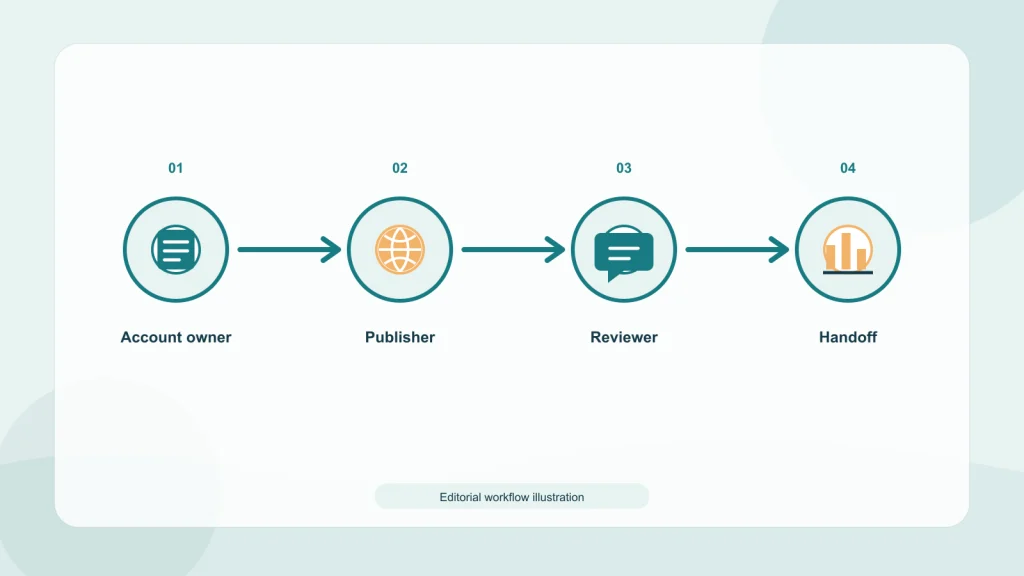
Ask how the vendor builds and maintains a terminology list. The answer should identify a reviewer, not just say “native-language check.” A useful process separates approved product terms from flexible wording, records source copy, flags claims that need review, and gives local reviewers enough context to check meaning. Technical products may require a glossary or engineer’s briefing.
Localization changes the calendar too. A campaign date may land on a local holiday or outside a key region’s business day. A response promise should match actual coverage. If the agency does not monitor weekends or overnight, public copy should not imply round-the-clock support. The company needs an owner for issues that require its judgment.
Decide what remains central and what adapts. Product specifications and approved claims may need consistency; examples, imagery, vocabulary, and calls to action may require market review. The agency should document that distinction rather than ask someone to approve unfamiliar copy without context.
Community management requires a decision tree
Community work is not simply clearing a queue. The agency may see a technical question, price request, shipping complaint, reseller inquiry, spam message, or sensitive issue. Each needs an owner. The team should know what it can answer from approved material and what it routes back to the company.
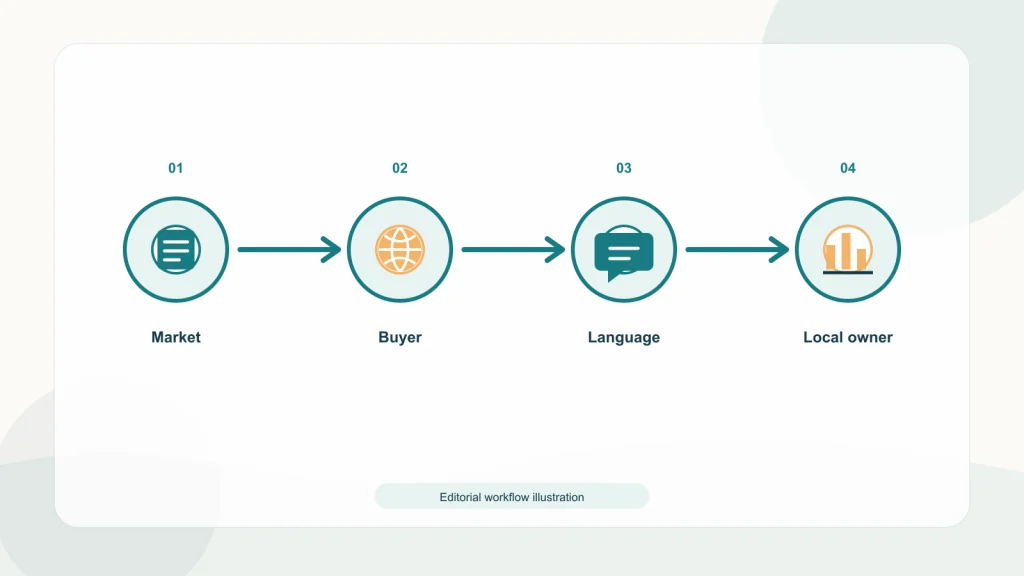
Define response boundaries before launch. Prepare approved answers, escalation contacts, sensitive terms, response templates, and language rules. The goal is not to make every reply identical; it is to stop moderators guessing about a specification or delivery date. If someone asks whether a product meets a particular standard, a moderator should use approved evidence or route it to the responsible product owner.
Specify coverage in local time. “Community management included” might mean checking once each business day or active coverage throughout a defined window. Ask which platforms, inboxes, and languages are included; how urgent issues escalate; what happens outside the window; and whether the agency replies directly or suggests a response for approval.
Use the same scenario exercise for every vendor: a distributor requests a catalog, a buyer complains about shipping, a user posts a technical misconception, and a suspicious account shares a link. Ask for the response, evidence needed, approver, and escalation timing. This reveals judgment better than “we engage authentically.”
A report should connect content to sales without overclaiming
A useful report separates exposure from action and action from qualification. Show distribution, meaningful interactions, tagged site visits, inquiries, and later CRM stages as separate steps. Large reach can coexist with few relevant conversations; a small technical audience may produce feedback that matters without being revenue.
Definitions matter. Engagement may combine reactions, comments, shares, clicks, or video actions differently by platform. A lead may mean a form, email, or sales-accepted inquiry. The company should define “qualified” in its own sales process. The report should record source, date range, market, and system for each measure, then distinguish direct referral from assisted influence.
For a long sales cycle, a last-click view will miss earlier discovery. That does not mean every touch deserves revenue credit. Use consistent tags and CRM fields where feasible, compare observed paths with sales notes, and mark unknowns as unknown. Monthly review can ask which questions recurred, which assets reached relevant audiences, which markets produced site activity, what sales heard, and what changes next.
Do not accept a chart without a denominator or label. If engagement rose, ask compared with which period, on which channel, with what definition, and under what publishing volume. If a post is called a lead driver, ask whether that lead was tagged and qualified and whether the statement describes attribution or association.
Content rights and account control belong in the contract
The company should retain ownership of its pages, recovery methods, and essential brand assets. Agency access should use roles appropriate to its work. An access register can record the business owner, agency roles, platform, date access was granted, and removal date. Avoid a setup where an agency email or one employee’s phone is the sole recovery route.
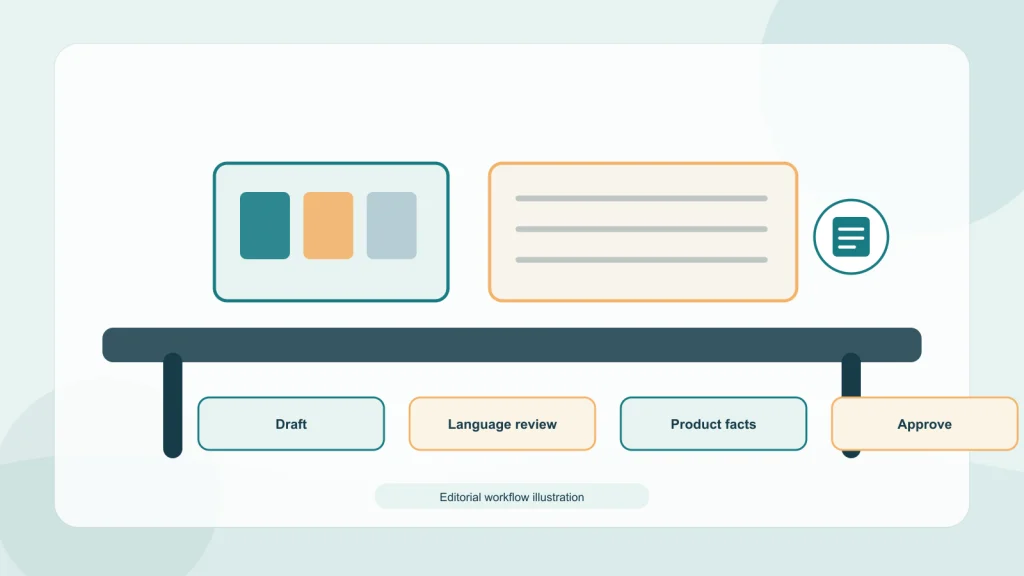
The agreement should address editable files, raw footage, captions, translations, templates, and approved creative at termination. Rights vary by contract and third-party license; paying for a post does not automatically grant every reuse right. Ask whether music, images, fonts, and creator contributions can be used in paid promotion, in each territory, for the intended period, and in adapted form.
If a creator or customer contributes, document their relationship and approval. In the United States, the FTC’s revised endorsement guides discuss truthful endorsements and disclosures for material connections. Its Consumer Reviews and Testimonials Rule addresses specified deceptive review practices and became effective October 21, 2024. These are U.S. references, not global legal advice; check each target market and ask qualified counsel when needed.
Keep a source, approver, and approval date for product claims. A caption can travel beyond its first audience. A good workflow can correct a material error and locate other versions derived from the same source.
How to evaluate a proposal in seven steps
- Write one target-market brief: countries, buyer roles, product categories, languages, sales cycle, and three questions the program should help answer.
- Map deliverables to the buyer journey: discovery, technical evaluation, supplier validation, and post-inquiry follow-up. Reject a calendar made only of formats.
- Request one sample month with channel, audience, premise, format, localization note, owner, approval and publication dates, response owner, and measurement.
- Review content using a real product question. Check factual sign-off, language review, claim support, accessibility, rights, and turnaround.
- Compare reports. Define reach, engagement, visits, inquiries, qualification, assisted influence, time period, market, and data source separately.
- Walk through account ownership and incident response: roles, recovery, assets, permission removal, escalation, coverage windows, and handover.
- Score every proposal against one rubric, record assumptions and exclusions, then start with a bounded pilot and review date—not an outcome guarantee.
Use weights only after the team decides what matters. One exporter may prioritize local-language service; another may need engineering access and technical depth. A starter rubric could score market understanding, editorial judgment, localization, reporting, governance, and capacity on one consistent scale. It is an internal decision tool, not an industry benchmark. Add a notes field so each rating points to evidence from a proposal or exercise.
A short proposal exercise exposes the real workflow
Use a fictional scenario for every finalist. Give each vendor the same facts: the company exports a technical component to two markets, has one English product sheet, receives questions from distributors, and has limited access to engineers. Ask for a one-page response that identifies what the agency would need to learn before drafting, which claims it would not publish without review, what assets it could make from the source sheet, and how it would route an inquiry. The exercise tests process without asking a vendor to provide free production work.
Look at what the agency asks you in return. Strong questions might cover which product features are approved for public comparison, what sales has heard from buyers, whether the images show a current model, who can review each language, and whether a local distributor has permission to be named. A weak response might invent a buyer persona, claim a product advantage without evidence, or use a customer logo because it appeared in a slide deck.
Ask the vendor to mark unknowns instead of filling gaps with confident copy. It can propose an open question in the private working document, but public-facing content should wait until the owner verifies the fact. This is an ordinary editorial discipline with practical value: it reduces the chance that a polished post creates a correction, confusion for sales, or a mismatch between a market promise and operational reality.
The exercise should also include one comment that the agency cannot answer from supplied material. Does the team say what it would verify? Does it identify the person who can authorize a response? Does it preserve a record of the question for future content? This small test says more about community ownership than a line item labeled “daily engagement.”
Red flags are questions to investigate, not instant verdicts
Some proposals contain signals that deserve a follow-up rather than an automatic rejection. A very low monthly fee may exclude production, localization, or moderation. A large post count may rely on client-supplied assets and captions. A broad list of channels may describe nominal platform coverage, not staff who understand each audience. Ask what assumptions make the proposal possible and request a task-level breakdown.
Likewise, a vendor may present a dramatic engagement chart from an unrelated sector. It can illustrate reporting format, but it does not predict your results. Ask whether the data belongs to the vendor, whether permission exists to share it, what period and market it covers, what changed during the period, and whether the business objective was comparable. If the vendor cannot disclose those details, treat the chart as design inspiration rather than evidence.
Pay attention to who will actually do the work. The person pitching may not own the calendar, language review, moderation, or analytics. Ask to meet the working lead or see how handoffs occur. A small team can be a good fit if capacity and backup coverage are clear. A large team can still leave responsibilities vague. The organizational chart matters less than whether a question has an accountable owner.
Finally, verify the proposed exit. A professional handover should include approved copy, source files where contracted, calendar status, rights records, report definitions, account-access removal, and open community issues. If a vendor resists explaining how the relationship ends, you have not yet seen the complete operating model.
| Evaluation area | Evidence to request | Signal to investigate |
|---|---|---|
| Market understanding | Sample buyer map and local review flow | “We use the same audience everywhere” |
| Editorial quality | Product answer with source and approval trail | Confident technical statement without an owner |
| Operations | Named workflow, deadlines, and backup roles | Dates with no review buffer |
| Community | Scenario response and escalation route | “We reply to everything” without boundaries |
| Measurement | Defined report and CRM handoff | Reach called qualified pipeline |
| Governance | Access, ownership, rights, and closeout register | Vendor requests owner-level control |
What a realistic month can look like
A consistent plan need not flood every channel. A month can begin with a meeting that confirms one market focus and product priority. The agency gathers questions from sales or support, checks which answers are approved, and creates a small set of assets. Reviewers get a clear deadline and language context. The vendor adapts approved material, publishes during agreed windows, monitors replies, and closes with a report grounded in observable evidence.
Frequency should reflect source material and review capacity. If the team can approve two substantive posts weekly, five thin posts may add work without usefulness. A launch or trade-show cycle may justify a short burst followed by product education and follow-up. The vendor should show how cadence changes with the business calendar rather than sell a fixed count without regard to inputs.
A sample cadence might include a buyer question, a technical explainer, a proof asset with permission, and a distributor update. Each item needs one primary job. Avoid combining a sales pitch, company announcement, product comparison, and unrelated trend in a single caption. A reader should understand the point without decoding the entire catalog.
Plan for slow weeks as well. Who refreshes evergreen content? Who checks links? What if the expert is unavailable? How are posts paused during a product issue? These details distinguish a dependable process from a calendar that works only when everything goes to plan.
When Marketboo belongs in the comparison
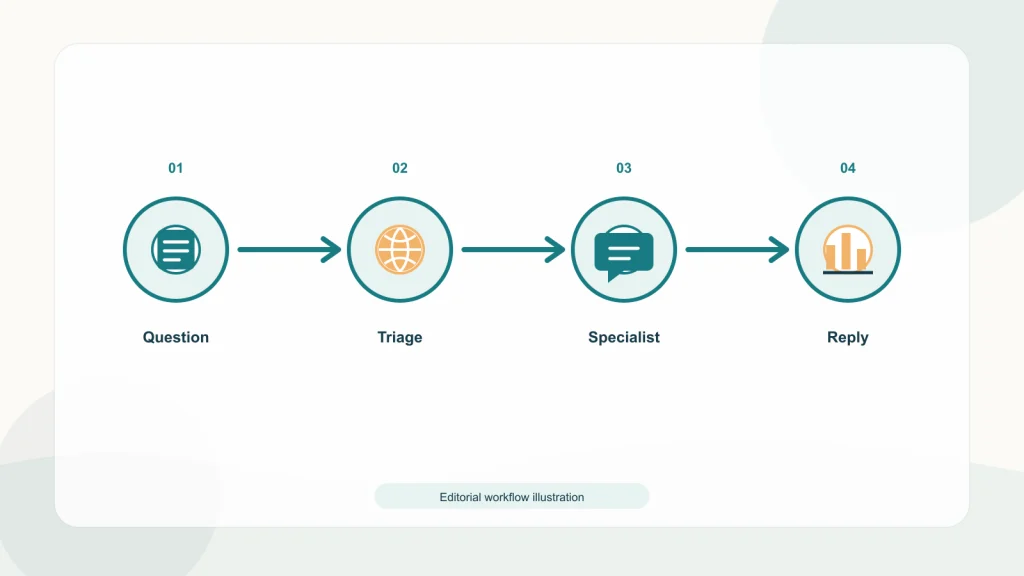
Next step: Marketboo’s current social-media service page describes strategy, content planning and creation, community management, publishing/account coordination, and performance reporting. Those are first-party descriptions, not independent evidence of client outcomes. If you are comparing those workstreams with your needs, review Marketboo’s social media management service and ask the same questions you ask any provider: which channels, markets, languages, review roles, response windows, reporting definitions, and rights would be included?
Next step: Bring the product, target countries, current account roles, sample buyer questions, and approval constraints to a conversation. You can contact Marketboo to discuss a scoped social program, then score its proposal alongside alternatives. No service page can determine fit without those details.
Questions exporters ask before signing
What should a social media management agency for B2B exporters do?
It should connect market research to a platform plan, useful content, language adaptation, community ownership, measurement, and a sales handoff. Posting volume alone is not a sufficient scope.
Which platforms should an exporter use?
Start with buyer behavior, product complexity, team expertise, and language capacity. U.S. adult usage is not proof of channel fit for overseas decision-makers.
How can I tell whether content is localized?
Look for adapted terminology, examples, proof points, references, and calls to action. Have a local reviewer compare source and adaptation; literal translation alone is not a test.
Should an agency own the company’s accounts?
No. The company should retain ownership and recovery control, grant necessary role-based access, and document revocation and handover.
How do you measure social during a long B2B cycle?
Separate distribution, engagement, tagged visits, inquiries, qualification, and later influence. State attribution limits and let CRM owners define qualified opportunities.
What should a pilot include?
Set markets, channels, volume, reviewers, response coverage, tracking, approvals, exclusions, and decision date. Test the operating process before making outcome claims.
Can an agency guarantee export leads?
A fixed count depends on audience, offer, spend, measurement, market demand, and sales response. Treat any guarantee as a contractual claim to examine closely, not a standard agency promise.
The decision: buy control and judgment before volume
A social media management agency for B2B exporters is worth considering when it shows how research, expert input, localization, publishing, moderation, measurement, and account governance work together. A strong proposal makes ownership and uncertainty visible. It provides a real working artifact, labels included work, names decision owners, and explains how it responds when evidence changes.
Use broad platform research to ask better questions, not forecast pipeline. Start with a buyer and market you can name, choose an operating test, and measure what your systems can observe. Continue, revise, or stop based on the work and pilot evidence. The workbook does not provide live keyword data, so search demand has not been validated.
