
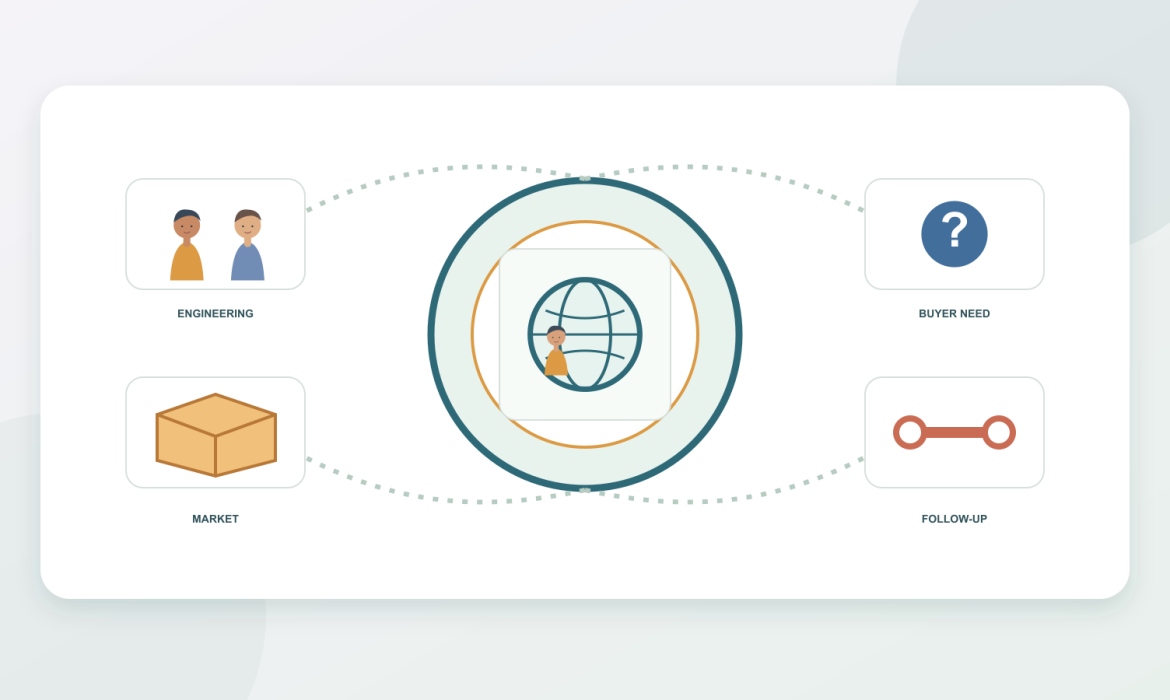
Quick answer: A social media strategy for international B2B exporters should assign each channel a specific audience task instead of opening every account and reposting the same asset. Start with the buying roles in each priority market and the questions those people need answered. Choose one or two channels the team can maintain, then add a time-limited test channel only when there is a clear hypothesis. Facebook, Instagram, YouTube, TikTok, and Reddit can be evaluated for different content jobs, but the right mix depends on buyer research, production capacity, community responsibilities, and measurable next steps. Define an owner, response approach, cost, success signal, and stop condition for every channel.
A social media strategy for international B2B exporters starts with distinct buyer needs, not account count. Opening five social accounts can look like international coverage. In practice, a company may have created five places where no one can answer a product question. A channel portfolio becomes a strategy only when the team knows who each account serves, what the account helps that person do, and what evidence would justify continuing the work.
Here, a social media matrix means a set of brand channels with distinct audience and content responsibilities. It does not mean an account-count target, a requirement to create a separate page for every country, or an instruction to appear everywhere. For an exporter, the practical question is not “Which platform is popular?” It is “Where can we credibly help this buyer make progress, and can our team sustain that contribution?”
Social media strategy for international B2B exporters starts with the buying group
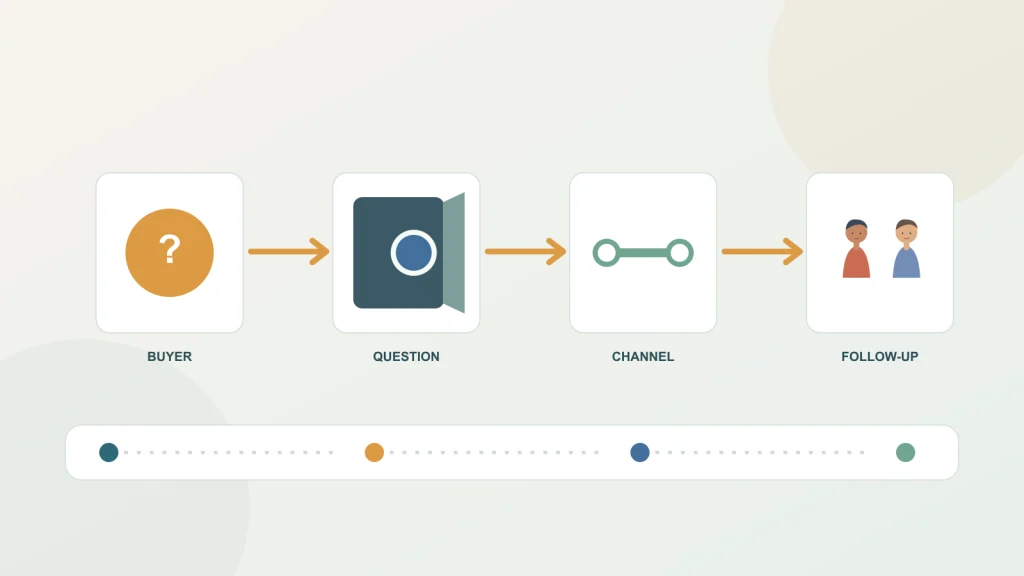
International B2B purchases often involve several people. An engineer may verify specifications and compatibility. Procurement may compare suppliers, terms, and delivery. A manager may weigh operational risk. A distributor may need a local sales explanation or product-training asset. Those roles may follow the same company account but look for different proof.
Build a decision-task map before assigning channels. For each role, note the decision stage, question, evidence needed, and person in your company who can provide it. A technical buyer may need an annotated demonstration; a distributor may need a concise product overview; a procurement lead may need a clear route to commercial terms. Customer interviews, sales questions, support tickets, and site behavior can inform this map. Mark each input as an observation, not a claim about the entire market.
Do not begin with an audience persona made of invented demographics. Use buyer roles and tasks you can substantiate. If the sales team says “our customers care about reliability,” ask for the specific question, specification, service record, or operational issue behind that statement. A social post should provide useful evidence or explanation, not repeat an empty adjective.
Channel research should also account for where the business can serve people. A platform may have broad adoption in a country, yet the brand may lack a local-language editor, distributor support, shipping option, or response coverage. Note those limits. The channel decision is about reachable, serviceable buyers—not total audience size in isolation.
Use five platform role cards as hypotheses
The roles below are editorial starting points for a test, not guarantees about platform reach, ranking, or conversion. Platform features and audience behavior change; verify current account options and your own audience data before investing. A role card should identify the intended audience, the useful content job, the team cost, and the signal that would alter the decision.
| Channel | Possible job to test | Formats to consider | What to verify |
|---|---|---|---|
| Regional updates, event communication, or an existing customer community | Short updates, event information, practical Q&A | Are target buyers present, and can the team respond? | |
| Visual product context, applications, and brand familiarity | Reels, carousels, Stories | Can the visual tell the story without hiding technical limits? | |
| YouTube | Longer demonstrations, tutorials, FAQs, and durable video assets | Full walkthroughs, Shorts, playlists | Can the company fund scripting, review, captions, and upkeep? |
| TikTok | A short, specific demonstration or a small audience-response test | Vertical clips, focused field examples | Does the test reach a relevant buyer rather than just earn views? |
| Listening to niche discussions and answering relevant questions | Transparent, useful participation where community rules allow | Does the team understand each community’s rules and norms? |
Facebook can be evaluated for a region where customers already interact with the company or where events and updates matter. If nobody is assigned to read comments, a page that only broadcasts announcements is not a community-management program. Instagram may work for visual product context, but a short video is not a substitute for a complete technical explanation. YouTube can house a full demonstration or service walkthrough when the company can support the production and future correction of those assets.
A TikTok test should start with a narrow question, such as whether a short clip can show one common installation check clearly. Do not infer procurement intent from general platform popularity or a high view count. On Reddit and other discussion communities, the brand should first read the rules, understand the culture, and be transparent about its commercial interest. A disguised product recommendation may undermine the trust the team is trying to build.
These are content-task recommendations, not current product claims about what an account can do. Before launch, confirm the account’s available formats, links, moderation settings, and access controls in the platform’s current documentation. A new feature or recommendation change may alter execution; it does not remove the need to make a useful contribution.
Let market evidence narrow the research question
Pew Research Center’s report Americans’ Social Media Use 2025 was published on November 20, 2025. It describes a survey of 5,022 US adults fielded February 5 through June 18, 2025. Pew reports that 84% of respondents used YouTube, 71% Facebook, 50% Instagram, 37% TikTok, and 26% Reddit. These are US adult platform-use figures. They do not show the share of international buyers, procurement professionals, engineers, or any company’s qualified audience.
Use those numbers only to frame a US-market question: should the team investigate whether a particular channel can support its buyer task? Then examine actual customer conversations, site referrals, account insights, and sales outcomes. The report cannot tell an exporter which platform will generate a distributor inquiry or whether a specific industrial niche uses a channel in the same way as the general population.
For any other country, seek local research with a relevant sample and date. A global average may obscure language, age, industry, and infrastructure differences. Even a representative national survey may not answer a B2B question. State the population and period every time a statistic is used, and avoid turning a broad adoption number into a performance promise.
Choose a minimum viable portfolio
When resources are limited, start with two core channels and one test channel at most. Core channels receive a sustainable cadence, community coverage, and monthly review. The test channel gets a time box and one explicit hypothesis. For example: “Can a one-minute troubleshooting demonstration help service distributors understand a recurring setup question?” That is more useful than “TikTok is growing, so we should be there.”
Estimate the full cost before adding a channel. Include research, scripting, filming, editing, localization, technical review, rights checks, comments, reporting, and asset maintenance. Do not compare two channels by post count if one requires a new video crew and another reuses approved product photography. Staff hours are real cost even when the media placement is organic.
Set a stop condition before the test begins. It might be that the team cannot access evidence or assets, no buyer role can be identified, community participation requires more coverage than the team has, or a defined behavior remains absent after a reasonable observation period. Stopping a channel is not a failure if the test revealed that the audience, format, or capacity assumptions were wrong. Document what was tested so the same weak assumption is not simply repeated next quarter.
A channel investment decision matrix
| Operating condition | Possible starting choice | Evidence to review | Do not assume |
|---|---|---|---|
| Reliable product footage and an available technical reviewer | Build a small YouTube tutorial or demonstration library | Relevant viewers reach key steps and visit the matching resource | Video volume guarantees search traffic |
| Applications are easy to show visually | Test Instagram product-context assets | Saves, shares, qualified visits, and audience fit | Visual engagement equals purchase intent |
| A regional team can support an existing community | Test Facebook updates or event communication | Questions, response workload, and follow-up actions | A page alone creates a community |
| One practical problem can be shown quickly | Run a limited TikTok short-video test | Relevant viewing behavior and tagged visits | Views prove buyer quality |
| Buyers discuss the issue in a specialist community | Observe and participate in Reddit discussions carefully | Community rules, question relevance, sustainable response | Posting an ad is accepted community participation |
This table is a decision aid, not a ranking. If your content team cannot produce the asset or answer questions, the correct first move may be to build capability rather than to create another account. If a platform test lacks enough observations to support a conclusion, extend or narrow the test; do not award a permanent budget based on one spike.
Reuse verified information, not identical finished posts
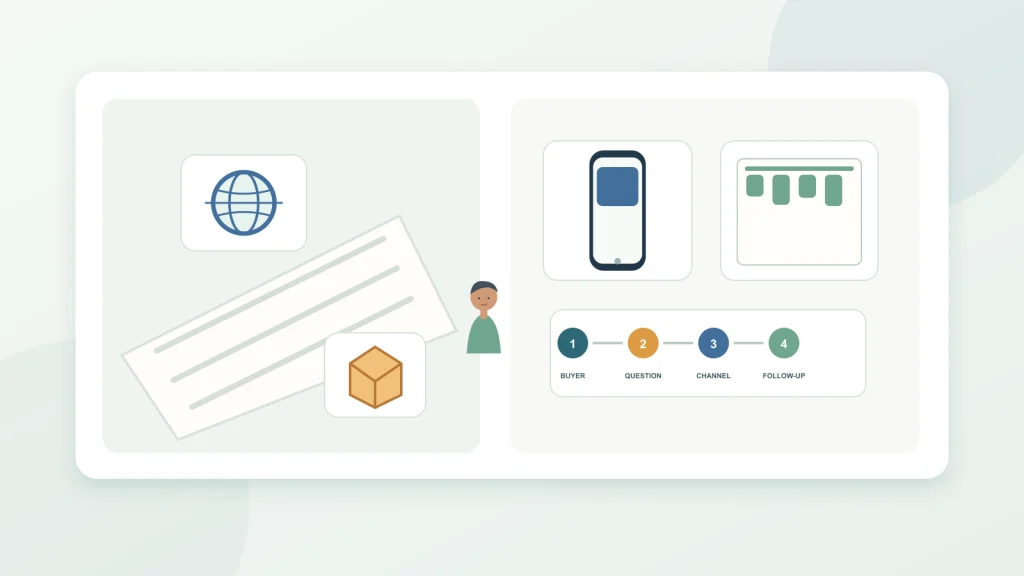
A product specialist can provide one approved explanation that becomes a short demonstration, a carousel, and a longer video. The factual base should remain consistent; the finished assets should not be carbon copies. Each channel needs an appropriate opening, level of detail, captioning, framing, and next step. A long-form video might answer “How does this selection factor work?” A short clip can demonstrate one step. The carousel can summarize the questions a buyer should ask before contacting sales.
Make a source file that records the model, specification, source document, applicable conditions, reviewer, language versions, and last-check date. Link every derivative asset to that source record. If a model changes, the content owner should be able to locate every affected version and update or pause it. Reuse without version control can multiply an outdated claim across the portfolio.
Do not invent first-hand experience to make the content feel more authentic. A scenario can be labeled as an example. A customer case should use approved facts and permission. A factory video should depict the actual process it describes. A voiceover should not imply a test was conducted unless the company can document what was tested and under which conditions.
Assign governance before the first post
List who owns the company account, who can publish, who approves technical claims, who handles comments, and who can pause a scheduled asset. Keep access under company control and adjust it when roles change, following current platform features and internal IT policy. One marketing editor can manage copy without needing every account-administration permission. A backup owner helps prevent a single person’s absence from leaving customer questions unanswered.
Response expectations should match working hours and risk. Set a practical first-response target, a backup path, and an escalation route for complaints, safety questions, pricing, performance, availability, or personal information. A public comment thread is not the right place to collect order details or sensitive data. Refer people to the company’s appropriate support channel and follow its privacy and customer-care procedures. This is operational guidance, not legal advice.
Community participation needs a genuine owner. If the brand joins a discussion, the person should know when to identify the company, how to disclose commercial interest, what information they may share, and when to refer a question to a technical specialist. On Reddit, read the rules of each individual community before contributing. A platform-wide rule does not replace subreddit-specific expectations, and a generic sales post may not be welcome.
Set a monthly content-lifecycle check. Confirm that prices, model names, links, event dates, subtitles, and product availability remain valid. Put a review date on content likely to become stale. Store original footage, language versions, rights documentation, and approved copy in a controlled team library. Channel governance is not only about publishing access; it is also about knowing what the company has said and whether it is still accurate.
Four-week pilot: measure whether the portfolio earns its workload
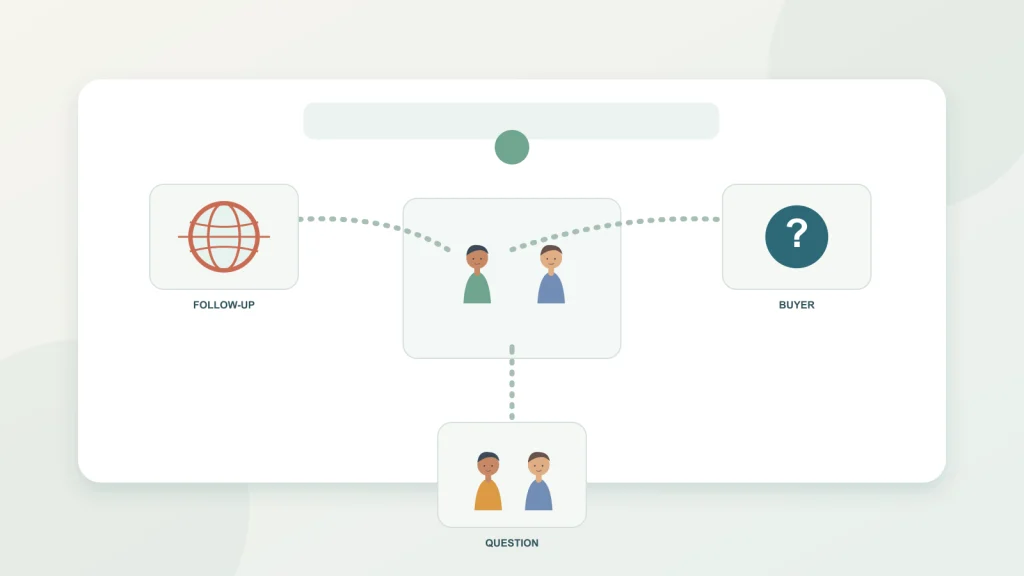
A pilot can be small enough to learn from without pretending that four weeks proves a universal platform rule. Choose one market and one buyer role. Run two core channels using assets the team already knows how to create. Add a third channel only if its hypothesis, owner, and stop condition are clear. Record the work required as carefully as the audience response.
At the end, compare the intended job with observed behavior. Was the team able to publish accurately? Could it respond to relevant questions? Did the right market visit the destination page? Did sales report more useful inquiries or an answer to a recurring objection? Did the channel require so much adaptation that it crowded out the core program? A channel can produce a meaningful learning outcome even without a large number of conversions; it should not be judged by a metric unrelated to the test.
Keep paid and organic activity separate. A paid campaign and an organic post may serve the same topic while involving different reach, targeting, and cost. Use consistent campaign names, but label the investment type so a report does not imply that an unpaid post achieved the same scale or that the paid result was free.
Budget for people and content, not just the posting tool
A channel plan is incomplete until the team can see how work is distributed. List the time required for topic research, product review, writing, translation, design, filming, editing, approvals, publishing, comment coverage, link checks, and reporting. Some tasks are shared: a verified specification sheet may support several posts. Others are channel-specific: a vertical edit, a long-form chapter structure, or community moderation may require separate work.
For each role, estimate a range rather than pretending that every asset takes exactly the same time. A simple event update may take less effort than a multilingual video with a technical review. Compare output against total hours and usefulness, not the raw number of posts. If the team finds that localization consumes more time than production, reducing the number of markets in the first pilot may be the responsible choice.
Make a backup plan for subject-matter experts. If only one engineer can approve technical claims, schedule review blocks and identify which questions can be answered from already approved material. Do not make a junior social editor responsible for inventing technical details. Where there is no qualified reviewer, narrow the post to information the team can verify.
Set a monthly ceiling on new formats until the core workflow is stable. Teams sometimes add a video, an influencer partnership, a community thread, and a paid boost all at once. That makes the content mix hard to learn from and the resource load hard to predict. A controlled pilot can introduce one new production demand at a time, record the work, and decide whether the value justifies repeating it.
Use a decision log when the platform mix changes
Channel portfolios should change with business stage. A product launch may need demonstration and product education. A trade-show period may call for regional event information and follow-up. Distributor recruitment may need a different audience and conversion path. Record why the mix changed, which assumptions were used, and what result will trigger another review.
That decision log prevents a temporary choice from becoming permanent by inertia. It also makes handoffs easier when a new marketer joins. The record can be short: date, market, buyer task, channels selected, owner, resources, evidence, result, and next action. Add a note where the data cannot support a strong conclusion. A new colleague should be able to distinguish an evidence-backed decision from an experiment that simply has not finished yet.
Do not mistake a single successful post for a complete channel case. An event may have driven the response; an employee may have shared the post in a private group; a paid placement may have contributed. Capture these conditions. If a channel repeatedly supports the intended job across several relevant periods, the team has a stronger basis for maintaining it—but still should check that the required workload remains reasonable.
Finally, define the conditions for an account to remain active. An account might need a minimum level of monitoring, current contact information, periodic content review, and an owner who can respond. If the business cannot meet those basic conditions, pause posting and provide a clear route to support. A dormant account can create a false expectation that someone is listening.
Review the portfolio when the business itself changes. A new distributor agreement, product category, market restriction, or support capability can make a formerly sensible channel role obsolete. Do not leave a market-specific call to action live after the company can no longer honor it. A quarterly review can be enough for stable content, while product details with frequent changes may need a shorter recheck interval.
Channel decisions should be reversible where practical. A limited pilot with a defined owner and end date lets the team learn without announcing a permanent global program. If a test succeeds, document what must remain true for it to continue: the production resource, response coverage, budget, rights, and audience task. If those conditions change, reassess the channel rather than relying on an old result.
Seven steps to launch a focused social media matrix
- Name the priority markets, buyer roles, decisions, and questions the portfolio should support.
- Collect evidence from customers, sales, support, and site behavior; label assumptions as assumptions.
- Select up to two core channels and one test channel, assigning each a distinct audience task.
- Estimate research, production, localization, review, moderation, reporting, and maintenance hours.
- Set an owner, response rule, rights check, and stop condition for each channel before publishing.
- Create channel-adapted assets from a verified source, with a relevant page and consistent campaign tags.
- Review workload, audience quality, site behavior, sales feedback, and uncertainty before continuing or pausing.
When a matrix is not working, reduce complexity first
If every post is late, check the production chain before adding more posts. If an account attracts questions the team cannot answer, appoint a technical contact or narrow the topics. If one market version is consistently delayed, reduce the number of languages in the pilot or add a qualified editor. If a channel produces activity but no useful learning, revise the hypothesis or stop the test.
More channels can create more places where the company must keep facts, permissions, links, and responses aligned. That complexity is justified only when the channels serve distinct, credible jobs. An account that is not monitored can look active from the outside but function as a broken support path. It may be better to state where customers should contact the company than to leave an unanswered social inbox.
Keep the decision record with the calendar: what audience task the channel serves, what evidence justified the test, what resources were allocated, what happened, and what the team decided. New colleagues can then understand why the portfolio looks the way it does instead of copying accounts because “we have always had them.”
FAQ
How many social platforms should an exporter manage?
There is no universal number. Begin with the channels the team can support with useful content and timely responses. A small, maintained portfolio is more credible than several unattended accounts.
Can the same content go on Facebook, Instagram, and YouTube?
The same subject and verified facts can be reused, but the finished post should fit the channel’s format, audience task, detail level, captions, and call to action.
Should a B2B company use TikTok?
Only if there is a buyer question that can be shown clearly and a market hypothesis worth testing. Start with a limited pilot; platform popularity alone does not demonstrate procurement value.
Is Reddit suitable for brand marketing?
It can be considered for transparent, useful participation where the relevant community permits it. Read local rules and norms first; repetitive promotional posts may not fit the community.
Can Pew’s US platform data select a global channel mix?
No. The report describes US adults, not worldwide users, industry buyers, or B2B purchase intent. Use local evidence and customer research for other markets.
How can a team reduce duplicate work across channels?
Maintain a verified fact and asset library, then adapt the opening, framing, length, captions, and next action for each channel. Reuse the evidence, not a copy-pasted final post.
When should we pause a channel?
Pause or change it when buyer evidence is weak, workload is unsustainable, responses cannot be handled, or the test misses its pre-agreed objective. Record the result as a test finding, not a universal rule.
Conclusion: let maintenance capacity set the portfolio size
A social media strategy for international B2B exporters starts with channel roles, not account expansion. Define which buyer needs which evidence, what each channel contributes, how much work the team can sustain, and what result would change the plan. Run a small portfolio, review the evidence, and add complexity only when it earns its place. If nobody owns an account, pausing it is more honest than leaving buyers with an unanswered brand presence.
Marketboo offers social media management services. Before discussing an outsourced matrix, use the role cards above to define markets, languages, interaction coverage, account responsibilities, asset permissions, and reporting.
If the matrix also needs to align with website topics and search visibility, review Marketboo’s SEO/GEO services and compare the proposed content themes with the relevant destination pages.
