
A performance marketing agency usually focuses on measurable acquisition and optimization work, while a full-service agency may coordinate a broader mix of strategy, creative, web, content and channels. The labels vary, so compare the actual team, deliverables, data access, reporting and decision rights. Choose a specialist when the problem is narrow and internal teams can support adjacent work. Choose an integrated partner when several connected workstreams need shared planning and ownership. In either case, define the business outcome, lead-quality rules and measurement limits before signing. No agency model guarantees revenue or a particular return.
Agency names can be less useful than the work behind them. One “performance” firm may include landing pages and analytics; another may manage media only. One “full-service” firm may provide strategy and production; another may coordinate subcontractors. The buyer needs a clear mandate, not a label that sounds comprehensive.
This guide compares operating models rather than ranking agencies. It uses an evidence-led reporting framework and does not claim a universal agency benchmark or result.
Define the performance marketing agency mandate first
Write the business problem in plain language. “We need more qualified distributor inquiries in three markets” is more actionable than “we need better digital marketing.” Identify the customer, offer, markets, available budget, sales cycle, internal capabilities and current measurement. Note what has already been tried and what evidence exists.
Separate outcomes the agency can influence from outcomes owned by the business. An agency can plan campaigns, improve pages, manage agreed channels and report activity. The company controls product availability, pricing, sales follow-up, margins and much of the customer experience. A proposal should state how these responsibilities meet and where the agency’s influence ends.
Set the scope around one or more bottlenecks. If paid search reaches the right audience but the landing page is unclear, a media-only mandate may be too narrow. If the company has a mature website and needs specialist campaign operations, a broad retainer may add work it does not need.
| Comparison area | Performance-focused model | Full-service model |
|---|---|---|
| Primary emphasis | Acquisition channels, optimization and outcome measurement | Coordination across several marketing disciplines |
| Typical scope to verify | Media, tracking, landing-page testing, channel reporting | Strategy, creative, content, web, SEO, media or social as specified |
| Best fit when | The problem is concentrated and adjacent owners are available | Several connected workstreams require shared planning |
| Main risk to manage | Channel success can be disconnected from site, brand or sales needs | Broad scope can blur ownership and dilute specialist depth |
| Proof to request | Campaign plan, tracking map, lead quality and reporting definitions | Integrated roadmap, team responsibilities and cross-channel measurement |
Choose a specialist when the constraint is specific
A focused partner can be appropriate when the business knows the channel, has a clear offer and can support creative, website and sales handoffs internally. The agency should still explain dependencies. Paid acquisition requires useful landing pages and accurate conversion events; a campaign report that stops at clicks may not answer whether the work created qualified demand.
Ask for the account structure, audiences or query themes, exclusion logic, budget controls, conversion definitions, optimization cadence and account access. Confirm who owns the ad account, tags, creative files and documentation. If the agency proposes a landing-page or tracking change, identify the implementer and reviewer.
A specialist is not automatically more accountable because it focuses on one channel. The contract should define how performance is measured, what data the agency uses and how discrepancies are resolved. Ask whether the fee includes creative, testing and reporting or whether those are separate work orders.
Choose an integrated partner when the work is connected
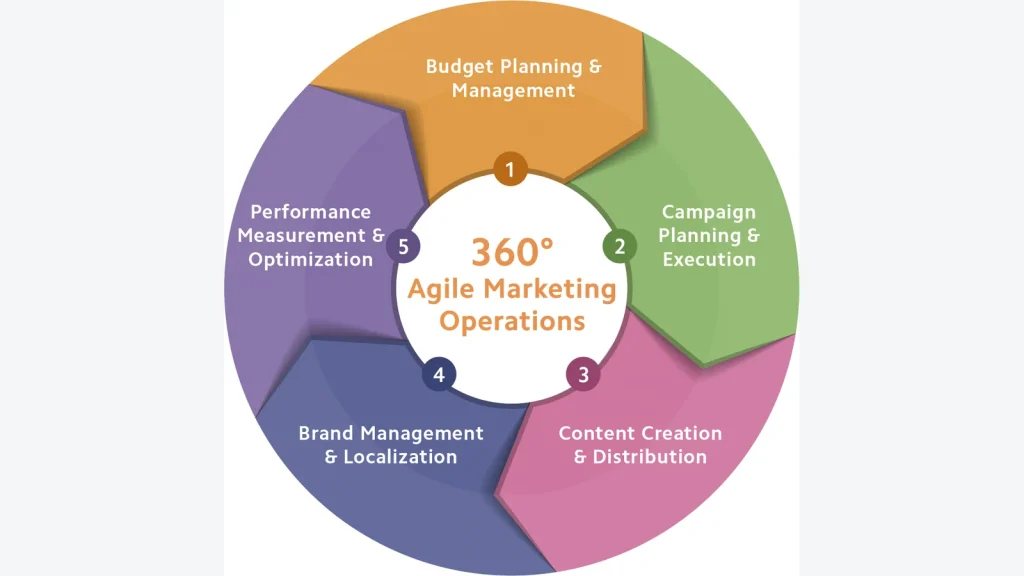
An integrated team can be useful when the organization needs a shared plan across website, search, content, paid media and sales enablement. The advantage is coordination: one team can see how an offer, landing page and acquisition source connect. The risk is breadth without enough specialist skill. Ask who will perform each task and what evidence supports the proposed approach.
Require a responsibility map. Name the lead strategist, channel owners, writers, designers, developers, analysts and client approvers. Show how work moves from brief to production to QA. If the agency relies on partners, explain how their quality, deadlines and access are managed.
Marketboo’s content plan describes an integrated model spanning SEO, GEO, paid media, social and website work. Buyers should still request a scoped list of deliverables, named owners and exclusions. An integrated offer should be judged by how clearly it coordinates work, not by how many services appear on a page.
Compare measurement and reporting on the same definitions
Before selecting an agency, agree on the primary business outcome and the supporting metrics. Define a qualified lead, accepted opportunity, order or other conversion in writing. Document the event, source system, attribution window and how duplicates are treated. Search visibility measures do not by themselves establish revenue or lead quality, so keep them separate from sales outcomes.
For web experience work, define a technical guardrail separately from sales results. Google’s “good” Core Web Vitals thresholds at the 75th percentile are LCP at or below 2.5 seconds, INP below 200 milliseconds and CLS below 0.1. web.dev’s explanation (updated May 7, 2025) describes the basis for those cutoffs. They are field experience targets, not a universal agency-performance benchmark.
Ask for a sample report with sensitive details removed. It should show the question, evidence, change made, result, limitation and next action. A dashboard full of platform metrics may still fail to answer whether the business is moving toward its goal. Confirm who can access raw data and how reporting will continue if the relationship ends.
For multi-channel work, make attribution limits explicit. Several touches may influence a sale, and long B2B cycles can cross reporting systems. Use a consistent model for operational decisions, but do not present it as a perfect record of causation. If leadership needs incrementality, discuss an appropriate test rather than treating last click as truth.
| RFP question | Strong evidence | Warning sign |
|---|---|---|
| Who owns the accounts and data? | Written access, ownership and export terms | Agency-only access or unclear transfer at exit |
| How is a qualified lead defined? | Shared criteria, CRM fields and rejection reasons | Success measured only by form count or platform conversions |
| What is included in the fee? | Deliverables, cadence, revisions and exclusions | “Full service” with no named work products |
| How are changes approved? | Documented access, reviewer and rollback path | Unlogged edits to production systems |
| How will results be reported? | Source, definitions, date range, caveats and next step | Guaranteed ROAS or rankings without assumptions |
If the agency labels are unclear, compare the actual deliverables and the internal work each model requires.
Find the right agency model with Marketboo
Test the relationship with a bounded discovery phase
A short discovery can expose whether the agency understands the business and can work with the available evidence. Ask for a problem statement, channel or page audit, measurement gaps, assumptions, risk register and prioritized work plan. The deliverable should be useful even if the business decides not to proceed with implementation.
Protect confidential information. Define which accounts, customer records and documents the agency may access, who approves credentials, and how work files are handled. Keep least-privilege access and record when accounts or permissions change. Ask legal or security teams to review agreements where required.
Use the discovery to test communication as well as analysis. Does the team explain uncertainty clearly? Can it separate fact from hypothesis? Does it ask questions about sales follow-up and product constraints? Those habits matter during the larger engagement.
Read the contract as an operating manual
The contract should explain scope, fees, payment schedule, term, termination, access, data ownership, confidentiality, subcontractors, approvals and transition support. Ask what counts as a revision and what triggers a change request. If a service includes media spend, distinguish agency fee from platform budget and state who pays the platform.
Define service levels carefully. A response-time target is not the same as a performance guarantee. If the agency promises a specific commercial outcome, request the assumptions, measurement method, dependencies and remedy in writing; then have the appropriate business and legal owners review it.
Plan for exit before launch. Keep a current account inventory, change log, creative archive, tracking map and documentation in an accessible location. An agency relationship should improve the business’s understanding of its marketing system, not make the system impossible to operate without the vendor.
Use a decision matrix that rewards fit over breadth
A simple matrix can compare agencies across the factors the business actually values: sector understanding, channel skill, reporting clarity, technical implementation, creative quality, collaboration, cost transparency and handover. Weighting is a management choice, not an objective market score. Explain the weights and record why a proposal received each rating.
Evaluate evidence. A relevant sample plan is stronger than a broad claim of expertise. A named specialist who will work on the account is more useful than a logo wall. A candid limitation can be a positive signal if the agency names the right partner or specialist to fill the gap.
Do not choose the widest service list simply to reduce the number of vendors. If the business has strong internal ownership of SEO and web, a performance specialist may fit. If the internal team is small and several workstreams interact, an integrated partner may reduce coordination cost. Make the decision from actual capacity and dependencies.
A clear next step for Marketboo and other agencies
Marketboo can be evaluated under the same criteria as any agency. Ask for the proposed team, service scope, reporting sample, account ownership, client responsibilities and a clear statement of when a focused specialist would be the better fit. This makes the integrated model credible because it names its boundaries.
Before the first call, prepare the target outcome, current channels, available data, relevant landing pages, sales qualification rule and known blockers. The more concrete the input, the easier it is to compare a tactical channel plan with a broader operating model.
Use a first phase to establish a baseline and working process. Expand the mandate only when the evidence shows that adjacent channels or site changes are part of the bottleneck. This lets the business scale the relationship based on demonstrated coordination rather than a promise of universal coverage.
Ask how the agency handles account access and data ownership
The company should remain able to access its ad accounts, analytics properties, domains, pixels or tags, creative files and reporting history. Use role-based permissions and provide only the access needed for the work. Record who granted access, how it will be removed and what will be transferred when the relationship ends.
Clarify who owns audience lists, campaign structures, landing pages, copy and custom reports. If an agency uses its own dashboard or tool, ask whether the raw data can be exported. These terms affect the company’s ability to compare future proposals and continue operations after a transition.
Check team seniority and actual delivery capacity
Meet the people who will do the work, not only the sales lead. Ask how much time the strategist, channel specialist, analyst and developer will allocate. If one person covers several disciplines, understand how priorities are set and what happens during absences.
A small specialist team may provide deep expertise in one channel but rely on the client for design and development. A larger agency may coordinate broader work but assign junior delivery staff. Neither structure is automatically superior; compare the named team with the scope and the pace the business expects.
Separate media budget from agency compensation
Ask the proposal to show platform spend, agency fee, production costs, software and third-party charges separately. If compensation is linked to media spend or results, request a clear explanation of how the structure affects incentives. Confirm who controls budget changes and whether the agency can move spend between campaigns without approval.
The business should set an approval threshold and a process for unusual spend, pauses or account issues. Document how unused media budget is handled. A transparent financial model helps finance compare an integrated retainer with a channel-specific engagement.
Review how the agency handles experimentation
A credible test plan states the hypothesis, audience, page or campaign change, measurement window and guardrails. Ask what the agency will do when the sample is too small or the results are inconclusive. A responsible team can recommend another test or a qualitative review rather than declaring a win from a few conversions.
Find out whether the test affects other channels. A new landing page may change SEO structure, paid media quality signals or sales follow-up. The plan should name other stakeholders and coordinate release timing so a result can be interpreted.
Write down the transition process before the engagement starts
A transition plan should cover account access, campaign exports, creative files, tracking documentation, current tests, open risks and vendor contacts. Decide how many handover hours or deliverables are included and what the agency will transfer if the contract ends. This is routine operational planning, not a sign of distrust.
Keep the company’s internal records current throughout the relationship. If all decisions live in an agency-only presentation or chat history, the business will have to reconstruct them later. Require a change log and an accessible repository for approved materials.
When a blended model is the better answer
A company may use a specialist for a narrow channel and a broader partner for strategy or web work. This can fit when the roles and handoffs are explicit. Name a coordinating owner, agree on shared definitions and state who resolves conflicts in measurement or priorities.
The blended model can also add coordination cost. If two agencies change the same landing page or claim credit for the same lead, reporting becomes harder. Set a shared calendar, approval process and access policy before splitting scope. The decision should reflect the company’s ability to manage vendors, not only the service list.
Buy a defined operating model, not an agency label
“Performance” and “full service” describe different ways providers organize work, but the labels do not specify who owns strategy, creative, analytics, landing pages, SEO, development or sales handoff. Ask each provider to list deliverables, account access, staffing, approvals, exclusions and the decisions it will make from the data. Compare the named team and scope, not the headline category.
A specialist can be a strong choice when the business has an internal team that coordinates adjacent channels and can supply clear briefs. An integrated partner may reduce handoff burden when several disciplines must change together. Either model can fail if ownership is unclear, data is inaccessible or the engagement is measured only by activity.
Score proposals against the work your team can absorb
Use a consistent proposal review: business diagnosis, channel rationale, evidence plan, creative and technical capacity, reporting, collaboration, cost structure and knowledge transfer. Ask for a sample decision memo or anonymized workflow rather than an unsupported performance claim. Confirm which parts of the proposal depend on client developers, product owners or sales operations.
Compare costs on the same basis. Distinguish agency fees, media spend, production costs, software, implementation work and any minimum term. Ask how changes are approved and what happens to accounts and assets when the engagement ends. Do not treat a low fee as a saving until the scope and retained internal work are clear.
Agree on handoffs before the first campaign launches
Write down who supplies product facts, who approves claims, who owns landing pages, who checks lead routing and who contacts sales about rejected enquiries. Set a response path for urgent corrections such as an incorrect offer, tracking outage or unavailable product. The agency should have access only to the systems needed for its assigned work.
A short responsibility map can expose the right choice. If a specialist will require frequent coordination across teams that have no shared owner, the business may need broader operating support. If internal leaders already coordinate the work and only need channel execution, a narrow specialist scope may be more efficient. Revisit the model when the business constraint changes.
Test provider claims with working questions
Ask a candidate to walk through one recent decision without revealing a client’s confidential information: what signal started the review, what data was checked, what change followed and how the outcome was judged. Ask what would make the agency recommend pausing spend or narrowing scope. The answer shows whether the team can describe limits as clearly as opportunities.
Also ask how work changes when a campaign needs a landing-page edit, a data correction or a sales-process fix. Clarify which team makes the change, who approves it and how long the dependency typically takes under the proposed agreement. These questions make it easier to compare actual operating capacity with the business’s needs.
How to select an agency model and compare proposals
Use these steps to evaluate the actual operating model behind each agency label.
- Write the business problem. Name the audience, outcome, market, timeframe and current evidence without prescribing a solution prematurely.
- Map current capabilities. List internal owners for media, creative, content, website, analytics and sales follow-up.
- Identify the bottleneck. Use campaign, page and CRM evidence to decide whether the issue is narrow or cross-functional.
- Define success measures. Write the conversion and lead-quality definitions, data source and attribution limitations.
- Request comparable proposals. Use the same deliverables, assumptions, access and reporting questions for each bidder.
- Meet the delivery team. Confirm who will execute each workstream and how subcontractors or specialists are managed.
- Review commercial and data terms. Check fees, media budget, access, ownership, confidentiality, term and exit support.
- Start with a bounded phase. Agree on discovery outputs, review dates and the evidence required before expanding scope.
FAQ
What does a performance marketing agency do?
The term usually describes a partner focused on measurable acquisition and optimization, but scope varies. Confirm channels, creative, landing pages, tracking, reporting and fees in the proposal.
What does a full-service marketing agency include?
It may coordinate strategy, creative, content, web and multiple channels, but no universal service list exists. Ask for named work products and delivery owners.
Which agency is better for a small business?
Choose based on the internal team’s capacity and the actual bottleneck. A focused specialist may fit a narrow need; an integrated partner may help when several workstreams must be coordinated.
Should one agency manage SEO and paid media?
It can be useful when shared planning and landing-page work matter, but verify specialist capability, data separation and clear channel ownership. Multiple vendors can also work with a defined coordination process.
How should I compare agency pricing?
Compare fees only after aligning scope, deliverables, media budget, revisions, support, reporting and exit terms. A lower total may omit important work.
Can a performance agency guarantee ROAS?
A guaranteed ROAS depends on factors beyond an agency’s control and requires precise assumptions. Treat guarantees cautiously and require the measurement method and remedy in writing.
What should I ask before signing?
Ask who executes the work, what data and accounts you own, how qualified leads are defined, what is excluded, how changes are approved and how the relationship will transition at exit.
A discovery discussion should end with a defined problem, proposed scope, measurement plan and clear exclusions.
Ask Marketboo for an agency-fit assessment
Buy the operating model your team needs
A performance marketing agency and a full-service agency differ by emphasis, but the labels do not guarantee a particular scope or skill. Choose from the bottleneck, internal capacity, measurement quality and ownership requirements. Compare proposals on the same evidence, protect account access and set a bounded first phase. The right relationship makes decisions clearer and leaves the business better able to understand its marketing system.