
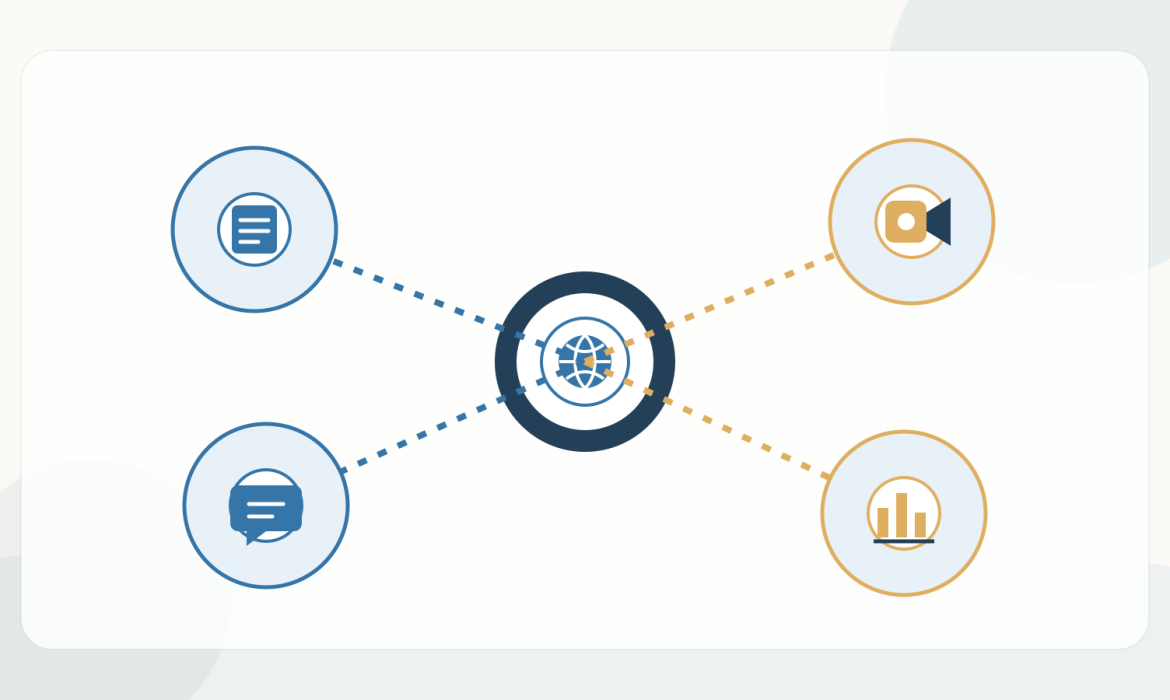
Quick answer: There is no single best social platform for every B2B company marketing internationally. Choose based on the buying group you need to reach, the proof your offer requires, the markets and languages you can serve, the content your team can sustain, and the next action you can measure. LinkedIn can support professional discovery and point-of-view content; YouTube can host demonstrations and education; Facebook, Instagram, TikTok, and Reddit may suit different audience and community tasks. Treat that as a set of hypotheses. Validate with buyer research, local account data, qualified conversations, and tagged site behavior before committing substantial resources.
An international marketing team often faces a tempting shortcut: pick the platform with the most familiar name, launch the same posts everywhere, and call the resulting follower totals a channel strategy. That shortcut avoids the hard decisions, but it does not answer whether the right buyers see useful proof in a language they understand or have a workable next step.
Start with the buying group, not a platform popularity chart
B2B purchases rarely belong to a single “audience.” The user who feels the problem may be different from the technical evaluator, procurement reviewer, manager, and budget owner. Each role asks a different question. A production engineer may want to see integration constraints. A procurement lead may need certification and contract details. An executive sponsor may care about cost, risk, and implementation time. Social content should serve one clear information need at a time.
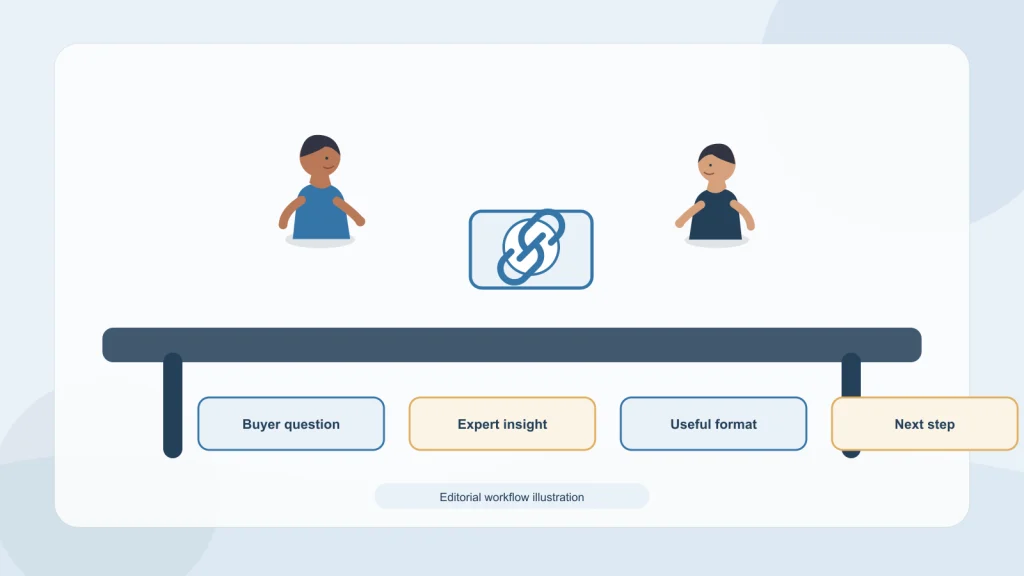
Write down the role, problem, proof requirement, market, language, and likely next step. Then ask how each platform could help with that task. If the buyer needs a detailed product demonstration, a video library may provide useful proof. If the challenge is vendor evaluation, expert commentary and employee knowledge may help establish a point of view. If the buyer depends on a peer community, participating responsibly in a relevant forum could help the team understand objections. These are plausible channel roles, not guarantees of reach or results.
Define “international” precisely. Which countries or regions are in scope? Which languages can the company support through product documentation, sales, customer service, and legal review? Are there restrictions on advertising or social access? Can the team serve inquiries during the expected local business hours? A platform plan that reaches a market the business cannot support creates operational risk rather than useful demand.
Choose a narrow initial market set. An English-language campaign may reach people in multiple countries, but it will not automatically answer local questions about regulation, availability, pricing, support, or business practice. Keep a market profile with buyer role, language, product fit, evidence requirements, preferred contact route, and a named internal owner. A country should not be labeled “active” simply because someone selected it in an ad account.
What broad audience data can and cannot tell you
Population surveys can help teams discuss general social media familiarity, but they do not identify who buys a specialist B2B product. Pew Research Center’s 2026 survey of 5,511 U.S. adults reports self-reported “ever use” of YouTube at 84%, Facebook at 70%, Instagram at 51%, LinkedIn at 33%, TikTok at 31%, and Reddit at 18%; fieldwork ran from January 30 to June 18, 2026, and the overall margin of error was ±1.8 percentage points. The survey is limited to U.S. adults and does not establish platform activity, B2B job roles, international usage, buyer intent, or campaign reach. Use it for broad context only, then check market-specific buyer evidence and your own account data.[1]
Do not compare platform “users,” “members,” “views,” “impressions,” and “monthly active accounts” as if they were the same quantity. The definitions and reporting periods differ. A platform’s own audience metric is useful for understanding its product under its chosen definition, but it is not an independent measure of your potential buyers. Record the metric definition and date whenever a platform statistic appears in a strategy document.
Interview sales, customer success, and existing customers. Ask where they learned about the problem, what they read or watched before contacting a supplier, what evidence changed their confidence, and which colleagues influenced the decision. Do not rely on recall alone as precise attribution. Use these interviews to generate hypotheses, then test content and measure actual engagement and qualified business actions.
Compare platforms by the job they can perform
Platform choice is more useful when framed as channel jobs rather than winner and loser rankings. The same business may use YouTube as a product education library, LinkedIn for professional discovery, and a smaller community platform for listening. Those channels may play different roles at different stages and require different owners.
| Platform | Possible job | Content that may fit | Validate before investing |
|---|---|---|---|
| Professional discovery and expertise | Technical explainers, executive perspective, employee insight, event material | Are target job roles and markets represented in your account and qualified conversations? | |
| YouTube | Demonstration and durable education | Product walkthroughs, installation guides, webinars, troubleshooting | Can the team produce clear video and maintain subtitles, titles, rights, and follow-up? |
| Market community or business presence in suitable regions | Customer education, event updates, service information, supported groups | Do target buyers use the relevant page, group, or placement for this business task? | |
| Visual proof and product context | Process views, product details, field work, short demonstrations | Does visual storytelling help buyers evaluate this offer, and can it lead to a useful next step? | |
| TikTok | Short-form discovery and accessible demonstration | Quick process clips, myth checks, practical demonstrations, expert answers | Can the brand be credible in this format and serve interest across markets? |
| Listening and permission-based community participation | Detailed answers and discussions where rules permit vendor participation | Are relevant communities active, and do moderators allow the planned role? |
This table is a planning framework, not a promise that every platform will perform those jobs. Platform interfaces, policies, audiences, and account features change. Confirm current availability in each target market and inspect the specific community or account experience before building a program around it.
Separate organic and paid channel decisions. Organic content depends on audience interest, editorial relevance, and platform distribution. Paid media uses a defined budget and campaign setup. They can complement each other, but a paid audience estimate does not prove that an organic post will earn attention, and a popular organic post does not establish the economics of paid acquisition.
Match proof to the product’s risk and complexity
A low-complexity product with a visible result may benefit from short demonstrations or visual examples. A high-value industrial solution can require technical specifications, site constraints, service coverage, and implementation details that do not fit in a short post. Use social content to introduce and organize the proof; do not ask a post to carry the entire sales process.
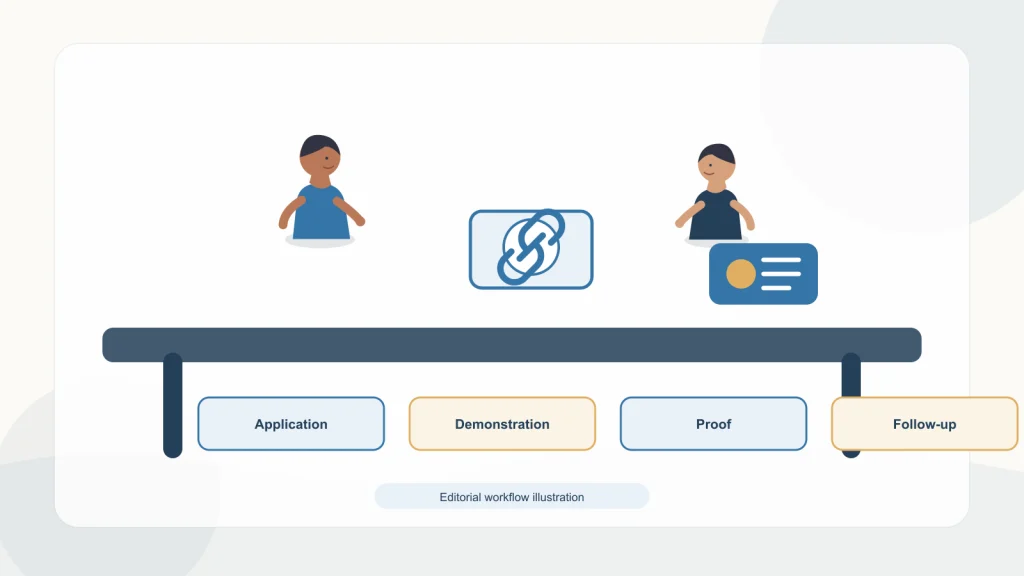
For complex products, a channel system may look like this: a short professional post names a problem; a video demonstrates the workflow; a technical page carries specifications and limitations; an expert webinar answers detailed questions; and a local sales or support contact handles the next step. The platform is one entry point into a broader content and service path.
Make each claim auditable. Keep a source record for technical specifications, certifications, customer outcomes, comparative claims, or regulated statements. Include the source, date, applicable product version, geography, approved wording, and owner. If a claim cannot be verified or is not approved for the target market, leave it out. High-stakes assertions should not be “localized” by simply translating an English phrase.
Use the same care with customer material. A factory photo, customer logo, testimonial, or case result may require explicit permission with a defined scope. Permission for a website case study does not automatically grant paid-media rights or permission to adapt it into a platform video. Store rights and expiry information with the asset, and ask a qualified reviewer when contract terms or regional rules are unclear.
Language and localization change platform fit
Translate the buyer problem, not just the words. Ask a local subject-matter reviewer whether the example makes sense, whether the product is available, whether terminology is correct, and whether the proof would be credible. Machine translation can support a workflow, but an unreviewed translation should not carry technical, legal, or product claims into a new market.
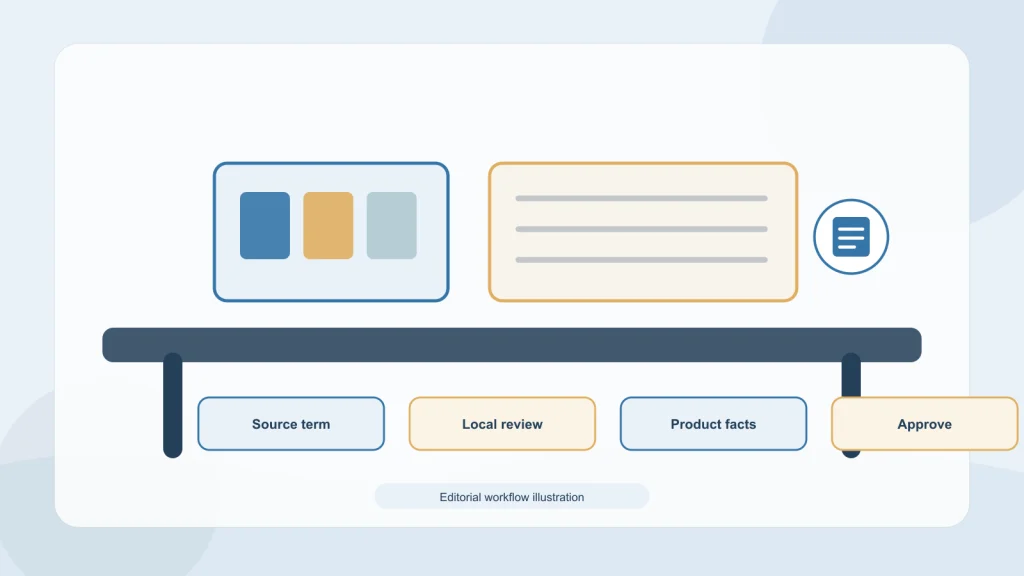
Consider which portions of a content experience need localization: spoken audio, captions, on-screen text, titles, thumbnails, landing pages, forms, sales follow-up, and technical documentation. A video may be understandable with subtitles, while a safety procedure may require a complete local-language review. The right decision depends on the reader’s task and the risk of misunderstanding.
Set market-level goals and owners. If a language version has no reviewer or no follow-up path, the content may generate questions the organization cannot answer. Be explicit about coverage: which hours are staffed, which inquiry route is monitored, what information can be provided, and what happens when a lead arrives in a different time zone.
Store the date and time zone with planned publication. Avoid copying one “best posting time” recommendation across countries. Run a modest test using account insights and audience response, then review the quality of engagement and site behavior. A posting-time experiment with a handful of content items is directional, not a universal platform rule.
Use the buying committee to plan a content sequence
A B2B platform mix should support the questions a buying group asks over time. Early in a search, a person may be trying to name a problem or learn which approaches exist. Later, the technical evaluator may check compatibility, the commercial team may compare service terms, and the budget owner may weigh deployment risk. One social asset will rarely meet every need. A small sequence can introduce the issue, show proof, answer a practical objection, and offer a relevant next step.
Map roles to evidence. A technical evaluator may benefit from a detailed demonstration, a schema or integration explanation, or a recorded expert session. A finance or procurement reviewer may need a transparent outline of ownership, service scope, and documented costs through a private sales conversation rather than a social post. A user may need to see the workflow in context. The marketer’s job is to route each role toward material that answers its question, not to force every viewer into the same lead form.
Use employee expertise carefully. Subject-matter experts can explain a process, answer recurring questions, or discuss trade-offs, but they should not be scripted into exaggerated product claims. Agree on the facts they can state, what needs approval, how to handle a question outside their expertise, and when a conversation should move to a secure or private channel. Employee advocacy is a content operation, not a replacement for evidence or training.
Social content can also help the sales team prepare for conversations. Share a technical explainer or customer question internally when it clarifies a buying concern, while respecting privacy and any permission limits. Do not assume that a public interaction identifies an in-market account or gives the company permission to contact a person. Follow platform rules and the organization’s privacy and sales practices.
Keep channel roles visible in the team workflow
Write a one-sentence job for each active platform. For example: “YouTube hosts searchable demonstrations that sales can share when buyers ask how the process works.” Another might be: “LinkedIn gives the company and its experts a place to explain operational trade-offs and direct interested readers to deeper material.” The sentence should describe a purpose, audience, and next step—not a promise of results.
Attach a named owner to content planning, publishing, replies, analytics, localization, and escalation. One person can hold more than one role, but each task needs an accountable name or team. Decide how often the team can respond and which inquiries require sales, technical support, or legal review. If the team cannot fulfill the promised response, change the call to action or schedule before publication.
Maintain a source and claims library for reusable facts. Record who approved a claim, what evidence supports it, which product or market it applies to, and when it should be rechecked. Reusable does not mean eternal: technical features, platform rules, certifications, product availability, and regulations can change. A social post that is reshared months later still needs to point to current information.
Use a stop rule for inactive channels. If an account has no accountable owner, stale contact information, repeated unanswered questions, or content that cannot be kept accurate, pause new posts while the team decides whether to resource it. A dormant page does not become strategically necessary simply because the brand once opened it.
Choose a portfolio the team can sustain
Every additional platform creates production, localization, rights, publishing, community response, and measurement work. Add a channel only when the team can state its job and resource it. An inactive account with stale contact information may hurt confidence more than a smaller, consistent presence.
Begin with one primary channel for the main buyer task and one supporting channel that contributes a distinct form of evidence or reach. Keep a secondary listening list for relevant communities even if the company does not publish there. Expand after the first test produces a learning that the team can act on, not merely because the competitor has an account.
| Criterion | Question | Evidence to collect | Weight |
|---|---|---|---|
| Buyer-role fit | Can the target roles be reached or served here? | Customer interviews, qualified referrals, account data | High |
| Proof fit | Can this format explain the product credibly? | Content review, buyer questions, sales feedback | High |
| Market readiness | Can the business support the geography and language? | Product availability, local owner, support coverage | High |
| Production capacity | Can the team make and maintain useful material? | Hours, approvals, rights, publishing workflow | Medium |
| Measurement | Can a meaningful next step be observed? | Tagged traffic, CRM events, defined conversion | Medium |
| Community risk | Are participation and promotion permitted? | Current policies, moderator guidance, legal review | Gate |
Do not turn the scorecard into false precision. Teams may use a 1-to-5 rating to make trade-offs visible, but a weighted total is not an objective forecast. Preserve the notes behind each rating. A “high” audience score based on a broad population study should not outweigh a missing local buyer and service plan.
Measure platform contribution honestly
Set a goal for each channel before publication. An educational video might aim to answer a recurring product question, while a professional post may seek qualified conversation or event registration. A community reply may inform the team about objections. These activities should not all be judged by the same click metric.
Use tagged links when an external visit is a meaningful next step. Google Analytics campaign URL documentation supports parameters such as source, medium, and campaign for classifying traffic. Agree on names and test links. UTM labels can connect a visit to a campaign tag; they cannot show every exposure, prove a post caused a sale, or resolve cross-device behavior by themselves.[2]
Use CRM definitions that sales and marketing share. A qualified lead should have a consistent rule such as target market, relevant role, stated need, and an agreed next action. Separate inquiries, accepted leads, opportunities, bookings, and revenue. If attribution is incomplete, say so. A platform report, analytics report, and CRM may count different time windows and identities.
Review qualitative evidence with quantitative data. Which question did buyers ask after seeing the content? Did the content help a sales conversation? Did a market team report confusion in translation? Did a technical detail cause friction? These observations may guide the next asset even when direct conversion counts are small. Document whether a conclusion is an observed fact, a platform-reported metric, or an editorial hypothesis.
Choose the best social platforms for B2B international marketing by test
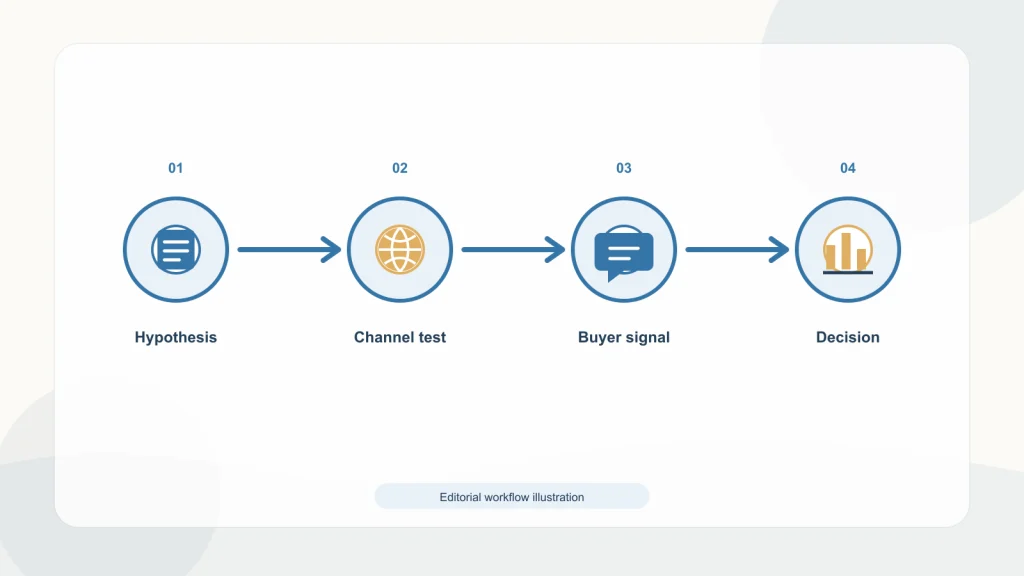
When two channels appear equally plausible, compare the same business task in a small, fair test. Keep the audience, market, offer, and destination as similar as practical, while allowing each platform to use a format that feels native. Do not demand identical creative if the platform’s conventions differ; instead, document the adaptation. The test should answer a decision such as whether a technical demonstration earns more qualified follow-up in a video environment or a professional feed—not which platform is universally superior.
Agree on a minimum observation window and a decision rule before launch. The window should reflect publication cadence and the buying cycle; the rule might require evidence of relevant buyer engagement, useful sales feedback, and a feasible cost or workload. If volume is too small to support a confident comparison, use the result to refine the next test rather than declaring a winner. Record paid support, organic distribution, language, asset format, and sample size so that later reviewers can interpret the evidence.
Finally, check whether the company can maintain the channel through the entire experience. A strong post that leads to an outdated product page, a language the sales team cannot support, or a form no one monitors is a weak channel path. A platform earns investment when its audience, proof format, local readiness, and follow-up process align—not simply because the account is popular.
How to select a first platform mix
- Name the buying task. Choose one problem, decision, or proof requirement for a target buyer role.
- Choose the market. Specify countries, language, offer availability, support coverage, and a local owner.
- Map decision evidence. List what a buyer needs to see, ask, compare, or validate before acting.
- Match format to evidence. Pick a platform capable of hosting or distributing that format and check current market availability.
- Review policies and rights. Confirm account rules, community restrictions, asset rights, disclosures, and claim approvals.
- Set one measurable next step. Choose a qualified action such as a relevant resource visit, event registration, or conversation.
- Build a small test. Define audience, content, period, budget if paid, and a baseline that makes the comparison understandable.
- Track and review. Use consistent tags and shared CRM definitions, then compare both quantitative and qualitative evidence.
- Keep, change, or stop. Invest further only when the evidence supports a distinct platform role and the team can sustain it.
This process does not produce a universal ranking. It produces a defensible first mix and a record of the assumptions being tested. If the market evidence changes or the business cannot support a language, revisit the plan. A platform should earn its place through a useful job, not through inertia.
FAQ
Which social platform is best for international B2B marketing?
There is no universal best platform. Choose based on buyer roles, product proof, local audience evidence, language support, team capacity, and the next measurable action. Validate the choice in each target market.
Is LinkedIn enough for B2B marketing?
It may be sufficient for a focused program in some contexts, but it does not automatically provide every type of product education or market coverage. Add other channels when they perform a distinct job the team can support.
Should B2B companies use TikTok?
Use it when short-form video can explain a relevant problem credibly and the company can sustain suitable production and response. Test audience and market fit rather than assuming the format is either only consumer-oriented or guaranteed to perform.
How many social platforms should an international B2B brand manage?
Manage only the number the team can keep accurate, useful, and responsive. A small portfolio with clear channel roles is easier to evaluate than several inactive or duplicated accounts.
How do you compare social platforms for different countries?
Define the buyer role and language for each country, review local audience evidence and product availability, check platform access and policies, then test content with a qualified next step. Do not generalize U.S. platform statistics to other markets.
Can social media generate B2B leads?
Social activity can support discovery and lead pathways, but outcomes depend on the market, offer, content, destination, and follow-up. Track qualified actions and pipeline definitions rather than treating likes or raw clicks as leads.
How long should a platform test run?
Set a period that fits the buying cycle and volume of content, then report the sample size and limitations. A small test may offer directional learning, but it cannot establish a stable result or causal lift on its own.
Next step: To coordinate channel roles, publishing, and market-specific content, review Marketboo’s social media management service.
Use the comparison to make a clear choice
The best social platforms for B2B international marketing are the ones that reach a relevant buying group with useful evidence in a market the business can support. That answer may be a focused LinkedIn presence plus a YouTube education library, a platform chosen for local community behavior, or a narrower mix that avoids spreading the team too thin.
Use broad audience figures as context, not a substitute for buyer research. Compare platforms by job, keep the measurement definitions visible, and review the quality of conversations and downstream actions. If a channel cannot be connected to a credible audience, service plan, and learning goal, leave it out until those pieces exist.
Document the choice as a testable decision: what the platform should do, for whom, in which market, with what evidence, and how the team will know whether to continue. That is more useful than a permanent “best platforms” list because it can change when customers, products, or operating capacity change.
Connect paid and organic planning: If selected channels also need market-based paid distribution, see Marketboo’s global paid media service.