
This Facebook private inquiry campaign for an auto parts supplier improved the part of the funnel that sales teams actually feel: customer quality and conversation behavior. The account had accumulated many fake followers and weak conversion. After the campaign was adjusted, the case record reports stable costs, higher-quality customers, and a 50% lift in both reply rate and conversion rate. The central lesson is simple: a commercial conversation is more valuable than a follower count.
Auto parts marketing can look healthy in a dashboard while the sales team sees a different picture. Reach may rise, followers may accumulate, and messages may arrive, yet few buyers provide enough information to quote a product. The second case in the campaign record starts from that gap between visible activity and usable demand.
Why fake followers create a misleading Facebook funnel
The campaign record describes a large share of fake followers and a poor conversion rate. Whether those accounts were automated, purchased, or simply inactive is less important than the commercial outcome: they did not help the supplier identify buyers or move inquiries toward a quote.
For a supplier, “private inquiry” should mean more than a chat notification. It is a conversation with enough context to decide whether the person is a fit. Depending on the catalog, that context can include a part number, equipment model, required quantity, destination country, delivery timing, and whether the buyer is an end user, distributor, or procurement team.
| Funnel stage | Weak signal | More useful signal | Why it matters |
|---|---|---|---|
| Audience growth | Follower count rises | Relevant buyers engage or start conversations | Shows whether the audience is commercially relevant |
| Inquiry start | Any message is counted | Message includes a product or buying need | Separates curiosity from a usable lead |
| Sales response | Reply volume alone | Reply rate within a defined time window | Shows whether the team can keep the conversation alive |
| Conversion | Unqualified chat marked as success | Qualified inquiry or quote request | Connects media activity with sales work |
What changed in the reported result
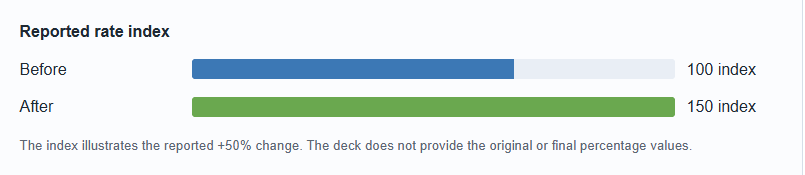
The reported outcome has three parts. First, cost became stable. Second, customer quality improved. Third, reply rate and conversion rate increased by 50%. Those three statements work together. A campaign that lowers cost but fills the inbox with low-quality conversations may create more work rather than more business. A campaign with slightly higher cost but a much stronger sales response can be healthier.
Meta’s lead-generation materials describe campaigns built around collecting or starting prospect information. For an auto parts supplier, the platform action is only the first step. The qualification questions, prompt design, sales handoff, and response discipline determine whether a message becomes a business opportunity.
A better way to judge inquiry quality
Start with a definition that a salesperson can apply consistently. “Qualified” might mean that the inquiry identifies a product and quantity, comes from a buyer in a served market, and can move to a quote. If the team cannot agree on that definition, the reported conversion rate will change whenever the person doing the counting changes.
Next, inspect the conversation itself. Are buyers asking about availability, specifications, lead time, or price? Are they sending model numbers? Are the same accounts opening multiple conversations without progressing? These details reveal more than a high-level engagement rate.
Practical next step: Ask the sales team to review a sample of recent conversations and label each one as buyer-ready, needs qualification, or irrelevant. Use those labels to refine the campaign’s optimization event.
What the case proves, and what it leaves open
The case supports a clear editorial conclusion: audience quality and sales responsiveness improved together after the campaign was adjusted. It does not prove that every auto parts supplier will achieve the same change, and it does not establish a revenue increase because order value and closed-won data were not included.
That limitation makes the case more credible. A publishable version should add the exact dates, inquiry volume, baseline and final rates, and the definition used for a qualified customer. Once those details are available, the story can connect media performance to sales outcomes without overstating the result.
For sales teams: Have sales label a sample of conversations before you claim that a lower cost also means better commercial performance.
How to improve Facebook private inquiries for an auto parts supplier
- Define a qualified inquiry using product, quantity, market, and buyer-role fields.
- Audit the existing audience for inactive, duplicate, or suspicious profiles.
- Create message prompts that help buyers state the part, model, quantity, and destination.
- Route every new conversation to a named owner with a response-time target.
- Review reply rate and qualified-conversation rate together with cost.
- Compare conversion using the same period and definition before calling the campaign improved.
FAQ
What was wrong with the auto parts campaign before the change?
The case record says the account had many fake followers and poor conversion. The problem was lead quality, not simply reach.
What result did the Facebook private inquiry campaign report?
It reported stable costs, higher customer quality, and a 50% increase in both reply rate and conversion rate.
Why are private inquiries different from ordinary lead forms?
A private inquiry often requires a conversation, qualification, and follow-up before a sales opportunity becomes clear. The reporting window should include those steps.
How can a business detect fake or low-value followers?
Compare follower growth with message starts, profile visits, qualified conversations, repeat engagement, and sales-accepted inquiries. A large follower number without commercial activity is a warning sign.
Should auto parts suppliers optimize for the cheapest inquiry?
Usually no. Suppliers should optimize toward qualified buyer conversations, product fit, destination market, order potential, and the sales team’s ability to respond.
Does a 50% increase mean revenue also doubled?
No. The case reports a 50% increase in reply and conversion rates. Revenue impact requires separate order-value, close-rate, and attribution data.
What data should be added before this case is published?
Add the baseline and final rates, inquiry volume, period length, definition of a qualified customer, and the method used to identify fake followers or low-quality traffic.